Get all your news in one place.
100's of premium titles.
One app.
Start reading
The Economic Times
The Economic Times

Rubio warns Hormuz tolls would 'spread like contagion' to other waterways

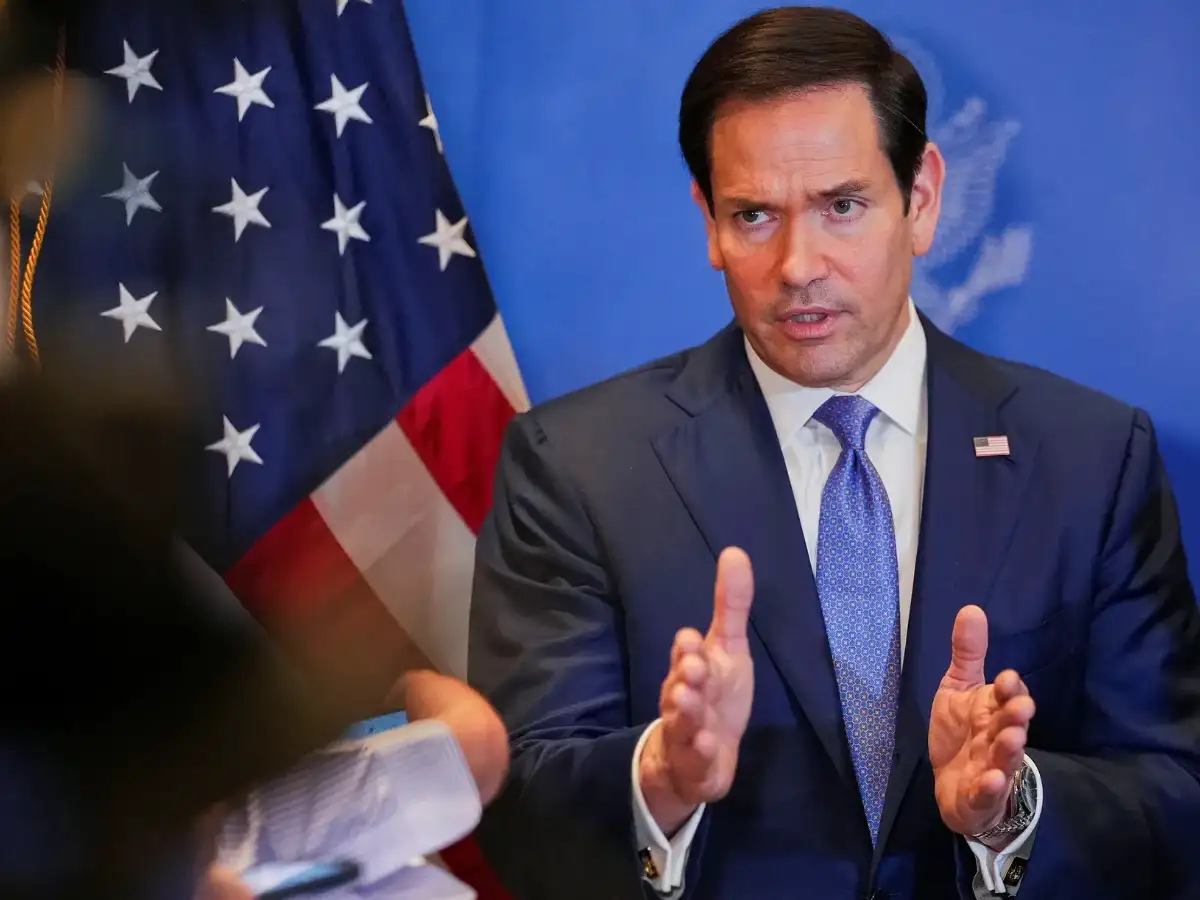
Manama: US Secretary of State Marco Rubio on Thursday warned that any tolls on ships passing through the Strait of Hormuz would set a precedent and risk "total chaos," while Oman said no fees would be imposed.

Rubio's comments during a tour of the Gulf came hours after Iran repeated that ships must seek its authorisation before crossing.

The statement by Iran's Revolutionary Guards followed an announcement by neighbouring Oman of a new temporary shipping route through the strait running close to its coast, which Iran appeared to denounce.

Also Read: Iran seeks long-term role in managing Strait of Hormuz, eyes billions in annual fees

Oman's top diplomat, for his part, said no transit fees would be imposed in the strait, during a meeting of Gulf foreign ministers with Rubio.

Iran's foreign minister Abbas Araghchi later "emphasized the importance of continued coordination" with Oman.

"International waterways do not belong to any nation state. This is a foundational principle in the world today, without which the world would be in total chaos," Rubio told a Gulf Cooperation Council meeting in Bahrain.

"If in fact we accepted that you can charge money to use an international waterway because it happens to be near your territorial space, well then this will spread throughout the world like a contagion."

The future of the strait, a vital route for energy shipments that was blockaded by Iran during the war, is a key sticking point in negotiations between Tehran and Washington to end their war.

Tehran has said it plans to impose what it calls maritime service fees, as opposed to tolls, while the United States argues it is an international waterway and therefore should not be charged.

"The only authorised route for passage through the Strait of Hormuz is the route announced by the Islamic Republic of Iran," said the Revolutionary Guards, the ideological arm of Iran's military.

Any crossing without authorisation is "unacceptable and extremely dangerous", they said in a statement, warning that vessels not complying "will be dealt with".

They also appeared to denounce the new route released by Oman, but only referred to "certain authorities" rather than Muscat directly.

Oman, which sits on the other side of the strait from Iran, said the new corridor was coordinated with the International Maritime Organisation, a UN agency responsible for marine safety.

The only route currently authorised by Iran runs through a corridor that follows the Iranian coast.

Hormuz is a narrow stretch of water between Iran and the Gulf countries through which roughly 20 percent of the world's crude oil and liquified natural gas normally transits.

At its narrowest it is only about 30 kilometres (18 miles) wide.

Also Read: Strait of Hormuz traffic sees sharp uptick but not back to normal

A memorandum of understanding signed last week by Tehran and Washington to end their war stipulated that commercial ships may transit the strait free of charge for the next 60 days.

With Iran and the US in further negotiations, it is unclear what arrangements will be in place after that period.

Rubio said the US wants a lasting settlement with Iran to end their war but not "at any price".

Sign up to read this article
Read news from 100's of titles, curated specifically for you.
Already a member? Sign in here
Related Stories
Top stories on inkl right now
One subscription that gives you access to news from hundreds of sites
Already a member? Sign in here
Our Picks
Fourteen days free
Download the app
One app. One membership.
100+ trusted global sources.