-
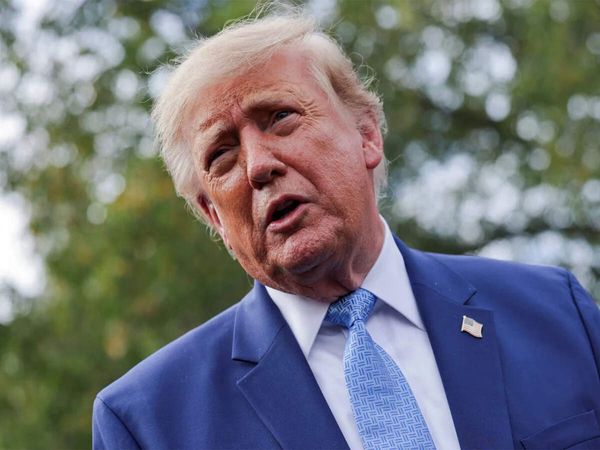
Secretary of State Marco Rubio said on Monday, Sept. 28, that Washington is working with Venezuela's 2015 National Assembly to create the conditions for elections "as soon as possible," but he offered no date.
- The comment came in the closing exchange of a wide-ranging Fox News interview, not in a dedicated policy speech, and it is not the first time he has used similar wording this year.
-
Talks on political guarantees slip to mid-October, oil executives are already gathering in Caracas, and protesters are demanding a calendar for the presidential vote.
Where and How Rubio Made the Remark
The Venezuela question arrived at the very end of Rubio's Monday interview with Fox News host Sean Hannity, after segments on a suspected terror plot in the United Kingdom, Iran, Europe, Greenland and China, according to the State Department transcript. Hannity told him only a short window remained.
Rubio answered by describing two needs running in parallel: an economy that has to keep recovering after decades of graft, and a democratic transition that he said his department is focused on. He added that the administration is working with the Assembly elected in 2015 on preconditions for a vote, and he named no timetable.
Still No Election Date
The absence of a calendar is what opposition voices are seizing on. Claudia Macero, communications coordinator for María Corina Machado's Vente Venezuela party, came back to the country on Sunday after more than a year abroad, and on Monday she asked authorities to fix a date for the presidential election, EFE reported. She pointed to interim President Delcy Rodríguez's pledge before the United Nations that a vote will take place, and asked when. According to El Nuevo País, she also acknowledged movement at the negotiating table while stressing that much remains unfinished.
What the Talks With the 2015 Assembly Have Produced
The Assembly Rubio mentioned is one side of a negotiating channel with Rodríguez's government. She took over after U.S. forces seized Nicolás Maduro in January and has governed under American oversight since then, Reuters reported.
Results so far are partial. Deputy Jorge Millán said the second round, which closed last week, did not install the working group on political and civil guarantees. That panel is meant to handle bans on candidates, including Machado's, the return of intervened parties to their owners, and safeguards for exiled leaders who come home, per El Nuevo País. The delegation aims to begin that work around mid-October.
Fellow delegate Juan Miguel Matheus defended the round, citing gains in access to information and commitments to overhaul the judiciary, and he promised further announcements.
Is This a Shift in Washington's Position?
Some outlets, such as Diario Las Américas, described the comment as a brief turn. The public record shows something less clear-cut, because Rubio's emphasis has moved back and forth this year.
On March 31, he told Hannity that elections must come eventually, coupling that with a call for patience: "We have to be patient, but we also can't be complacent," Reuters reported. On June 3, at a House hearing, he said Washington would like to see a vote as soon as possible, while noting that five months was little time and that a new electoral commission was needed, according to EFE. On Sept. 23 in New York, he argued that debt restructuring and institution-building should advance alongside any vote and said speed was not the goal, per Latin Times.
Against that backdrop, the "as soon as possible" phrasing is not new. What stands out is that Rubio tied it explicitly to the 2015 Assembly while still declining to name a date, so whether it marks a policy change or a rhetorical adjustment remains open.
Oil Deals Are Moving Faster Than Politics
The commercial calendar is outpacing the political one. Bloomberg reported that about 650 executives, officials and diplomats were due at the Venezuela International Oil and Gas Summit in Caracas, with more than 150 people waitlisted, and that ExxonMobil, TotalEnergies, BP and Repsol were among the companies represented, in a report republished by Energy Connects. Organizers schedule the event for Sept. 28 to 30, and the same report links it to President Donald Trump's stated goal of steering $100 billion into Venezuela's oil revival.
Scrutiny of the money is growing too. Representatives Joaquín Castro, Gregory Meeks and Ami Bera asked Rubio to release KPMG's audits of the account that holds Venezuelan oil proceeds, along with a full accounting of disbursements, by Oct. 8, according to Castro's office.
Pressure From the Street
Critics say daily life has not improved at the pace of the deal-making. On Monday, teachers, health workers, pensioners and relatives of political prisoners marched in Caracas over pay, pensions, detainees and the lack of an election calendar, and police blocked their route, Analítica reported. Protests also broke out in several states, and EFE counted the electricity crisis among the grievances.
Amnesty International Secretary General Agnès Callamard welcomed the prisoner releases but told EFE that the laws, institutions and police forces behind past repression are still in place, and she warned that superficial gains can be reversed, per EFE.
What to Watch Next
Three markers will show whether "as soon as possible" becomes concrete. First, whether the political-guarantees panel is finally installed in October and takes up the candidate bans. Second, whether Machado can return safely. Third, whether Washington or the interim government attaches a date to the presidential vote. Until one of those happens, Rubio's statement remains a declaration of intent rather than a schedule.