Nursing home residents who received an RSV vaccine were 73 percent less likely to be hospitalized with the virus and 56 percent less likely to die from it, according to a study of nearly 600,000 Medicare beneficiaries published this week in JAMA Internal Medicine.
The finding lands weeks before respiratory virus season, and it addresses a population that has been largely missing from the evidence base. Clinical trials of RSV vaccines enrolled community-dwelling older adults. Residents of long-term care facilities are frailer, carry more chronic conditions and take more medications, and families have had reason to ask whether trial results transfer to them.
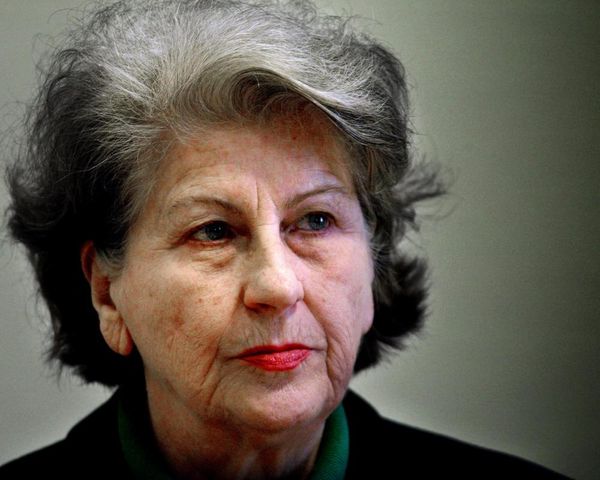
For the roughly 1.2 million Americans living in nursing homes and the relatives who make or influence their medical decisions, this is the question that has been open since the vaccines were approved in 2023. The answer in this data set is that protection held up.
Four Outcomes, One Large Claims Data Set
Researchers led by the Centers for Disease Control and Prevention examined Medicare claims for 597,430 people living in nursing homes. They measured the vaccine's effect on hospitalizations, serious RSV complications, thromboembolic events, and death.
Estimated effectiveness was 73 percent against hospitalization, 59 percent against serious RSV outcomes, 66 percent against thromboembolic events, which are potentially dangerous blood clots, and 56 percent against death. The study appears in JAMA Internal Medicine, which published it alongside an independent commentary.
The authors wrote that the results add to the evidence that RSV vaccines protect a vulnerable group of older adults, and that the size of the protection lines up with what other studies have found in different older populations.
An accompanying commentary by Christopher Radcliffe, MD, of Yale University School of Medicine and Rupak Datta, MD, PhD, of the Veterans Affairs Connecticut Healthcare System described the result as robust and said it demonstrates "the preserved benefits of vaccination even among nursing home residents with extensive multimorbidity."
The Evidence Has Real Limits Worth Naming
This is an observational study built on medical claims, not a randomized trial. That distinction matters. People who get vaccinated differ from people who do not, in ways that are not fully captured by billing records, and researchers adjust for what they can measure rather than everything that exists.
The healthy vaccinee effect is the specific concern in older populations. Residents well enough to be brought to a vaccination clinic may be healthier at baseline than residents who are not, which can inflate apparent effectiveness. Frailty and life expectancy also influence whether a clinician offers a vaccine at all, and neither is captured cleanly in billing codes. The authors note their estimates align with other studies in different older adult populations, which is reassuring but not a substitute for randomization.
The thromboembolic finding should be read carefully. A 66 percent reduction in blood clot events is biologically plausible, since severe respiratory infection drives inflammation and clotting risk. It is not evidence that the vaccine treats or prevents clots in general.
Nothing in this study changes existing recommendations. CDC recommends a single dose of any licensed RSV vaccine for all adults 75 and older, and for adults 50 to 74 who are at increased risk of severe RSV illness. Living in a nursing home is itself one of the qualifying risk conditions in that younger group. Adults who have already received a dose are not currently advised to get another.
Questions Families Can Reasonably Raise with a Facility
Nursing home vaccination rates vary widely between facilities and between states, and residents cannot generally arrange their own vaccination. That makes this a conversation between families and administrators rather than a personal decision.
A family member or health care proxy can ask whether the resident has received an RSV vaccine, when, and which product. They can ask what the facility's overall resident vaccination rate is and whether staff vaccination is tracked, since staff is a documented route of introduction during outbreaks. They can ask what the facility's plan is if a resident tests positive.
Cost is generally not the obstacle it once was. RSV vaccination is covered under Medicare Part D for eligible beneficiaries with no cost sharing, and most nursing home residents have Part D coverage. Families uncertain about a specific plan can ask the facility's pharmacy consultant or contact the plan directly.
Residents who are severely immunocompromised, who have had a serious allergic reaction to a vaccine component, or who are acutely ill may need a different approach. That is a decision for the resident's physician, and no one should act on a news article in place of that conversation.
The Winter Ahead for Long-Term Care
RSV is a seasonal virus that typically circulates from fall through early spring in most of the United States. CDC estimates that 110,000 to 180,000 adults 50 and older are hospitalized with RSV in a typical year, and the risk of severe illness climbs with age and with certain chronic conditions.
Nursing homes carry a disproportionate share of that burden every winter. Congregate living, shared staff, close-contact care and a resident population with heart and lung disease combine to make facilities efficient settings for transmission once the virus arrives.
MedicalDaily reported this week on fall vaccine guidance, whose evidence review reached similar conclusions about RSV vaccine performance in older adults. The nursing home figure is consistent with that body of work.
Families visiting a facility can reduce risk directly by staying home when symptomatic, since RSV in a healthy adult often looks like an ordinary cold. Residents developing fever, worsening cough, difficulty breathing, confusion, or reduced alertness need clinical evaluation, and difficulty breathing or sudden confusion warrants urgent care.
Additional effectiveness data are expected as the season progresses. MedicalDaily will report significant new findings on RSV vaccine performance in older adults.
Key Questions Answered
What did the study find? Among nursing home residents, RSV vaccination was an estimated 73 percent effective against hospitalization, 59 percent against serious RSV outcomes, 66 percent against thromboembolic events, and 56 percent against death.
How large was it? Researchers examined Medicare claims data for 597,430 people living in nursing homes. It was published in JAMA Internal Medicine and led by CDC researchers.
Is this a clinical trial? No. It is an observational study using medical claims, which can show association but cannot establish causation as directly as a randomized trial.
Does this change vaccine recommendations? No. It supports existing CDC guidance rather than expanding it.
Who is currently recommended to get it? All adults 75 and older, and adults 50 to 74 at increased risk of severe RSV, including nursing home residents. Specific eligibility should be confirmed with a clinician.
What can families of nursing home residents do? Ask the facility whether the resident has been vaccinated and when, what the facility-wide resident vaccination rate is, and how staff illness is handled.
What does RSV look like in an older adult? It can resemble a bad cold but may progress to fever, worsening cough, difficulty breathing, confusion or reduced alertness. Breathing difficulty or sudden confusion needs urgent evaluation.