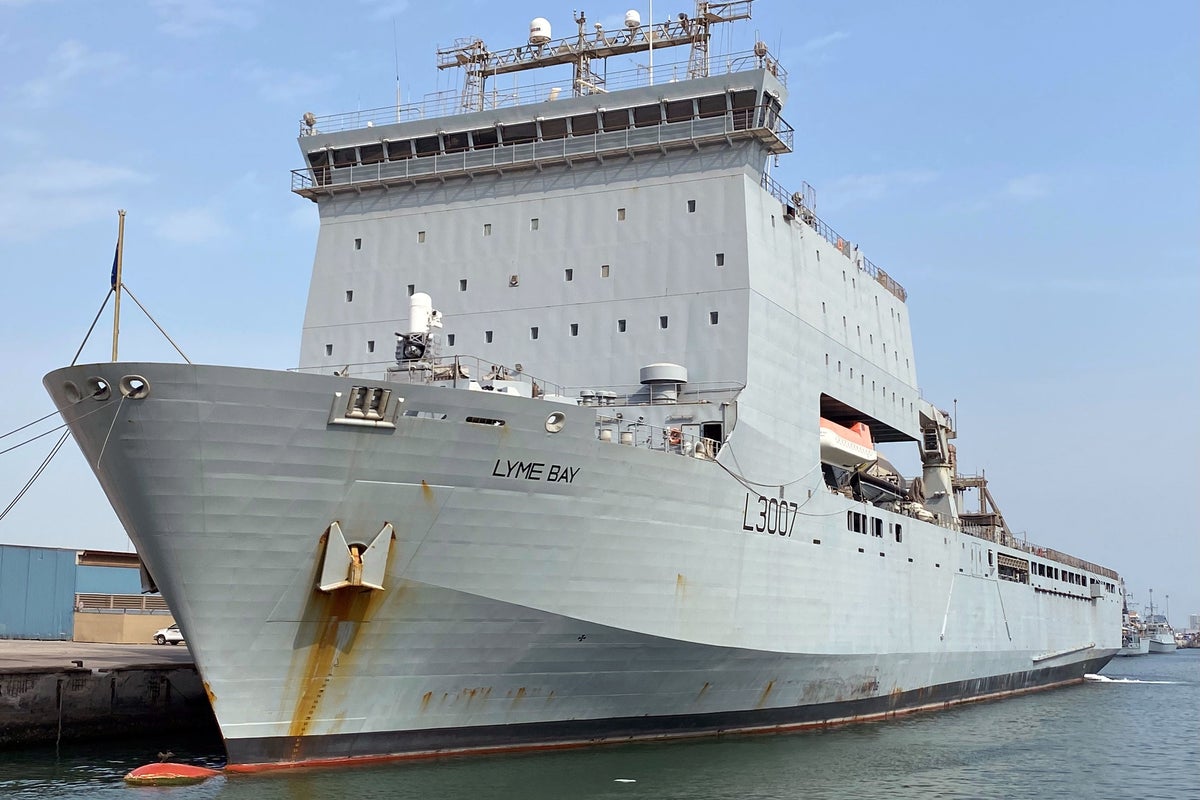
The Royal Navy is preparing to equip one of its landing ships with advanced minesweeping drones, as ministers explore options to facilitate the reopening of the Strait of Hormuz. RFA Lyme Bay is slated for a refit that will integrate high-tech equipment, transforming it into a "mothership" capable of deploying both underwater drones and crewless minehunting boats.
This upgrade is understood to be central to the Navy's strategy for utilising autonomous minehunters to clear the critical Strait of Hormuz, should such an operation become necessary. The UK is currently collaborating with international allies to develop military plans for re-establishing access through the strait, a vital shipping artery for global oil and gas supplies that has been effectively blockaded by Tehran.
Donald Trump had previously urged allies to dispatch warships to the region to aid in reopening the strait, though Western nations have thus far refrained from doing so. Any potential deployment of RFA Lyme Bay to the strait is not anticipated until the volatile situation stabilises, with the current threat posed by Iranian drones and missiles considered too significant.
A defence source said: “Whilst no decisions have yet been taken on whether these capabilities will be sent to the Strait of Hormuz, this preventative step gives ministers options should they be needed to help resume the normal flow of merchant shipping.”
Part of the Royal Fleet Auxiliary, RFA Lyme Bay is primarily a landing and transport ship and has previously been used to deliver humanitarian aid in the Caribbean and the Middle East.

The ship had been undergoing routine maintenance in Gibraltar, but was brought to a heightened state of readiness following the outbreak of the Iran war and has been undertaking training drills in the Mediterranean in recent days.
It is understood that the decision to equip the ship with anti-mine equipment followed a reassessment of the risk that civilians would have to be evacuated from Lebanon, following a ground invasion by Israeli forces.
It also follows the arrival of the destroyer HMS Dragon in the eastern Mediterranean to assist in defending Cyprus from potential missile and drone attacks.
Until the beginning of 2026, the Royal Navy had a permanent minehunting presence in the Middle East, based in Bahrain.
But the last of those vessels, HMS Middleton, was withdrawn from the region shortly before the outbreak of war for maintenance.
General Sir Gwyn Jenkins, the First Sea Lord, said the conversion of RFA Lyme Bay to a minehunting “mothership” was “a perfect example of how we are building a hybrid navy – one where crewed ships and cutting-edge uncrewed systems work together seamlessly to keep our people safe and our seas secure”.
The ship’s commanding officer, Captain Mark Colley, said: “I am proud of the work my ship’s company has done to prepare RFA Lyme Bay, and be ready to embark this kit.
“Having recently returned to high readiness, we have been put through our paces but I know we are ready to support this autonomous uncrewed kit so as to play an important role in its use.”
Navy fits ship with minehunting drones ahead of possible Hormuz deployment
Trump called Britain’s aircraft carriers ‘toys’. He couldn’t be more wrong
Actor James Tolkan of 'Top Gun' and 'Back to the Future' fame dies at 94
Prince Harry ‘hopes King will invite Meghan and children to Sandringham this summer’
Half a million people march in London for biggest anti- far-right demonstration
‘I’ve had six operations for endometriosis – we need another way to diagnose it’