Get all your news in one place.
100's of premium titles.
One app.
Start reading
Motor1
Motor1
Business
Brian Potter

Rolls-Royce Is Slamming Nightingale’s Trunk 15,000 Times

  • Rolls-Royce will cycle the Nightingale's Piano Boot 15,000 times during validation testing before deliveries.
  • Engineers are logging 350 collective weeks of global testing for Nightingale.
  • Nightingale prototypes will be validated at a private facility at speeds up to 155 mph.

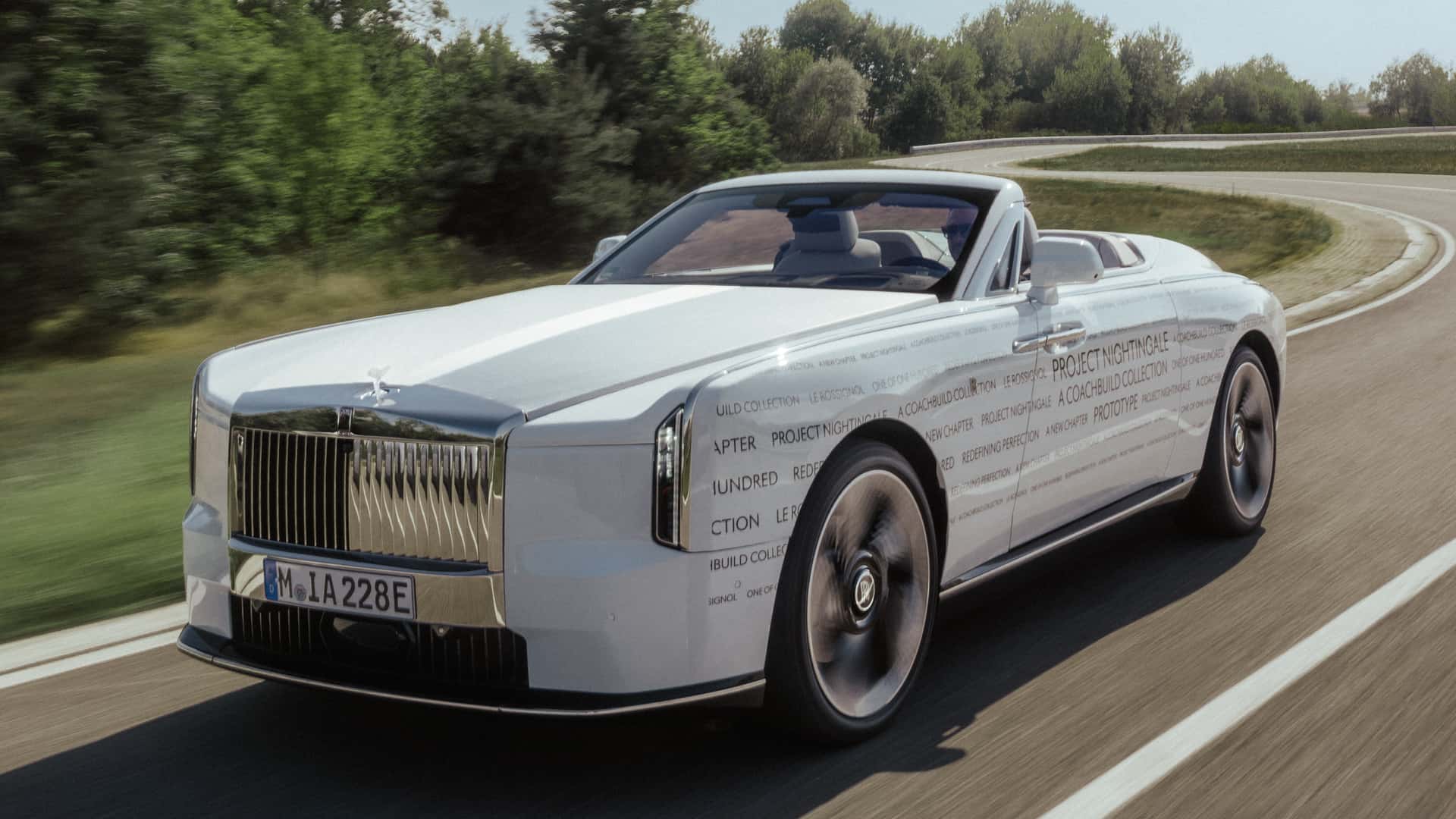
Rolls-Royce engineers are spending the next several months slamming a trunk lid. Project Nightingale, the automaker's electric, two-seat Coachbuild Collection, is undergoing global road testing ahead of deliveries planned for 2028.

The car's Piano Boot, a sideways-opening trunk unlike anything else in the Rolls-Royce lineup, will be cycled open and shut 15,000 times before any of the 100 buyers gets a key. That level of testing goes well beyond a standard durability routine.

Gallery: Rolls-Royce Project Nightingale Enters Testing

Project Nightingale Enters Global Testing

Rolls-Royce Chief Executive Chris Brownridge tied the effort to the marque's earliest days. He described Project Nightingale as a return to the spirit of Sir Henry Royce's experimental "EX" cars from the 1920s, with engineers logging 350 collective weeks of testing.

The test program covers Mediterranean coastal roads, the Arctic Circle and the deserts of the Arabian Peninsula. Prototypes climb to elevations of 9,020 feet and face wide temperature swings along the way.

Nightingale is an English rendering of Le Rossignol, the house Henry Royce built for his engineers near his winter home on the French Riviera. It is the same region where the brand once tested cars between Monte Carlo and London, and the same rigor Rolls-Royce says it is revisiting now.

Static testing already logged more than 1,430 hours of aerodynamic work, including wind-tunnel sessions, before any car turned a wheel on public roads. Rolls-Royce will validate that data at a private facility where Nightingale prototypes hit speeds up to 155 mph, chasing near-silent cabin noise at speed.

The Piano Boot's 15,000-Cycle Trial

The Piano Boot is a split trunk lid that swings open sideways on a cantilever, a mechanism Rolls-Royce has never used before. The company says the part will be "subjected to up to 15,000 cycles of opening and closing," a stress test meant to guarantee decades of smooth operation.

The brand says that push in durability exists so the mechanism "never interrupts the perfect theatre and effortless operation of this hallmark gesture for generations to come." That is a notably specific promise for a piece of trunk hardware.

The convertible top gets similarly obsessive treatment. Lined with a blend of cashmere, fabric and high-performance composites, the roof faces 10 separate tests that cover its fabric, its closing mechanism and performance at temperatures up to 176 degrees Fahrenheit.

Rolls-Royce also built a bespoke electric wind deflector for Nightingale, engineered to stop high-pressure air from looping into the cabin with the top down, tested across a range of speeds. At 226.8 inches long and seating for just two, Nightingale is an invitation-only coachbuilt EV for around 100 existing clients, with pricing reported around $4 million and up rather than a single confirmed dollar figure.


Motor1's Take: Nightingale shows how far Rolls-Royce will go to protect its reputation as cars gain complex electric hardware and bespoke bodywork. A sideways trunk and a cashmere-lined roof bring new failure points, so the brand must test rigorously to keep its "effortless" image intact.

Sign up to read this article
Read news from 100's of titles, curated specifically for you.
Already a member? Sign in here
Related Stories
Top stories on inkl right now
One subscription that gives you access to news from hundreds of sites
Already a member? Sign in here
Our Picks
Fourteen days free
Download the app
One app. One membership.
100+ trusted global sources.