
Get all your news in one place.
100’s of premium titles.
One app.
Start reading
TechRadar
TechRadar
Graham Barlow

Rokid’s new AI glasses are lighter, cheaper, and ready to challenge Meta’s Ray-Bans

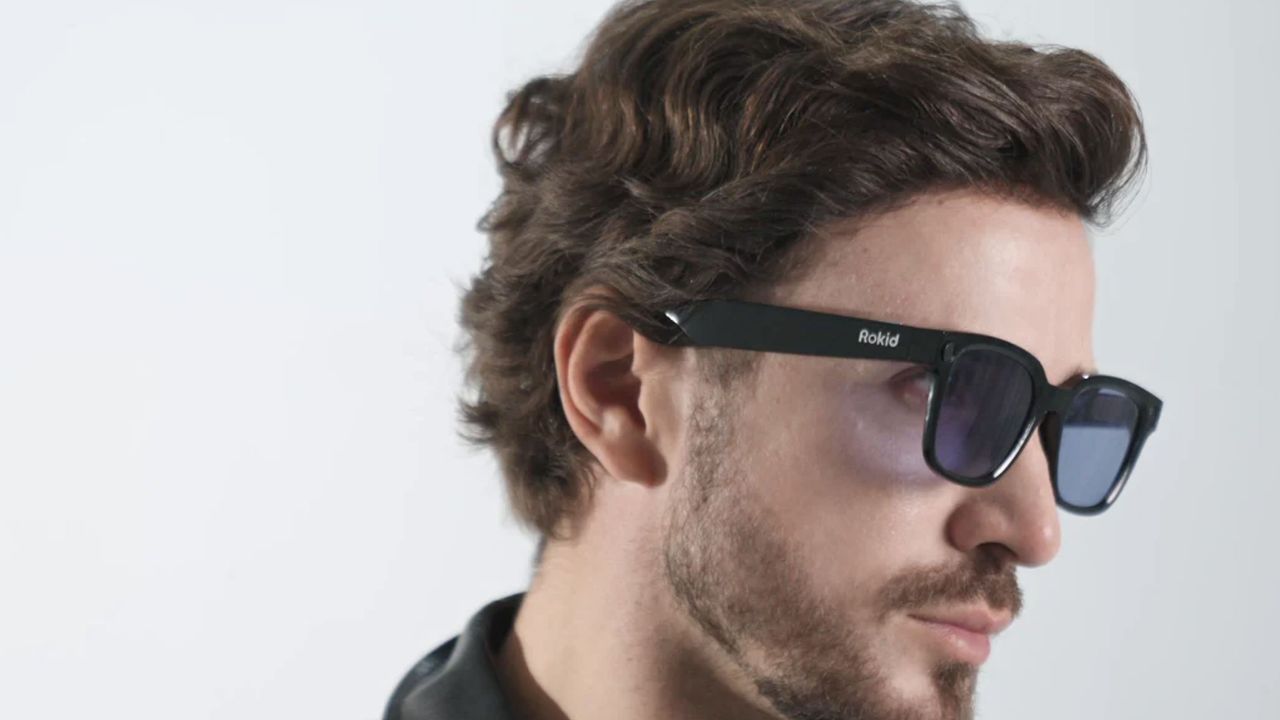
Rokid AI Glasses Style.
  • Rokid's new AI Glasses Style are available for pre-order
  • The AI-powered sunglasses don't have a screen, and use voice commands
  • The Rokid AI Glasses Style are powered by ChatGPT-5

Screenless AI wearables are quietly having a moment — and Rokid’s new AI Glasses Style may be the clearest sign yet of where smart glasses are heading.

Launched at CES as a new competitor to Meta’s Ray-Ban AI glasses, the Rokid AI Glasses Style ditch the screen and lower the price point in the process. And while the Rokid AI Glasses Style don’t carry the Ray-Ban logo on the frame, they look strikingly similar to Meta’s AI eyewear.

Interestingly, the Rokid AI Glasses Style are designed without a display at all, which allows them to stay lightweight at just 38.5 g. At $299, they’re also $80 cheaper than Meta’s offering.

The Rokid AI Glasses Style are activated with a simple voice command – “Hey Rokid”. They’re designed for voice-first AI tasks like asking about what you’re seeing, translating conversations in real time, and summarizing meetings – all without pulling out your phone.

It all works thanks to its built-in AI assistant, which is powered by ChatGPT-5.

All-day battery

Using the built-in 12 MP camera, you can take photos via a spoken command – “Hey Rokid, take a photo” – or shoot 4K video logs hands-free.

The glasses offer up to 12 hours of battery life, which should be enough to get you through a full day. There’s also an optional 3,000mAh charging case and a 1,700mAh capsule battery for extended use.

The Rokid AI Glasses Style are available now for pre-order, which gives you priority shipping and a $20 discount. The glasses can also be fitted with prescription lenses in a range of colors.

Say goodbye to your phone in 20206?

While screenless AI devices have existed for some time, they’ve so far failed to grab the public’s imagination. That appears to be changing and we’re reaching something of a turning point.

The shift arguably began with the upcoming wearable ChatGPT device from OpenAI, designed by Jony Ive, was announced. The device is rumored to arrive in the first quarter of 2026. As this year’s CES is already showing, screenless AI devices may be leading the next wave of hardware.

Razer has just unveiled its Motoko headphones at CES – an audio-first wearable that can “see” the world around you but communicate entirely through voice – and now Rokid has announced AI-powered, screenless glasses that look capable of giving Meta’s Ray-Ban sunglasses a real run for their money.

If Rokid is right, 2026 won’t be about replacing your phone. It’ll be about needing it a little less, so long as the sun is out.

TechRadar will be extensively covering this year's CES, and will bring you all of the big announcements as they happen. Head over to our CES 2026 news page for the latest stories and our hands-on verdicts on everything from wireless TVs and foldable displays to new phones, laptops, smart home gadgets, and the latest in AI. You can also ask us a question about the show in our CES 2026 live Q&A and we’ll do our best to answer it.

And don’t forget to follow us on TikTok and WhatsApp for the latest from the CES show floor!

Sign up to read this article
Read news from 100’s of titles, curated specifically for you.
Already a member? Sign in here
Related Stories
Top stories on inkl right now
One subscription that gives you access to news from hundreds of sites
Already a member? Sign in here
Our Picks
Fourteen days free
Download the app
One app. One membership.
100+ trusted global sources.