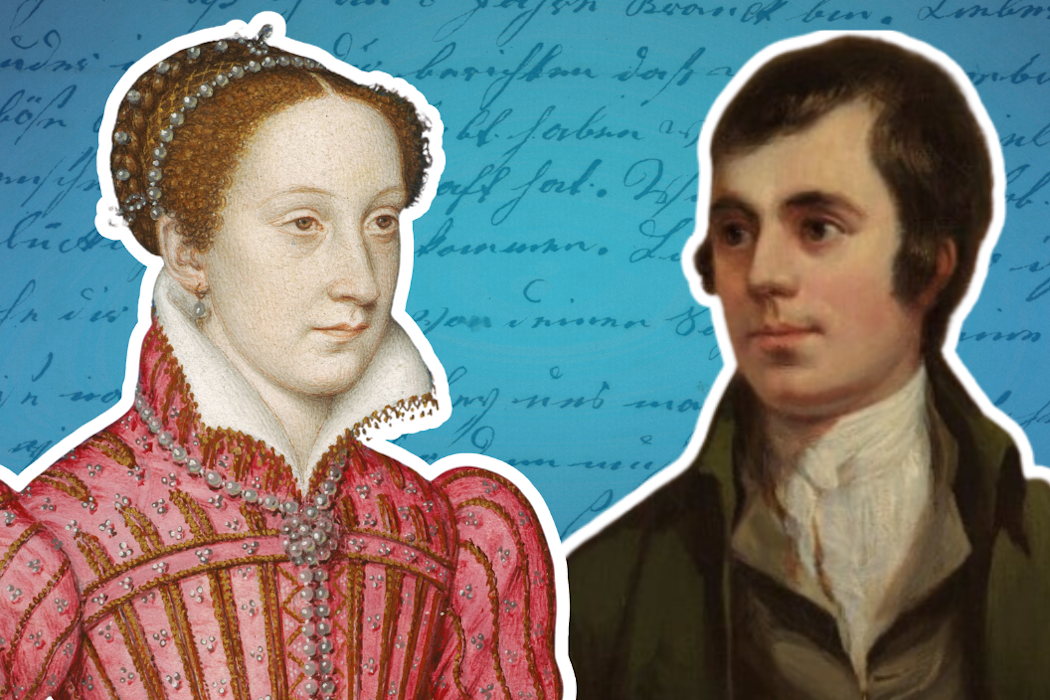
Internationally synonymous with Scottish identity, Robert Burns is Scotland’s national bard, a status he has achieved through his popularity since his death in 1796. He wrote some of the country’s most famous poems, including the satirical ode, Address to a Haggis and the rousing Scots Wha Hae. His most well-known work, the emotive Auld Lang Syne, is belted out the world over every New Year’s Eve.
On the 25th of January each year, Scots celebrate his life with good food (including the haggis he declared “Chieftain o’ the Puddin-race”) and recitations of his poetry. This Burns Night, I urge you to read one of the Bard’s lesser-known works from 1790, Lament of Mary, Queen of Scots, on the Approach of Spring.