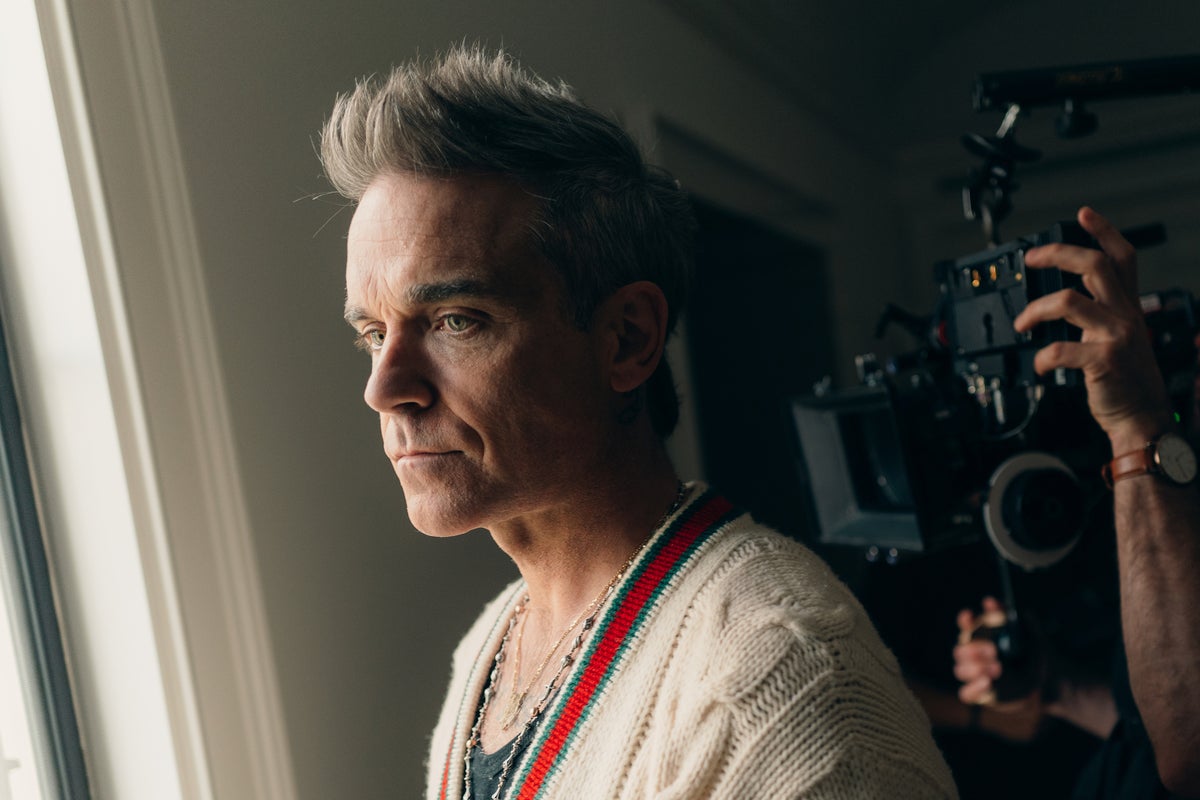
If the true legacy of a pop act is measured not in continued record sales or Spotify streams, but in how frequently their songs are drunkenly belted out in karaoke bars or pubs after football matches, then there are few superstars like Robbie Williams. From “Angels” and “Millennium” to “Rock DJ” and “Feel”, the impish charisma of Stoke-on-Trent’s favourite son is still remembered and adored more than 20 years on. But Robbie Williams, Netflix’s new four-part docuseries on the musician, tells a different story: one of addiction, despair, and ultimately, reconciliation.
His is the tale of a 16-year-old kid who joins a boy band (Take That) only to end up performing routinely in front of 90,000 fans hopped up on a cocktail of drugs and alcohol. It is a familiar story of fame, excess and a late-in-life descent into civilised domesticity. “If I’m not on stage,” Williams says. “I’m in bed.” No lie: Williams narrates much of his story from beneath a duvet. Swaddled in a protective armour of goose down and Egyptian cotton, he recounts a retrospective fuelled by self-castigation (he calls his show “end-of-the pier-nonsense”) and a futile search for credibility (“I want to write ‘Karma Police’ and I’m writing ‘Karma Chameleon’,” he says of “Rock DJ”).