
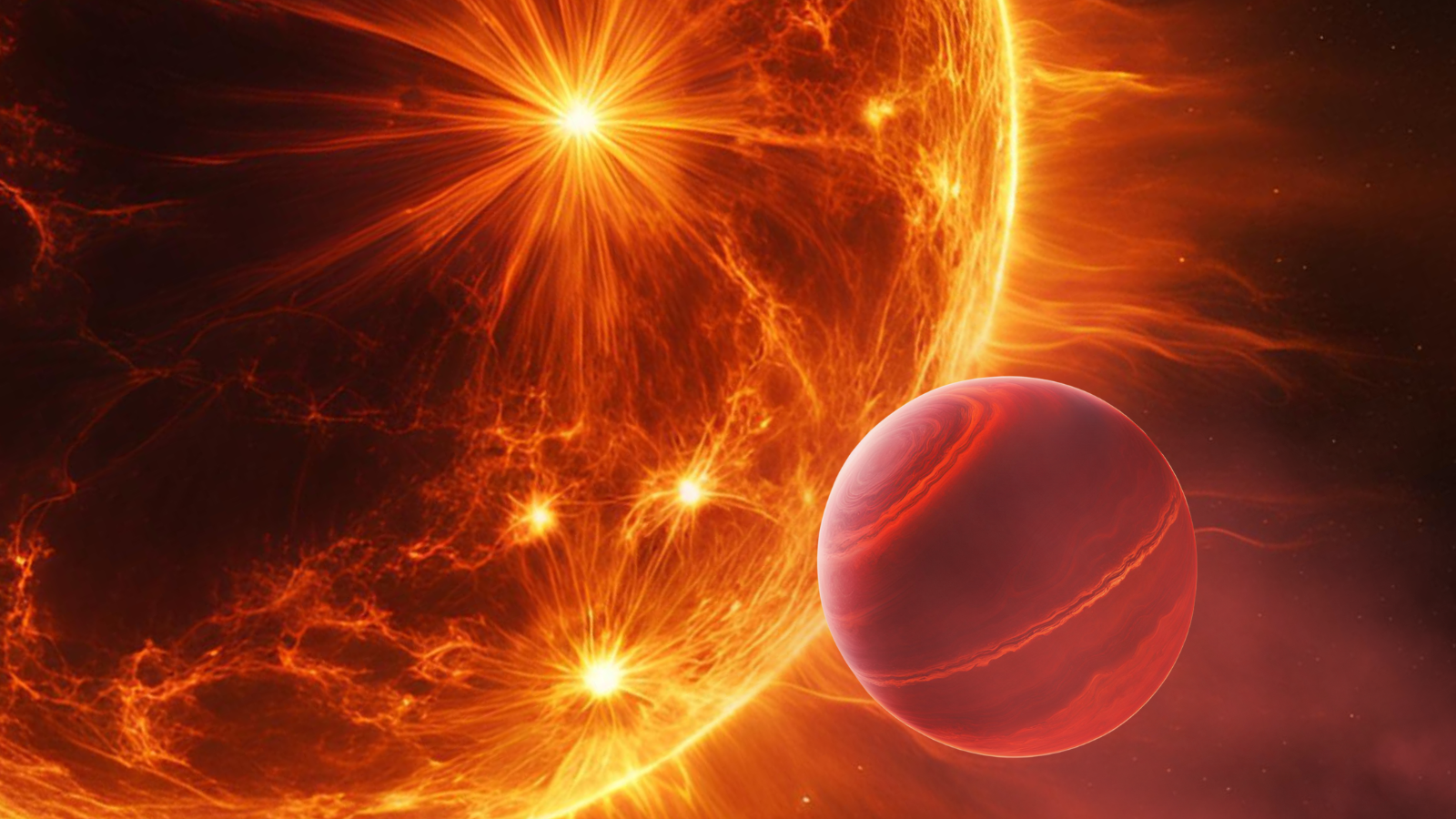
Astronomers may have inadvertently complicated the mystery of how strange "roasting marshmallow" planets form. Using the Gemini South telescope, researchers found that the "hot and puffy" ultra-hot Jupiter planet WASP-121b may have formed closer to its star than previously believed, challenging what we know about how planets form.
Since the discovery of the first planet outside the solar system in the mid-1990s, the catalog of extrasolar planets, or "exoplanets," has grown to over 5,000 entries. Many of these exoplanets are like nothing found in our solar system. The hot and ultra-hot Jupiters are prime examples of this, being gas giant planets many times the mass and size of Jupiter that are so close to their stars that they can complete an orbit in a matter of a few hours.