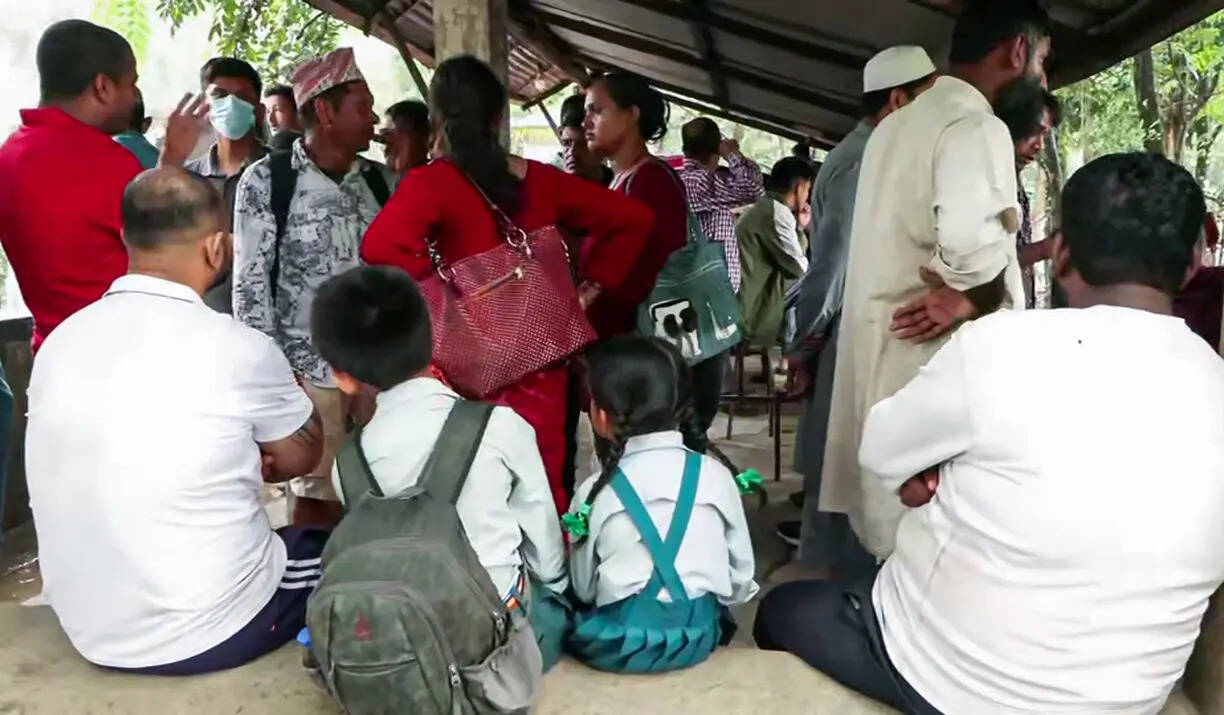
TRISHULI BAZAAR: Nobody in Trishuli Bazaar -- and the cut-off Rasuwa district upstream -- unwinds anymore. A bag with critical documents, some dry food and a bottle of water remains close to the door. Shoes stay on. Phones remain fully charged and clutched tightly in hands even as one "sleeps". When Trishuli rises, people scamper uphill. When it falls, they tread back cautiously to what remains of their homes and businesses. Then another warning arrives from upstream and the climb starts again.
Get breaking news anytime, anywhere. Download the TOI app now!
Your correspondent watched that cycle repeat through Saturday night and Sunday morning.
Around 3.30am Sunday, word began spreading that Bhote Koshi had risen sharply upstream. Phones started buzzing. Police and local authorities warned people in downstream areas to stay away from the river and move towards safer ground. Sleep disappeared.
Shops and structures that once stood closest to Trishuli in the bazaar are already gone. Every fresh rise in the water now looks like the beginning of another disaster.
“It's not possible to sleep,” Dawa Tamang, 42, proprietor of a garment store, told TOI . He had moved uphill four times since the previous morning. “The river surged nearly three metres, swallowed our lower terrace, and then pulled back. Just as we started sweeping the silt away, word came of another surge upstream. We ran again.”
The fresh water moved downstream through the morning. At one stage Trishuli was around three metres above danger level in parts of Dhading before the surge gradually weakened farther south. By the time it reached Narayani, officials said it had dropped below danger level.
That offered relief on paper. Here, it did not feel like relief.
A falling river now only means that people can descend for a few hours. They inspect damage, move belongings, wash away fresh layers of silt and try to eat. But they remain ready to leave again.
“Every time a phone vibrates with a group text, your heart stops,” high school science teacher Bina Gurung, 28, said. “The kids are exhausted, the elders are anxious, and none of us dare to take off our jackets before dawn.”
Night amplifies everything. Power has flickered. The valley turns completely dark. Trishuli cannot always be seen, but it can be heard below — a constant roar that people now listen to for changes.
“The fear is psychological as much as it is physical,” relief worker Ramesh Adhikari, 34, told TOI . “Everyone is sleeping in their boots, clutching their phones, listening to the sound of rain or for police sirens or neighbours shouting.”
Rescue personnel, govt officials, aid workers and journalists have filled surviving lodges, guesthouses and homestays. Rooms on higher ground got sold-out first. Local families have opened spare bedrooms, living rooms and attics.
Such is the load on hotels and homestays that Nepal's physical infrastructure minister Sunil Lamsal came to Trishuli Bazaar by a chopper, but had to return to Kathmandu hours later because he could not find accommodation. Along with home minister Sudhan Gurung, Lamsal is the closest aide to PM Balendra Shah.
“In 30 years of running this inn, I have never seen anything like it,” River View owner Sarita Shrestha, 51, told TOI . She had turned her family’s attic into sleeping space. “People are sleeping four to a bed, but even those staying lower down spend the whole night asking to be moved uphill.”
Barrier lake has drained naturally, easing fresh flood threat: China