Get all your news in one place.
100's of premium titles.
One app.
Start reading
The Economic Times
The Economic Times
Debjit Sinha

Rihanna launched Fenty Beauty in 2017 with an estimated 50% stake; 4 years later, Forbes valued the cosmetics company at $2.8 billion

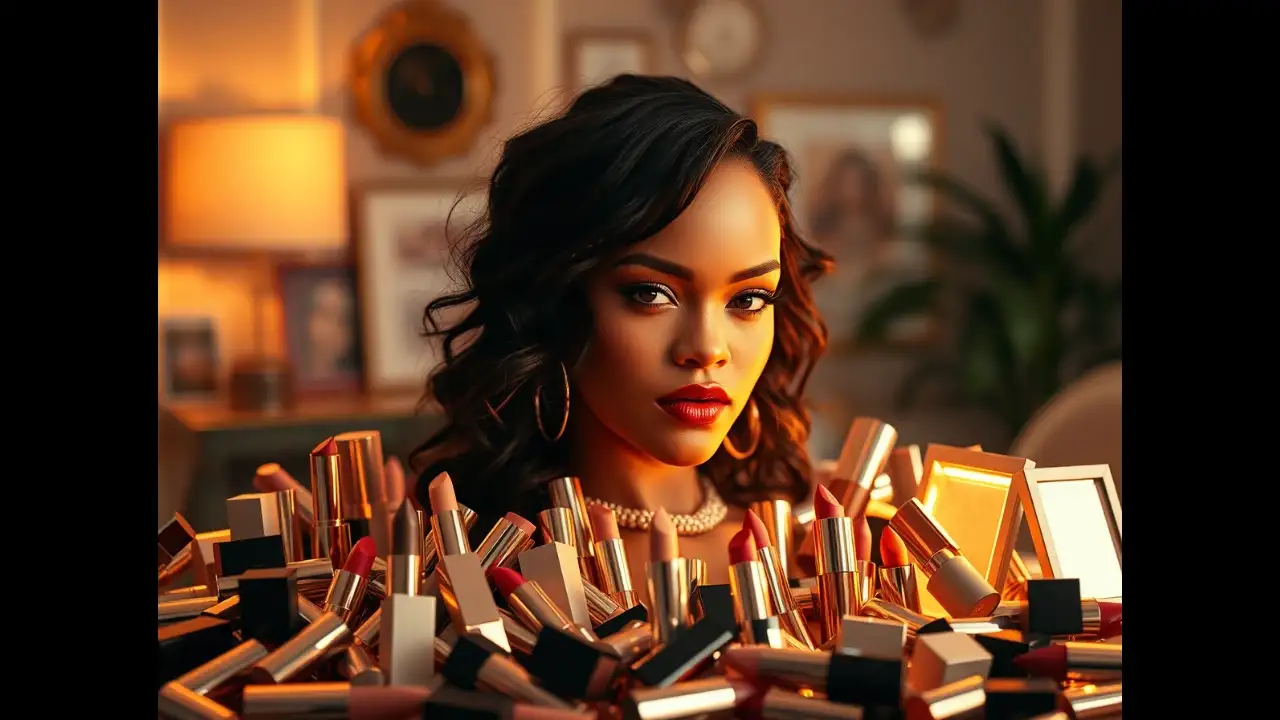
Rihanna’s rise from global music superstar to beauty-industry billionaire offers one of the most notable celebrity business stories of the modern era. When she launched Fenty Beauty in 2017, the goal was not simply to attach a famous name to another cosmetics line. Rihanna wanted to create products that made a much broader range of consumers feel represented, particularly people who had historically struggled to find suitable makeup shades. Four years later, Forbes reported that Fenty Beauty had become the central asset behind Rihanna’s billionaire status, estimating the company’s value at $2.8 billion and confirming that Rihanna owned 50% of the business. Forbes estimated her overall fortune at $1.7 billion in 2021, with approximately $1.4 billion attributed to her stake in Fenty Beauty.

The foundation for that success was a business partnership with French luxury giant LVMH, the parent company of brands across fashion, cosmetics and retail. Fenty Beauty operated as a 50-50 joint venture between Rihanna and LVMH, giving the singer creative influence while providing the company with the infrastructure and global expertise of one of the world’s largest luxury groups. The partnership had been developed before the product launch, with LVMH and Rihanna agreeing in 2016 to create the cosmetics business. When Fenty Beauty reached consumers in 2017, it entered a highly competitive beauty market but differentiated itself through an unusually broad approach to shade selection and representation.
READ ALSO: This wind-turbine nacelle once sat atop a giant machine in the Dutch city of Eindhoven; designers turned the 10-metre-long retired shell into a tiny house

Fenty Beauty’s History

One of the defining moments in Fenty Beauty’s history was its foundation range. Rather than launching with a narrow selection of shades and gradually expanding, the brand introduced 40 foundation shades at launch, deliberately addressing a longstanding challenge for consumers with deeper or less commonly served skin tones. LVMH’s own history of the brand notes that the initial range contained 40 foundation shades and that the company was created around Rihanna’s ambition to make beauty products more inclusive. The brand’s positioning helped turn inclusivity from a marketing message into a central part of its product strategy, while its campaigns featured models representing different skin tones, cultures and appearances.

The commercial response was equally striking. According to Forbes, Fenty Beauty generated more than $550 million in annual revenue during its first full calendar year in 2018, surpassing several other prominent celebrity-backed beauty businesses at the time. That performance demonstrated why Rihanna’s venture was more than a conventional celebrity endorsement. The brand had created a product-market strategy that combined Rihanna’s enormous cultural influence with a clear consumer proposition. Its availability through Sephora, which is also owned by LVMH, provided an established retail channel, while online sales expanded the company’s reach beyond physical stores.

The financial significance became clearer in August 2021, when Forbes published its detailed assessment of Rihanna’s wealth. The publication estimated Fenty Beauty at $2.8 billion and calculated that Rihanna’s 50% ownership represented approximately $1.4 billion of her fortune. That valuation helped explain why her financial story was increasingly being shaped by entrepreneurship rather than music alone. Forbes estimated her total wealth at $1.7 billion, with the remainder coming largely from her stake in Savage X Fenty, along with earnings associated with her entertainment career and other ventures. The figures illustrated how ownership in a rapidly growing consumer brand can become substantially more valuable than traditional celebrity income alone.

READ ALSO: In 1906, diver William Walker began working in darkness beneath a sinking English cathedral; by 1911, his underwater work had helped save the building from collapse

Fenty Beauty Story

Fenty Beauty’s story also highlights the changing relationship between celebrity influence and entrepreneurship. Rihanna already had worldwide recognition when the cosmetics company launched, but recognition alone could not guarantee a multibillion-dollar valuation. The business needed products, distribution, branding and a consumer proposition capable of sustaining demand. Rihanna’s involvement gave the company a powerful connection to pop culture, while LVMH supplied corporate and retail capabilities. The combination created a model in which a celebrity’s personal brand became part of a broader commercial ecosystem rather than functioning simply as advertising. Forbes’ assessment of the company’s value reflects the scale that this strategy achieved within only a few years.

Another important element of the Fenty Beauty story is the timing of its inclusivity strategy. Beauty consumers had long discussed the difficulty of finding foundations and complexion products that matched a wide variety of skin tones. Fenty Beauty entered that conversation with a launch range designed around diversity from the beginning. LVMH says the brand was created for people across different shades, personalities, cultures and races, while its launch included 40 foundation shades. That approach helped establish Fenty Beauty as a widely discussed example of how a clearly defined consumer need can become the foundation of a global brand strategy.

Rihanna’s Fenty Beauty

Rihanna’s Fenty Beauty journey therefore represents more than a remarkable celebrity wealth milestone. It is a case study in how ownership, strategic partnerships, product differentiation and cultural relevance can combine to build a major consumer business. Launched in 2017 with Rihanna holding half of the joint venture, Fenty Beauty reached a Forbes-estimated $2.8 billion valuation by 2021, making the company the dominant component of her estimated $1.7 billion fortune at the time.

READ ALSO: In 1999, Metallica's James Hetfield bought a 1,150-acre Marin ranch, then gave up development rights. 19 years later, 1,000 acres were protected as working agricultural land forever

The numbers are striking, but the larger business lesson lies in the strategy behind them: identify an underserved audience, build products around that audience, pair creative vision with operational expertise and create a brand that extends beyond the fame of its founder. Fenty Beauty’s rapid rise remains one of the defining celebrity entrepreneurship stories of the 2010s and early 2020s.

Sign up to read this article
Read news from 100's of titles, curated specifically for you.
Already a member? Sign in here
Related Stories
Top stories on inkl right now
One subscription that gives you access to news from hundreds of sites
Already a member? Sign in here
Our Picks
Fourteen days free
Download the app
One app. One membership.
100+ trusted global sources.