Get all your news in one place.
100's of premium titles.
One app.
Start reading
AAP
AAP
Lloyd Jones

Rich biodiversity sparks call for harbour's protection

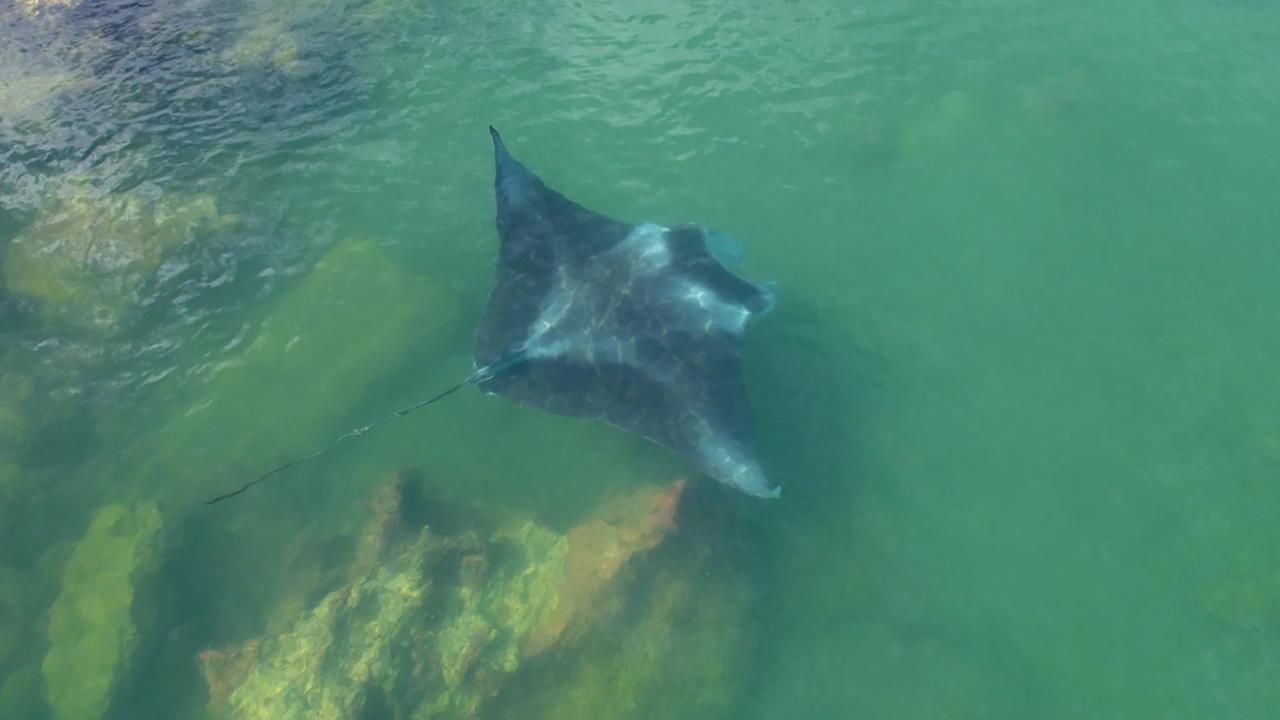
Manta rays are among the numerous types of sea life that make Darwin Harbour an important ecosystem. (PR IMAGE PHOTO)

Recent sightings of manta rays circling off urban beaches highlights the impressive biodiversity of Darwin Harbour, researchers say.

But there are concerns industrial and urban development could harm the harbour following recent toxic leaks from gas plants amid plans to build more.

A new report says Darwin Harbour is one of the most ecologically and biologically important mangrove estuarine ecosystems in the Indo-Pacific region.

Ben Fitzpatrick, lead researcher of the study by marine science consultancy Oceanwise, said it was one of the most pristine parts of the world's coasts with a unique estuary ecosystem.

"The diversity of species approaches that of the renowned Ningaloo Reef in Western Australia - one of Australia's most celebrated and protected marine icons."

The report found the harbour is home to 36 of the world's mangrove species, with 55 per cent of the species found in the Indo-Pacific.

It found the harbour had 529 species of bony fish, including barramundi, mangrove jacks, bream, and flatheads, comparable to Ningaloo Reef, which is home to 550 species.

The harbour holds more than 1000 species of crustaceans such as mud crabs and prawns, 71 species of sharks, rays, skates, and sawfish and up to 800 species of sponges.

A marine turtle species that can be found in Darwin Harbour
Six of the seven critically endangered marine turtle species live in Darwin Harbour. (PR IMAGE PHOTO)

Four of the five critically endangered sawfish species, six of the seven marine turtle species and 15 sea snake species also live in the harbour which has seven species of dolphin including threatened snubfins.

Dr Fitzpatrick told reporters on Thursday the harbour deserved the same recognition and protection as any of Australia's great reef systems.

"The recent sightings of manta rays performing loops in Darwin Harbour as they hunt for prey is a living testament to the richness of this ecosystem," he said.

Environment Centre NT executive director Kirsty Howey said the harbour was at risk of being harmed forever by a planned Middle Arm gas and petrochemical hub and the constant threat of leaks from heavy industry.

She feared the Northern Territory's Country Liberal Party government would fast-track development laws to override environmental protections in the harbour and tip it over the edge beyond repair.

Dr Kirsty Howey and Dr Ben Fitzpatrick
Dr Kirsty Howey and Dr Ben Fitzpatrick discuss a report highlighting Darwin Harbour's biodiversity. (Lloyd Jones/AAP PHOTOS)

Nature-based tourism was big business in the NT with fishing charters, harbour cruises and wildlife watching tours alone generating over $1 billion for the local economy each year, Dr Howey said.

"We don't want it trashed by industrial development."

Dr Howey cited an oil spill from Japanese gas giant INPEX in 2025, iron ore run off resulting in a mass fish kill in April 2026, and leaking US military fuel tanks built without proper planning permission.

Migratory shorebird expert Amanda Lilleyman said Darwin Harbour was a critical stopover and feeding area for 25 migratory shorebird species on their long-distance migrations from China, Russia and Alaska.

Fourteen of Australia's 15 endangered shorebirds live in Darwin Harbour but face threats from industrial and urban development causing habitat loss and pollution, Dr Lilleyman said.

Sign up to read this article
Read news from 100's of titles, curated specifically for you.
Already a member? Sign in here
Related Stories
Top stories on inkl right now
One subscription that gives you access to news from hundreds of sites
Already a member? Sign in here
Our Picks
Fourteen days free
Download the app
One app. One membership.
100+ trusted global sources.