
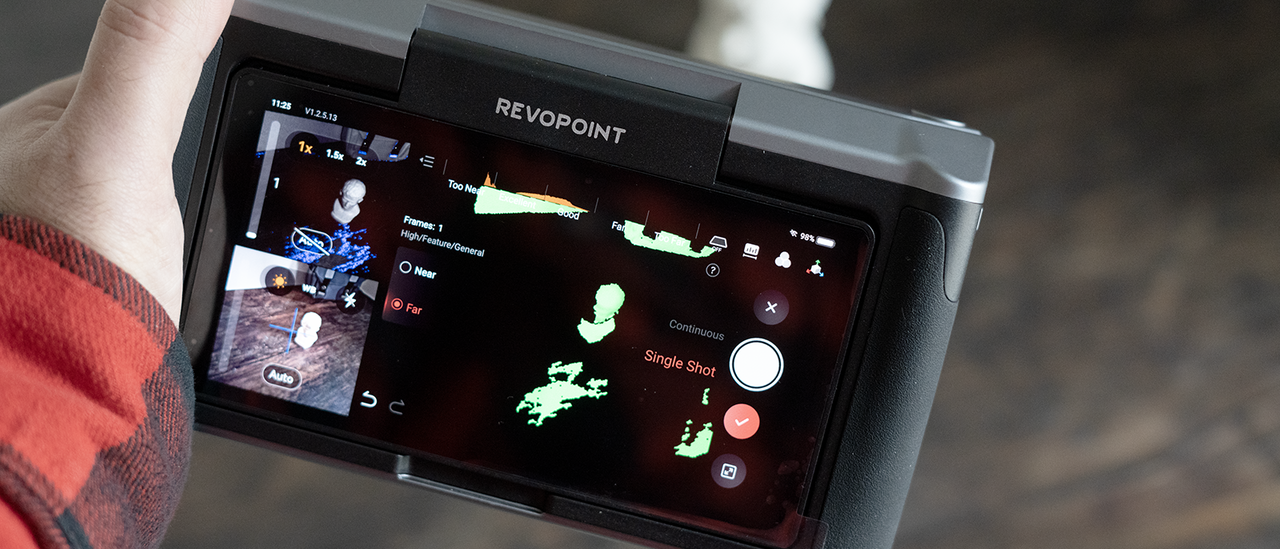
3D scanning has become relatively mainstream for digital creators and the more niche areas of engineering and design in recent years. The market is pretty full, with options of all kinds, from those that aim to capture small objects using a turntable to models that can capture far larger subject matter. They all operate in a similar way, using an array of cameras, sometimes with colour capture too, alongside some clever software, turning that data into usable geometry that can be taken further and incorporated into different projects, be that as a game asset or as a model for an architect or engineer.
The biggest problem facing a lot of these devices is twofold. Firstly, they tend to be locked into a specific scale, being good at capturing only the large or the small. Secondly, the majority of 3D scanners need to be tethered to a computer. This is for transfer, which is fine, but also for utilizing the computing power to process the data into a usable mesh.













