Get all your news in one place.
100's of premium titles.
One app.
Start reading
Sports Illustrated
Sports Illustrated
Sport
Liam McKeone

Revisiting the Three Blockbuster Trades That Brought the Knicks NBA Championship

The Knicks are NBA champions, and they’re a title team unlike anything we’ve seen in a long time.

New York looked shaky in the opening three games of the playoffs against Atlanta before waking up and deciding to obliterate everything in its path. The Knicks went on an absurd winning streak that stretched from Game 4 of the first round to Game 3 of the NBA Finals, ultimately going 16–3 before raising the Larry O’Brien trophy. And they did it all without a single homegrown player in the starting five.
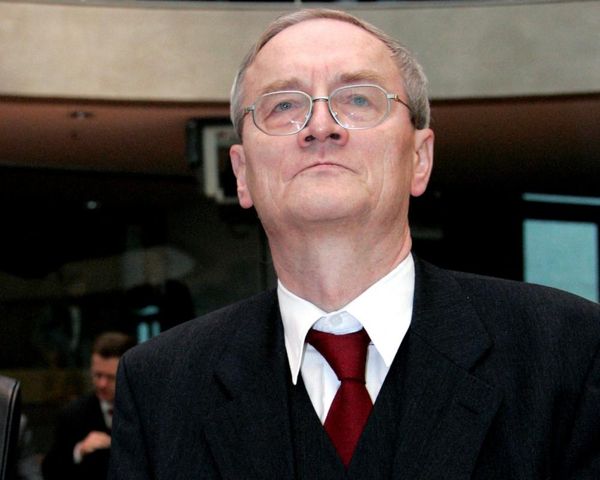
Yes, the reigning champions’ entire starting lineup was acquired rather than drafted and developed; the most famous example is Jalen Brunson, the Finals MVP who was signed as a restricted free agent. It’s quite unusual to see that sort of roster assembly in the NBA, and even more unusual to see it win a championship—every title-winner of the century has featured at least one home-grown talent in their starting five. The reason why is simple, too. It’s difficult beyond words to make several smart, consecutive acquisitions in a row that wind up meshing perfectly.

But these Knicks did it. Starting with the Brunson signing, the New York front office led by Leon Rose and William Wesley executed brilliant trade after brilliant trade to build a contender almost entirely from scratch. It will be remembered as one of the great stretches of front office moves in modern NBA history.

At the center of those moves were three blockbuster trades that brought OG Anunoby, Mikal Bridges and Karl-Anthony Towns to the Big Apple. These three trades were huge decisions, and even one of them going wrong could’ve easily derailed the Knicks’ ascent to greatness. But they worked out exactly the way New York hoped and planned.

Let’s revisit those trades in an effort to further understand at the deepest level how the Knicks’ championship roster came to be.

Honorable mentions

New York Knicks guard Josh Hart speaks to the media after the Knicks defeat the San Antonio Spurs.
Josh Hart, one of the ‘Nova Knicks, was the consummate role player for the 2026 NBA champions. | Scott Wachter-Imagn Images

Jose Alvarado, Josh Hart

No conversation about how the Knicks won the title can be had without Hart and Alvarado, and both were acquired by trade as well. Hart came to N.Y.C. at the 2023 trade deadline as part of a four-team trade involving a wide assortment of bench players like Cam Reddish and Matisse Thybulle. Alvarado, a Brooklyn native, returned home at this year’s deadline as the Knicks sent Dalen Terry and two second-rounders to the Pelicans for his services. It is no exaggeration to say New York doesn’t win this year’s championship without the contributions of these two role players.

But the trades that brought them to town aren’t blockbusters by any stretch of the imagination. So they don’t quite fit the spirit of this article. Thus, honorable mentions.

December 2023—OG Anunoby trade

OG Anunoby Game 3
Anunoby’s Game 3 tip-in will go down as one of the great shots in Finals history. | Erick W. Rasco/Sports Illustrate

The trade in essence: RJ Barrett, Immanuel Quickley for Anunoby

What it looked like at the time

The Knicks were a rising team in 2023–24 after it had become obvious Brunson was a legit star scorer. Anunoby had been on the trade block for a while as the Raptors slowly disassembled their championship roster and made for an obvious clean fit alongside Brunson. The real complicating factor was Anunoby becoming extension-eligible in the summer of ‘24; whoever traded for him didn’t just have to give up assets but also ink him to an extension worth hundreds of millions with very little negotiating power. It made for something of a risky proposition given Anunoby’s offense lagged far behind his defense.

Making it more risky for New York in particular? Barrett and Quickley were the franchise’s most successful draft-and-develop stories in decades. They had their flaws but were also still young and growing into their games. Sacrificing young talent in an attempt to take a shortcut to contention is something the Knicks have tried several times over the last 20 years and it consistently set them back as an organization. Even with Anunoby only being 26 at the time it felt like there was a real chance this turned into a “Same old Knicks” situation where they give up early on a young core for a more expensive, shiny option.

How it worked out perfectly

The Knicks did end up having to sign Anunoby to a pricy deal that summer worth over $200 million. But, obviously, it proved a risk worth taking. He continued to play defense at an All-NBA level and shot more three-pointers playing off Brunson while maintaining his efficiency. New York would have been pleased with the deal in retrospect if that’s all he did. But instead, Anunoby saved his best for last, leveling up during the playoffs as a scorer—he averaged over 20 points per game after scoring only 16 a night during the regular season. And he was the architect of one of the great moments in Finals history when he soared in for a put-back to cap off the Knicks’ historic 29-point comeback in Game 4.

No same old Knicks here.

July 2024—Mikal Bridges trade

Mikal Bridges and Jalen Brunso
Bridges has proven inconsistent offensively with the Knicks but his defense has been crucial. | Geoff Burke-Imagn Images

The trade in essence: Five unprotected Knicks’ first-round picks, Bucks’ 2025 first-round pick for Bridges

What it looked like at the time

The initial reaction to the massive Bridges trade was universal: holy overpay. The Villanova product had proven himself a durable and reliable defender with the Suns and showed he could shoulder some of the offensive load with the Nets. But five unprotected first-round picks is the sort of package you offer for someone like Kevin Durant. Bridges was good but clearly not at that level and it felt like he’d have an awfully hard time living up to that price point. Even if his fit alongside the recently-acquired Anunoby was clear as day and the built-in chemistry advantage of adding another Villanova grad could make the transition easier.

Bridges was respected as a two-way talent at the time of the trade but it wasn’t clear who the Knicks were bidding against by forking over every tradable draft pick they had at their disposal. It also wasn’t clear that doing so would elevate them from good to great.

How it worked out perfectly

The concerns about the Bridges trade ended up being valid. He showed up to opening night of the 2024–25 season with a weird hitch in his jumper that took a while to iron out and generally hasn’t been anywhere near the same level offensively as we saw in Brooklyn, for whatever reason. As a result Bridges became a very highly-paid fourth option in the starting lineup, whereas the NBA world thought the Knicks were paying for a legit No. 2 option. His defense proved as deadly in tandem with Anunoby (and as critical in covering Brunson’s weaknesses) as expected but even entering this year’s postseason the trade still felt like an overpay.

Now? Nobody cares. Bridges played great defense throughout the Knicks’ playoff run, and while his shot-making largely disappeared in the Finals he went on an absurd heater in the earlier rounds that played a big part in New York’s dominance. From Game 6 of the first round to Game 4 of the Eastern Conference finals, Bridges scored 18 points per game while shooting 62.8% from the floor, including a truly ridiculous 71% on two-point shots. He may have cost a lot relative to his responsibilities of playing good defense and hitting a shot every now and again, but Bridges showed up in a huge way when it mattered most. “F--- them picks,” indeed.

October 2024—Karl-Anthony Towns trade

Karl-Anthony Town
Towns was a perfect fit on this year’s Knicks. | Brad Penner-Imagn Images

The trade in essence: Julius Randle, Donte DiVincenzo, Pistons’ first-round pick for Towns

What it looked like at the time

This trade was a stunner, executed on the eve of the ‘24–25 season and completely out of left field. The gut reaction was that it was risky. Randle had played a big part in reviving the Knicks, laying the groundwork for the Brunson acquisition by turning himself into a great all-around forward in New York. DiVincenzo was a free agent success story and a core member of the “‘Nova Knicks” who clearly loved playing with Brunson and Hart. Moving two players who were known positives around Brunson for anybody was a big swing.

For Towns? It felt even bigger. His offensive skillset was both unique and effective in equal measure; the dividends paid by pairing him with Brunson were clearly going to be significant. But KAT’s defensive issues were equally as well-known. He was a total minus on that end and so was Brunson, leading to valid questions about whether the offensive pay-off was worth what they were giving up defensively. And Towns only got traded in the first place because of a gigantic contract extension would pay him an average of well over $50 million annually in the coming seasons. The upside was clear, but so too were the pitfalls.

How it worked out perfectly

Little did the Knicks know they were acquiring the perfect foil to Victor Wembanyama. Towns improved defensively across the board over his first year in New York and was nothing less than outstanding against Wemby in this year’s Finals. His combination of agility and size is unlike any other big in the NBA and is exactly what’s required to defend Wembanyama every possession. On the other end, Towns’s shooting ability threw a wrench into the Spurs’ core game plan of keeping Wemby as close to the rim as possible. He was a matchup problem for San Antonio unlike any other center the West champs had faced. That was on full display when the Knicks stole the first two games of the Finals on the road; they outscored the Spurs by 25 points in Towns’s Game 1 and 2 minutes. He may have won Finals MVP instead of Brunson if not for the foul trouble that plagued him afterwards.

It’s hard to imagine New York winning a title without Bridges or Anunoby. It’s genuinely impossible to imagine it without Towns. He was the heart and soul of the team in the most important games of the season while doing the most important job of hampering the opponent’s best player at every opportunity. Now he’s a champion and the Knicks’ final, biggest blockbuster trade proved the most brilliant of them all.


More NBA Finals on Sports Illustrated

Listen to SI’s NBA podcast, Open Floor, below or on Apple and Spotify. Watch the show on SI’s YouTube channel.

Sign up to read this article
Read news from 100's of titles, curated specifically for you.
Already a member? Sign in here
Related Stories
Top stories on inkl right now
Our Picks
Fourteen days free
Download the app
One app. One membership.
100+ trusted global sources.