Get all your news in one place.
100's of premium titles.
One app.
Start reading
International Business Times UK
Politics
Chelsie Napiza

Retired US General Says US Military Leaders Are Duty-Bound To Reject Illegal Orders From Trump – Army Revolt In Order?

A retired US Army lieutenant general who spent nearly four decades in uniform has stated plainly that many senior military commanders are currently asking themselves whether they can lawfully comply with orders from Donald Trump, and that when an order is unlawful, officers are obligated to refuse it.

In a recent interview, retired Lieutenant General Mark Hertling, former commanding general of US Army Europe under President Obama and commander of the 1st Armored Division during the 2007 Iraq surge, laid out the three competing loyalties that govern every officer in the American military. The first is the Constitution. The second is superiors, but only insofar as their orders are lawful. The third is the soldiers under their command. It is precisely the tension between these three, Hertling said, that is now playing out in real time inside the US chain of command.
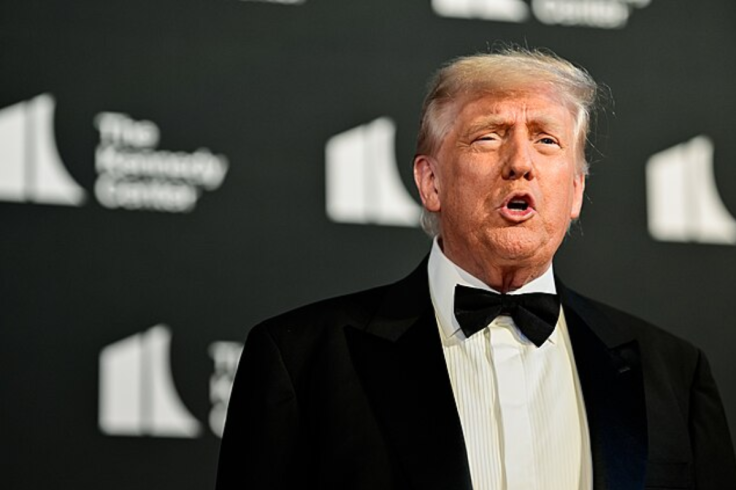
His remarks arrive as Trump threatened on 6 April 2026 to destroy 'every bridge in Iran' and 'every power plant' in the country if Tehran did not reopen the Strait of Hormuz by an 8 p.m. deadline — a threat that legal scholars, former JAG lawyers, and over 100 international law experts have identified as constituting war crimes under the Geneva Conventions and the DOD's own Law of War Manual.

Hertling's Three Loyalties: Constitution First, Superiors Second — Only If Lawful

Hertling chose his words with deliberate precision in the interview. 'When you're an officer in the United States, you're loyal to a couple of things,' he said. 'You're primarily loyal to the Constitution. You are also loyal to your superiors if they give a lawful order. When they start giving unlawful orders, you find a way to push back on them and make sure they adjust their approach. But you also are loyal to the soldiers that run your command.'

He then named the consequence directly: 'Those three loyalties sometimes were conflicting.' The significance of that framing cannot be overstated. Hertling is not describing a theoretical tension from military ethics textbooks.

He commanded 60,000 soldiers across 49 nations as the head of US Army Europe. He led a division through active combat operations in Iraq. When he says loyalties 'conflict,' he is describing a dilemma that he personally navigated at the highest levels of wartime command.

He went further, speaking directly to what he believes is happening right now inside the current force. 'I'm sure there's a lot of military commanders right now, a lot of senior officers who are saying to themselves: I can't obey an unlawful order. I can't do things that I know are absolutely wrong.' He did not describe this as a crisis of discipline. He described it as the military's legal and ethical architecture functioning exactly as it is meant to.

Why Trump's Civilian Infrastructure Threats Force The Question Into Cockpits And Command Posts

The context for Hertling's interview is Trump's 6 April White House press conference, at which the president said the US had 'a plan where every bridge in Iran will be decimated by 12 o'clock tomorrow night' and 'every power plant in Iran will be out of business, burning, exploding, and never to be used again.' He later walked back the deadline but not the substance of the threat. Targeting a country's entire civilian power generation capacity, indiscriminately, without the case-by-case analysis required by the law of armed conflict, is not a grey area in military law.

Hertling had already addressed this scenario directly in a 24 March 2026 essay for The Bulwark, written when Trump made an earlier version of the same threat. He wrote: 'Had such a strike been ordered, particularly in the broad, coercive terms in which the president announced it, it would have forced American military leaders into one of the most difficult positions they can face: determining whether a presidential order was lawful, and if not, refusing to carry it out.'

He went on: 'Up and down the chain of command, officers would simultaneously grapple with the questionable legality of such an order. Legal advisers would be engaged. Targeting boards would scrutinise assumptions. Commanders would seek clarification, attempt to narrow the scope of action, or in the most extreme case, confront the possibility that the order could not be lawfully executed.'

The two former JAG officers who addressed the same question on Just Security on 6 April 2026, Margaret Donovan, formerly an Army JAG Captain, and Lieutenant Colonel Rachel VanLandingham (USAF, ret.), were equally direct, writing that Trump's statements 'run counter to decades of legal training of military personnel and risk placing our warfighters on a path of no return.' They urged 'military decision-makers within the chain of command to think long-term, trust their training, and remember their oaths.'

The Purge That Removed The Officers Most Likely To Push Back

Hertling's warning about commanders asking themselves whether they can comply with unlawful orders lands in a specific institutional context: Hegseth has removed more than two dozen senior generals and admirals since taking office, including the Army's most senior officer during an active war. Army Chief of Staff General Randy George was dismissed on 2 April 2026, years before his term expired, after reportedly clashing with Hegseth over the Defence Secretary's decision to block the promotion of four officers, two Black men and two women, to the rank of brigadier general. George asked to meet Hegseth to discuss it. Hegseth refused. George was then fired.

His farewell email, confirmed authentic by CBS News and The Hill, carried one phrase that resonated through the force: soldiers 'deserve tough training and courageous leaders of character.' Hertling, addressing this on the same Morning Joe appearance in which he delivered his 'three loyalties' remarks, read the letter as a message the institution could not miss. He drew a parallel to General Mark Milley's 2023 retirement speech, in which Milley told the force that officers 'don't take an oath to a king, or a queen, to a tyrant or dictator — or wannabe dictator.' Hertling described both as acts of 'steep intellectual courage.'

Hegseth has also fired the senior legal officers, the judge advocates general for the Army, Navy, and Air Force. These are the lawyers who advise commanders in real time on the lawfulness of targeting decisions. Their removal, alongside the dissolution of the Pentagon's Civilian Harm Mitigation and Response unit and the systematic sidelining of officers who questioned the administration's directives, has stripped away precisely the institutional infrastructure Hertling describes as essential. 'Those three loyalties sometimes were conflicting,' he said. Without the people and mechanisms designed to navigate that conflict, the tension has nowhere to go.

A general who spent decades training officers to hold the Constitution above any individual's orders has now said publicly what many inside the force are privately reckoning with — and the question is no longer hypothetical.

Sign up to read this article
Read news from 100's of titles, curated specifically for you.
Already a member? Sign in here
Related Stories
Top stories on inkl right now
One subscription that gives you access to news from hundreds of sites
Already a member? Sign in here
Our Picks
Fourteen days free
Download the app
One app. One membership.
100+ trusted global sources.