Get all your news in one place.
100's of premium titles.
One app.
Start reading
Bangkok Post
Bangkok Post
Business

Retail sector warns of rising competition

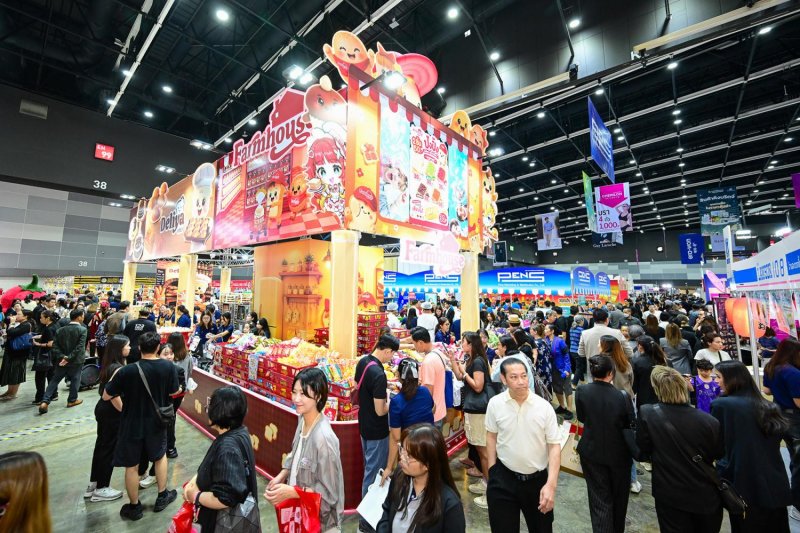
Consumers explore goods on display at the 30th Saha Group Fair and Fest, running from June 25-28 at Bitec Bangna.

I.C.C. International Plc, a distributor of fashion and consumer goods under Saha Group, says it is difficult to predict the economic outlook for the second half of the year due to rapid market changes.

The company anticipates intense competition in the consumer goods sector.
Thamarat Chokwatana, president and executive chairman of I.C.C. International, said for 3-4 months forecasting has become challenging.

The retail industry is likely to mirror the broader Thai economy in the second half of the year, with both facing uncertainty.

Heightened retail competition is expected, though sales growth is possible thanks to promotional strategies, an expansion of the customer base, and the introduction of innovative products.

Prasert Suruttanamethakul, managing director of Lion Corporation (Thailand) Co Ltd, a fast-moving consumer goods (FMCG) producer for brands such as Shokubutsu Monogatari and Systema, said uncertainty is a challenge for all business operators, including in the FMCG sector.

This unpredictable environment is affecting consumer sentiment, making them more cautious with their spending, he noted.

Although global tensions appear to have eased, the company's raw material costs remain 30% higher than before the war, said Mr Prasert.

While consumer purchasing power may recover in the second half of this year or next year, he said it is difficult to predict due to the constantly changing outlook.

Business operators should focus on improving efficiency and managing costs, said Mr Prasert.

"There are no positive signs for the second half of this year," Mr Prasert said.

Thai businesses including Lion have absorbed these higher costs instead of passing them on to customers, he noted.

Personal care products such as soap are expected to be more resilient than other household goods during challenging times, said Mr Prasert.

Emotional factors continue to influence purchasing decisions, as consumers may not necessarily opt for the cheapest option, but instead choose products they feel comfortable with, he noted.

Mr Prasert urged the government to restore consumer and investor confidence through both short-term and long-term measures.

For the long term, the government should invest in transport infrastructure, such as developing the train network to facilitate the movement of people and goods at lower costs.

Sign up to read this article
Read news from 100's of titles, curated specifically for you.
Already a member? Sign in here
Related Stories
Top stories on inkl right now
One subscription that gives you access to news from hundreds of sites
Already a member? Sign in here
Our Picks
Fourteen days free
Download the app
One app. One membership.
100+ trusted global sources.