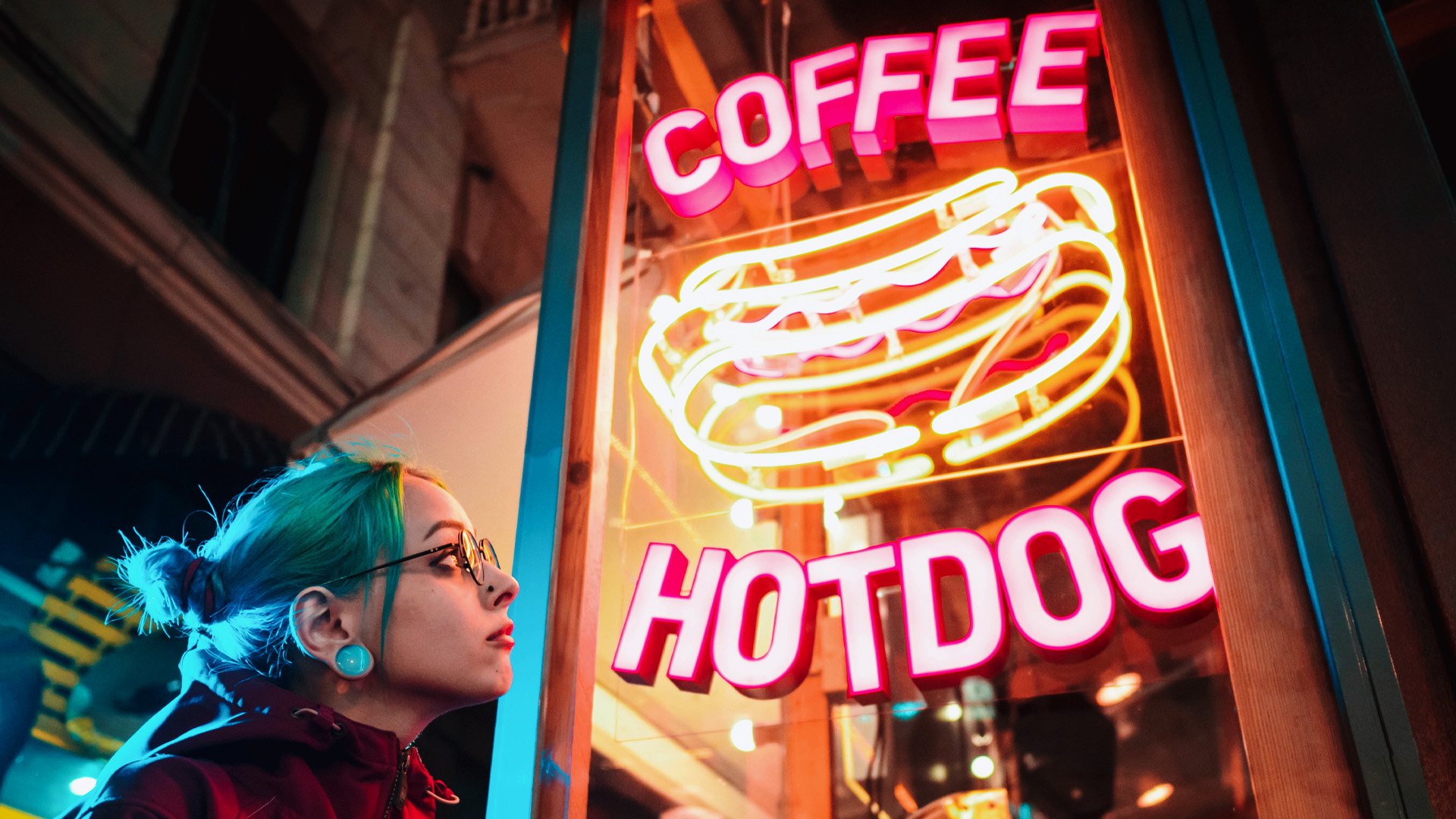
Most high streets and malls feel the same. Long rows of glass, stickers, and printed boards that disappear into the background. Then one storefront stands out. A bright logo glows in the window, people stop to take photos, and that same sign appears later in your social feed.
That moment is not just a nice atmosphere. It is your brand becoming easier to notice and remember.
Recent signage and retail research shows that digital and illuminated signs, such as neon signs, can increase brand awareness by 47-48%. One analysis reports 47.7 percent brand awareness effectiveness, while other studies describe brand-awareness lifts of more than 47 percent when businesses upgrade to modern signage.
In retail, these displays are linked to higher ad recall, more store visits, and strong double-digit sales growth.
Why Storefront Logos Stick in People's Minds
Here's the thing: your logo isn't just decoration. It's a shortcut in the brain.
Psychology and marketing research keep coming to the same conclusion: brand recall is one of the strongest drivers of overall brand lift.
A 2023 analysis of emerging media found that brand recall accounts for roughly 38.7% of total brand lift, more than any other single factor. In simple terms, if people can't remember you, everything else you do works harder for less.
Now put that next to what logo and signage studies are telling us:
- A 2024 logo survey found that 26% of adults are more likely to trust a business if its logo feels familiar, and about 25% are more likely to buy from brands whose logos they recognise.
- Many adults say they "often" recognise the logos of big brands, and that logo familiarity is doing a lot of heavy lifting before they ever read a price tag.
Custom logo neon signs plug directly into that mechanism. They:
- Speed up recognition. The brain processes bold visuals far faster than text, which means a clean, glowing mark at the edge of someone's vision can land before they consciously register the shopfront.
- Anchor memory with emotion. Bright colour, glow, and a bit of theatre turn a logo into a mini experience. That emotional "spark" makes the memory trace stronger than a flat printed sign.
- Repeat the cue. Every walk past your window, every selfie in front of your wall, every story post with your glowing logo repeats the same visual hook. That's how awareness turns into recall.
If your logo only lives on a website and a paper bag, you're leaving that neural real estate empty. A custom neon sign threads the same mark through street, store, and social in a way the brain is wired to keep.
From Static Signs to Neon Sign Stories: What's Actually Changed
Look, physical signs are as old as retail itself. What's changed in the last few years is how much they behave like the media.
Digital and illuminated signage has gone from "nice-to-have" to one of the most measurable levers in offline retail:
- In 2023, retailers using digital signage saw average sales increases of 29–32% and ad recall jumps of 52–55%.
- Public digital displays grab up to 400% more views than static signs.
- In retail settings, digital signage has been linked to purchase‑amount uplifts of around 29.5% and foot‑traffic increases of roughly 24%.
- By 2024, digital signage was reaching about 135 million people per week, with the global market on track for roughly US$63.3 billion by 2031 at a 6.3% compound annual growth rate.
Zoom in on brand awareness, and the story sharpens:
- A 2024/2025 set of retail signage stats reports that 84% of retailers believe digital signage is more effective at building brand awareness than traditional channels.
- One commonly cited metric: digital signage has 47.7% effectiveness for brand awareness, and some ROI analyses note that upgrading signage can increase brand awareness by more than 47%.
Custom neon sign logos sit in the sweet spot between classic signage and full digital displays:
- They're always on, like a billboard, but tightly matched to your identity.
- They behave like content because they show up in photos and social posts.
- They create a distinct visual signature, the exact thing brand recall and brand lift depend on.
So when you hear that neon logos can drive something like a 47% lift in brand awareness, it's not marketing fluff. It's shorthand for what happens when you stop treating your logo as a file and start treating it as a medium.
Where the "47% Brand Awareness Lift" Really Comes From
Let's decode that 47% number instead of throwing it around like magic.
Several converging data points sit behind it:
- A widely referenced compilation of retail signage data reports that digital signage has a 47.7% effectiveness for brand awareness; in other words, nearly half of brand‑awareness gains in those environments are attributed to signage.
- A business signage ROI breakdown notes that digital signage can increase brand awareness by more than 47%, tying that uptick directly to more memorable, on‑premise branding and logo visibility.
- In the same cluster of stats, 84% of retailers say digital signage is more effective than traditional methods for creating brand awareness, and customers are 80% more likely to enter a store that uses digital or illuminated displays.
These studies examine digital and modern signage broadly, not just neon signs. But custom neon logo signs are part of that family: high‑contrast, illuminated, designed to be seen and remembered.
So when brands talk about a "47% brand awareness lift" from custom neon sign logos, what they're really doing is applying those signage findings to a specific format that:
- Uses your actual logo instead of generic "SALE" or "OPEN" boards
- Sits at the exact point of decision, your storefront or feature wall
- Doubles as a shareable backdrop, multiplying exposures beyond the street
Does every neon sign guarantee a 47% jump on its own? No. The number comes from aggregate studies. But it's a solid, research‑backed estimate of what's possible when your logo stops hiding in the corner and starts owning the space.
Turning Your Custom Neon Sign Logo into a Brand Awareness Engine
Picture this: a customer snaps a quick photo at your checkout, posts it to friends, and your logo is crystal clear in the background. That's one small, compounding win. Now multiply it by hundreds of visits a week.
To get there, the design and placement of your neon logo matter more than its glow. Some data points to keep in mind:
- Adding a strong on‑premise sign can boost annual sales by about 4.75% in some retail settings.
- In one survey, more than 76% of respondents said they'd made purchases triggered by engaging signage.
- In multiple studies, around 80% of shoppers say they've entered a store because signage, often illuminated or digital, caught their eye.
Design: Make the Logo Legible at a Glance
A few practical rules help you tap into those numbers:
- Simplify the mark. Detailed crests or ultra‑thin scripts often vanish at a distance or in glare. Use a stripped‑back version of your logo for neon clean shapes, minimal words.
- Prioritise contrast. High‑contrast colour pairings (for example, warm white on a dark wall, or cyan against deep navy) are easier to process from across the street.
- Design for distance. Stand 10–30 metres away from a mock‑up on your screen. If you can't read it in two seconds, neither can your customers.
Placement: Where Eyes and Cameras Naturally Land
You're not just placing a sign; you're putting a future photo.
- At street level: Position the main logo sign so passing traffic naturally looks it in the eye, not at ceiling level. Corners and entries work better than cluttered window centres.
- Inside, as a feature wall: Add a second, slightly smaller neon logo on an interior wall that feels "Instagrammable," a seating area, a coffee counter, or a fitting room zone.
- Avoid visual noise: One strong logo beats five competing messages. Let the neon mark breathe with clean space around it.
Integration: Connect Storefront, In‑Store, and Social
To turn brand awareness into ongoing recall:
- Use the same neon version of your logo across pop‑ups, events, and trade stands.
- Encourage gentle sharing, subtle prompts like a branded hashtag near the sign, not shouty "TAKE A SELFIE HERE!" banners.
- Track the impact: add a quick "Where did you first notice us?" question at checkout or in post‑purchase surveys and watch for "the sign" as a growing answer.
Common Neon Sign Logo Mistakes (And Easy Fixes)
Retailers don't usually fail because they skip neon signs. They fail because they treat it as a novelty rather than a brand asset.
Some frequent missteps:
- Too many words. Trying to cram the full brand name, tagline, and slogan into one neon piece. Fix it by using just the logo mark or a short word/initials version.
- On‑trend, off‑brand. Choosing a cursive "cocktail bar" script for a clinical skincare brand, or a harsh red for a calm wellness studio. Let your existing brand voice lead the style.
- Low contrast installs. Mounting a pale sign on a pale wall, or pointing strong light directly at the tubes, so the glow washes out. Test under real lighting before locking it in.
- Generic instead of branded. Relying on generic "OPEN" or "COFFEE" neon, which helps the category but not your brand. Your logo (or a distinctive version of it) should be the hero.
The fix is always the same: treat the neon sign as core identity infrastructure, not decor. Start from your logo system, colour palette, and positioning, then work with a supplier to translate that into an illuminated format that can live for years.
Your Logo Is Already Doing the Work—Let It Shine
Modern signage data points to a consistent pattern: upgrade your visual identity at the point of sale, and you can see brand‑awareness gains of around 47%, stronger recall, and measurable sales uplift.
Neon sign logos are one of the most direct, controllable ways to tap into that effect, especially when they're designed for clarity, placed where eyes and cameras fall, and woven into your broader brand story.
So the next time you walk past your own storefront, ask yourself: if you were a stranger, would that glowing logo be the one brand your brain keeps after the block is over? If the honest answer is "not yet," you know exactly where to start.
By treating your neon sign logo as a living media asset, not just a sign, you give your retail brand a fighting chance to be the one people remember, recognize, and eventually choose.