Get all your news in one place.
100's of premium titles.
One app.
Start reading
RideApart
RideApart
Janaki Jitchotvisut

Residents Are Mad About MotoGP's Adelaide Street Circuit's Want to Remove The City's Trees

I don't live in Adelaide, and I never have. But I've been a fan of international motorsports for a long time, and from that point of view, I recognize the historical significance of Adelaide. You can't be at all acquainted with Formula 1 history and not understand its significance.

What I didn't fully understand, and what researching this story as it's developed over the past months has helped me to understand, is what sets Adelaide apart as a place.
Australian newspapers and publications will frequently refer to the "Adelaide Park Lands," and it's a phrase that's understood by most readers of those publications what that means. But as an outsider, I don't have that inherent knowledge. As a native Chicagoan, I think it's kind of like when we see tourists go watch a White Sox game and say they're going to "Rate Field" here in 2026, when most of us know that no matter what's changed, it's really still Comiskey Park.

In our hearts, at least. I digress.

In a way, as a person from the US who values the incredible national wealth of public lands that we all (allegedly) share, the concept of the Adelaide Park Lands should actually be pretty easy for my fellow US folks to wrap our brains around.

You see, the extremely unique thing about Adelaide is that it was "the first city in Australia to be planned and developed, not as a penal settlement or military outpost, but as a place for free settlers," according to the Australian government. It's been on the National Heritage List since 2008, due in large part to its urban design scheme, which involved a city "surrounded by more than 900 hectares of park lands."

The city was founded in 1836, and while obviously some things have changed since that time, the basic plan still remains, and is highly regarded both inside and outside Australia. Urban design that incorporates green spaces is something that many planners, if they're thinking of the longevity and well-being of the people who will live there, frequently strive to incorporate.

Having the forethought to build it into the city build-out plans back in 1836 is something Adelaide has every right to be proud of. Just like Americans of all generations have every right to be proud of the vast, majestic public lands that dot the country that we call home, and to fight like hell when someone wants to sell them out from under us.

It's not surprising that locals in either place would want to protect those natural amenities that make the place they call home special. I may not have gum trees as native species to my area, but I planted an eastern redbud for a reason, you know? Relatable mindset, different geography.

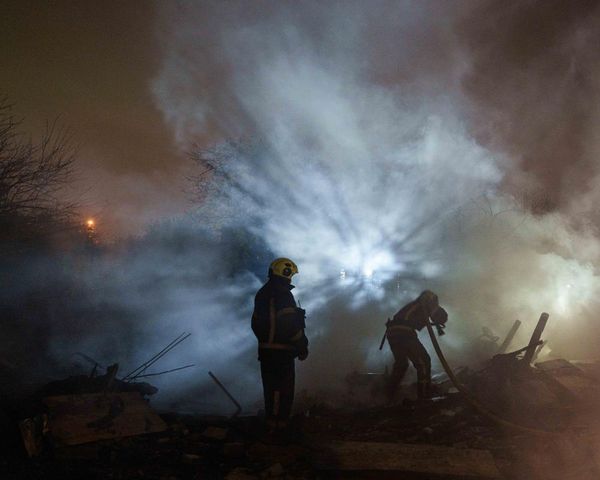
Now, the Government of South Australia's Department for Infrastructure and Transport has published its intended designs for the new Adelaide Street Circuit, which would host both MotoGP and Australian Supercars races within a very close timespan (about 10 days, apparently) of one another. Because of the nature of the city known as Adelaide, and the way its Park Lands are incorporated into the design of the city, any street circuit with modern levels of motorsport safety in mind would by definition encroach on Adelaide Park Lands.

In this case, the $96M (that's Australian dollars, so a little under $69M USD) circuit also includes a temporary pit building that, on the design, is marked to become a "vibrant new community play space" when motorsport events are not being held. It's not clear what this means, nor how it will be achieved. A solid block of pavement that spans the footprint of a pit building does not seem like a particularly "vibrant new community play space," and if whatever goes there in the interim will have to be removable for future racing events, it's not clear how (or how well) any of that will work. An indoor space with reconfigurable sections, much like convention centers do to host a variety of events, is one thing. But an outdoor space like this?

More than that, though, the concern among residents of the area has been tree loss. You might see Australian news outlets refer to a loss of nearly 400 trees from the Park Lands to make way for this circuit, of which 42 are referred to as "significant trees." If you wonder what those are, it turns out there's a National Register of Significant Trees, which can be nominated as part of Australia's natural heritage by anyone who wants to fill out a form. These are native trees, and do not include invasive species. The list is constantly changing, because trees previously included can fall into ill health and be removed, or simply be removed as this circuit plan intends to do.

Of the nearly 400 trees to be removed, most of the ones that are not listed as "significant trees" are reportedly "regulated, unregulated, invasive, dead or poor health" specimens. Which is definitely something that happens in lots of places; volunteer trees (which frequently occur because squirrels don't always remember where they bury things) are a global occurrence.

To address concerns over the trees being removed, Premier Peter Malinauskas has said that they will be replaced with new, native trees on a 10-to-1 basis, meaning that approximately 3,770 new trees will be planted. A further Environmental Fact Sheet about the project gives additional details, stating that "all replacement trees will be mature stock, ranging from 45 litres to 200 litres." And if you're also wondering about encroachment on native grass lands, the plan to replace those is also covered in this fact sheet as well. Around $15 million has been earmarked for "environmental enhancements" across the Adelaide Park Lands in order to sweeten the Adelaide Street Circuit deal.

If the environmental concerns aren't your jam, officials have also published a separate publication, outlining all the public facilities enhancements that are planned for implementation. These include amenities like a new 21 kilometer running track, a new accessible toilet (hey, everyone's gotta pee!), an upgraded bus stop, and promises to return the gravel run-off areas for the Street Circuit back to "grass and community spaces" when they're not needed as gravel run-off areas.

So, in other words, much like the "temporary pit building," the gravel traps will also be temporary. Which means there will be associated, ongoing costs whenever these temporary items need to be switched over for either racing, or for community use for the rest of the year when races aren't being held. Costs that are not included in the $96M estimate, and are not laid out here. Any greenery planted in those places will therefore only be done on a temporary basis.

Where will the trees earmarked for removal or relocation be taken from? Never fear, there's a map for that, too.

Tree map legend: Green = Trees to ro remain; Red = Trees marked for removal; Blue = Trees marked for relocation

The Government of South Australia is currently seeking public comment on its Adelaide Street Circuit Design from residents of the area, but the public comment period is only available for the next few weeks. The cutoff is September 20, 2026, and heavy construction equipment is reportedly already scheduled to start doing work in December.

If you're an Adelaide resident, and you want to share your thoughts on the proposed design with the Government of South Australia, you can do so here.

Sign up to read this article
Read news from 100's of titles, curated specifically for you.
Already a member? Sign in here
Related Stories
Top stories on inkl right now
One subscription that gives you access to news from hundreds of sites
Already a member? Sign in here
Our Picks
Fourteen days free
Download the app
One app. One membership.
100+ trusted global sources.