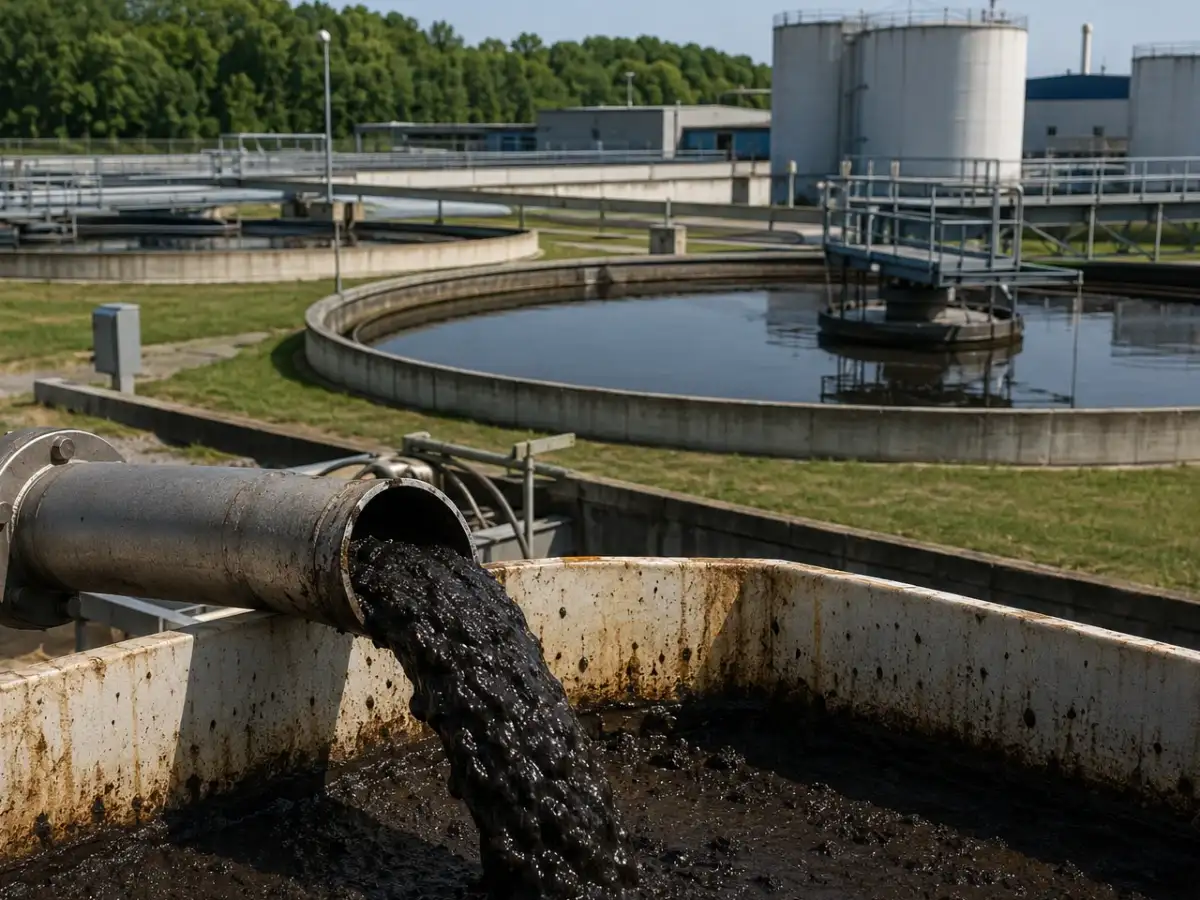
Municipal wastewater treatment plants produce sludge, a resource most people would rather not think about. However, a research paper titled A centrifugation-first approach for recovering high-yield bio-oil with high calorific values in biomass liquefaction: A case study of sewage sludge , published in the journal Fuel, points to a new use for sewage sludge. The authors of the article used dewatered sewage sludge, subjected it to a heating process at 325°C for half an hour, and were able to transform 88% of the sludge into a useful product with the recovery of bio-oil at the rate of 64%. The findings point to sewage sludge as a potential source of bio-oil, adding another possible route for managing a waste stream that is costly to dispose of.
The process at the centre of this work is called hydrothermal liquefaction. It uses heat and pressure to process wet organic material without requiring it to be dried first. In the Fuel study, the researchers used the water contained in dewatered sewage sludge as the liquefaction solvent.