
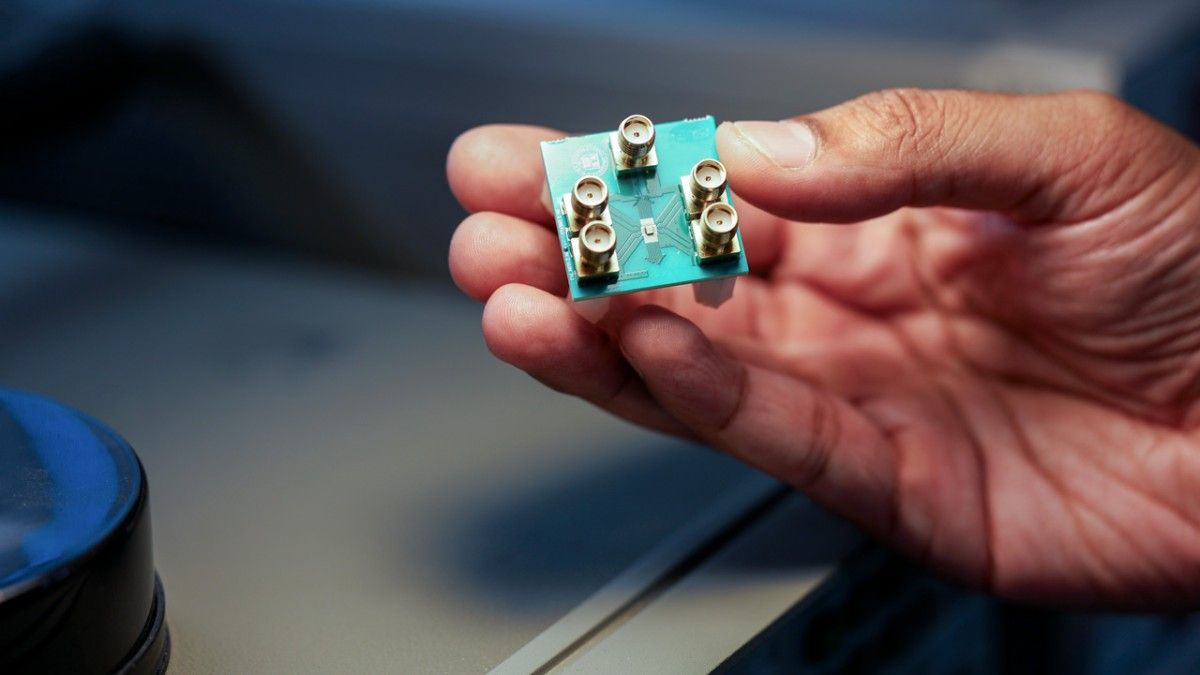
In a quiet Cornell University lab, researchers have taken a hammer to decades of digital circuit convention. The result is a silicon chip that thinks less like a clock-driven processor and more like a living brain—only instead of neurons, it uses controlled bursts of microwave energy.
Dubbed the “microwave brain,” this experimental processor can juggle two jobs at once: crunching ultrafast data streams and talking wirelessly, all inside a footprint small enough for a smartwatch. And it does it at just 200 milliwatts, a fraction of the power a comparable digital neural network would consume.