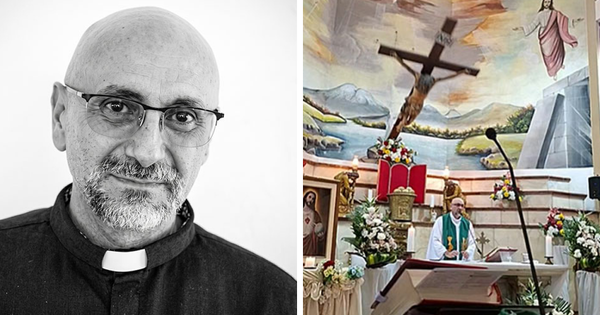
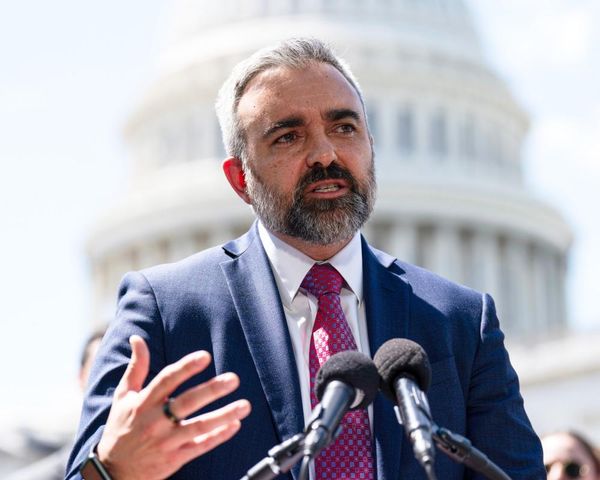
For months Carl Ruby, a pastor at a church in Springfield, Ohio, and a prominent supporter of the city’s estimated 10,000 Haitian immigrants, had been trying to contact his local congressman, Republican Mike Turner.
Ruby had long hoped for an opportunity to explain in person the difficulties facing Haitians in Springfield and how that community had helped revive the struggling town.
“I hadn’t gotten anywhere in getting an appointment with him; all his staff were putting us off,” Ruby recalls.
But then recently, while he and Viles Dorsainvil, who runs the Haitian Community Help & Support Center in Springfield, were at a gate at a local airport waiting to board a flight to Washington, there appeared Turner, waiting to board the same flight to the capital.
Ruby and Dorsainvil, a plaintiff in a case heard last Wednesday by the supreme court, challenging the Trump administration’s efforts to end temporary protected status for 350,000 Haitians and thousands more Syrians, decided there and then to approach Turner to attempt to talk about the situation facing Haitians.
The response they got from the congressman, who faces an election in November, surprised them.
“He clearly understands the economic benefit of having immigrants here. He clearly is not on the same page with many members of his party who are willing to step back and let the president do whatever he wants,” Ruby says.
Turner was one of just 10 of 214 Republicans in the House of Representatives who voted alongside Democrats last month to extend immigration protections for Haitians in the US.
In addition to Turner, Mike Carey, a Republican congressman from neighboring Columbus, also voted with Democrats on the aforementioned bill, which is, however, unlikely to pass the Republican-controlled Senate.
Turner and Carey are among several Republicans in Ohio up for election this year who are siding with Haitian immigrants and against the Trump administration, as the president’s ratings crumble not just in national polling, but in Republican strongholds such as Ohio.
Although Ohio voted for Trump by double digits in the 2024 presidential election, polls suggest that support for the president is waning significantly. With three large metropolitan areas in a state that voted for Barack Obama twice, political scientists say that Ohio is slipping back into purple territory.
A poll of 1,000 registered Ohio voters released this week by Bowling Green State University and YouGov shows that 15% of those who voted for Trump in 2024 admitted to regretting their decision. A majority of those polled opposed Trump’s war on Iran (53%) and the administration’s tariffs campaign (56%).
“A significant number of Ohioans do not like what they have seen when it comes to many of Trump’s policies. Respondents have routinely noted concerns over the economy, inflation and a general unhappiness with the status quo. We are witnessing much higher enthusiasm for this year’s midterm among Democrats over Republicans as well,” says Robert Alexander, a professor of political science who headed up the poll.
“The headwinds will certainly be strong against Republicans in the fall … Given support Haitians have received from religious, business and civic leaders in the area, it makes sense that Carey and Turner have shown a willingness to not toe the Trump line on this topic.”
While Ohio hasn’t had a Democrat for governor in 15 years, polls show Republican former presidential candidate Vivek Ramaswamy and Democrat Amy Acton, a physician, statistically tied in the gubernatorial election slated for November. Ramaswamy, a billionaire from Cincinnati who has stirred controversy for defending conspiracy theories, is expected to win his primary next month. Acton, who led the state’s department of health during the 2020 Covid pandemic, is running unopposed in the Democratic primary.
A hotly contested Senate race between Republican Jon Husted and Democrat Sherrod Brown has attracted $79m – more than for any other senate campaign in the country – from the Senate Leadership Fund, a Republican Super Pac.
For Turner, a former mayor of Dayton, a growing number of polls suggest that he is vulnerable to losing a seat which he has held for nearly a quarter century.
Turner was roundly criticized last year for failing to hold an in-person town hall to hear from his constituents. His office did not respond to emails sent by the Guardian asking why he has backed legislation that would help Haitians and opposing the Trump administration.
For Pastor Carl Ruby, Turner may be finally responding to pressure from local leaders and voters in standing against Trump on the issue of supporting Haitian immigrants.
“There is a large part of his constituency who understand the value of immigrants. Ohio was a shrinking and an ageing state, so I think he saw that,” he says. Immigration has been the driving force in a recent stop to a decades-long falling population trend in Ohio and other industrial midwestern states.
In the aftermath of Trump’s incendiary comments from September 2024, when, during a presidential debate watched by millions of people, he falsely accused immigrants of eating pets in Springfield, Ruby, who worked on immigration issues before coming to Springfield, found himself accused of collaborating with immigration agents and protecting Haitian immigrants in the town. As bomb threats and white supremacist marches upended life in Springfield in the weeks before Trump’s election win, Ruby was subjected to threats that led him to share information with the FBI.
But that hasn’t softened his resolve.
Last year, his church began offering mass services in Creole to meet the needs of the growing number of Haitians attending.
“I have people in my congregation who have been imprisoned and tortured because they had opposed corruption [in Haiti]. It’s more violent now than it was when they first came. Even our own state department says do not go there,” he says.
In the supreme court last Wednesday, justices Sonia Sotomayor and Ketanji Brown Jackson wondered how Trump’s comments, claiming that Haitians come from a “disgusting” country and that immigrants are “poisoning the blood of the country”, were not discriminatory in nature. Last October, however, the court ruled in favor of the Trump administration’s ending of TPS for more than 300,000 Venezuelan nationals.
Ruby, who was seated in the row behind the legal representatives at the hearing, estimates the court may rule on the TPS for Haitians issue by June. Regardless of its decision, the uncertainty for the community in Springfield is set to continue.
“Nobody wants to hire Haitians because of all the uncertainty,” he says, “if they may not be allowed to work.”