Get all your news in one place.
100’s of premium titles.
One app.
Start reading
Roll Call
Roll Call
Jackie Wang

Rep. Rouzer talks tobacco farming and his time as a staffer for Jesse Helms

One of Rep. David Rouzer’s first tasks at the Capitol was on the roof.

As a recent college graduate in 1995, he hoisted the flag that flies over the Senate — which was easier said than done when the wind was blowing.

“It looks smaller from the ground, but it’s a big sail, basically,” says the Republican, who now represents North Carolina’s 7th District in the House.
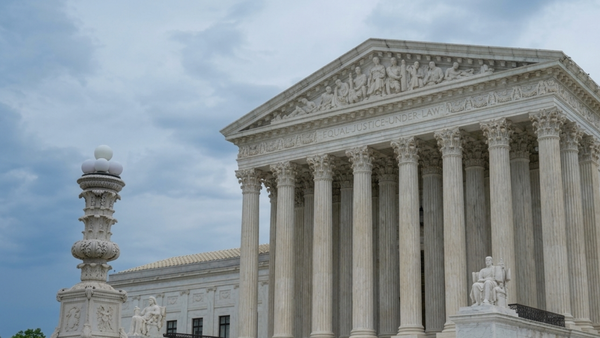
Before long, Rouzer was working for Sen. Jesse Helms’ reelection campaign, in the first cycle after the hard-line conservative parted ways with the direct-mail fundraising behemoth he helped build.

“He was starting anew,” Rouzer recalls. “I didn’t know anything about fundraising whatsoever, but I found everybody that loved Helms in D.C. and everybody that hated Helms in D.C., and I took the guys that really liked him … and I set up these little lunches.”

That led to two different stints in Helms’ Senate office working on tobacco policy issues, a role Rouzer continued with Republican Sen. Elizabeth Dole after Helms’ retirement.

“He was like a grandfather to me,” Rouzer says of Helms, adding that he saw a different side of the divisive senator who made his name opposing abortion, communism and federal civil rights laws. “He had a killer instinct that very few people have in politics, but he was a true gentleman.”

Rouzer sat down with Roll Call this month to talk about the tobacco wars of the 1990s and the “wide and vast” network of Helms alumni in public service today.

This interview has been edited and condensed.

Q: What got you interested in politics?

A: The summer before I graduated college, I was invited to join a program over in the Czech Republic, and my roommate had lived his whole life behind the Iron Curtain. It was through the Fund for American Studies, and we’d stay up late nights, just talking about life in general. 

And that’s what got me interested in politics. What we have in this country is very special, but it’s also fragile, and if you don’t take good care of it, you can lose it.

Growing up, I always wanted to be a tobacco farmer, and in my heart of hearts, I still do.

But my uncle reminded me not long ago that he always had a notion that I might get involved in politics, because he said whenever I was helping him farm in the summers, I was always listening to Rush Limbaugh.

Q: What was your first job on Capitol Hill?

A: I graduated in December 1994, and I figured I had nothing to lose. I packed my bags, came to D.C. and started knocking on doors.

Bob Dole was the majority leader of the Senate at the time, and there was a lady in his office that really took a liking to me. As I was walking down the hallway one day, I heard her holler my name: “David, you’re looking around for a job. We need a doorkeeper — you know, those folks you see outside the Senate gallery. We’ll let you go interview.”

One of the neat aspects of that job is I would take up and put down the flag over the Senate. I remember January 1995 being a cold month, and you’re up there on top of the roof, and that cold wind is whipping through, and you’re trying to hoist that flag. 

Q: After working on Helms’ 1996 campaign, you joined his Senate office and focused on trade and agriculture issues.

A: I cut my teeth during the tobacco wars of the ’90s. Everybody was going after tobacco to fund anything and everything under the sun, and we had votes all the time on the Senate floor. 

You had the national tobacco settlement, which required congressional approval and failed to get the 60 votes in the Senate. So that effort was defeated, and then the companies and the health advocates, recognizing they couldn’t get anything through Congress, ended up with a master settlement agreement that totally transformed the industry. 

That was so huge for the state. You know, North Carolina was basically built on tobacco, textiles and furniture, and still is, but NAFTA really hurt the textile and the furniture industries. 

Q: What was it like working for Helms, and what do you think of his legacy now?

A: Helms was a beloved figure for many, and he was a hated figure for many. No one was more opposite of the way the news media portrayed them. He had a way of putting himself in your shoes, even if he was strident in his beliefs. 

People like to portray him as this country bumpkin, but he was no country bumpkin. We were very close, and probably the highest honor of my life was serving as a pallbearer in his funeral. 

Maybe his greatest legacy is all the staff who are in so many important jobs today — I mean, everything from pastors to judges. [Former Rep.] George Holding and myself both got elected to Congress, and the network is wide and vast. The alumni are continuing to carry the torch.

Rouzer worked for Sen. Jesse Helms as a legislative aide and policy adviser, focusing on trade and agriculture issues, including the tobacco settlement and quota buyout debates in the late 1990s and early 2000s.

Q: When Helms retired in 2003, you went on to work for Elizabeth Dole.

A: It was instilled in me at an early age that you finish what you start. The tobacco farmers were in dire straits, and Elizabeth Dole had campaigned on getting the tobacco quota buyout done. I helped her with that, and they called it the Dole plan. Another big component of that plan was recognition for the Lumbee [tribe of North Carolina], which we just got 20 years later. 

The tobacco quota buyout is probably one of the few things Congress has ever passed that actually worked the way it was intended. It really was a game-changer and a lifesaver for many farm families. Without that, many would have gone bankrupt.

Q: What has changed the most since you first came to the Hill?

A: I asked Sen. Helms one time, “What’s the worst thing that ever happened to the institution of the U.S. Senate since you’ve been here?” And he stopped for a second and said, “C-SPAN. As soon as they put the cameras in the chamber, all the members quit talking to each other and started talking to the cameras.” 

I think 24-hour news and social media has just magnified that so much more and made it very, very difficult to govern, particularly in a highly partisan environment. I tell you what, some of the best work is done back in the cloakroom and in the side rooms, where people are just sitting down and there’s nobody around.

The post Rep. Rouzer talks tobacco farming and his time as a staffer for Jesse Helms appeared first on Roll Call.

Sign up to read this article
Read news from 100’s of titles, curated specifically for you.
Already a member? Sign in here
Related Stories
Top stories on inkl right now
One subscription that gives you access to news from hundreds of sites
Already a member? Sign in here
Our Picks
Fourteen days free
Download the app
One app. One membership.
100+ trusted global sources.