The remains of the Israeli police sergeant Ran Gvili, who was killed fighting Hamas-led militants on 7 October 2023, have been returned to Israel.
Militants took Gvili’s body to Gaza to use as a bargaining chip. He was the last of 251 people captured that day still held in the territory.

“With this, all hostages have been returned from the Gaza Strip to the state of Israel,” the Israeli military said in a statement.
Gvili, 24, a member of an elite police unit, was killed defending Kibbutz Alumim. He was on medical leave after dislocating his shoulder in a motorcycling accident but when news of the attack began filtering out he put on his uniform and went to support the military.
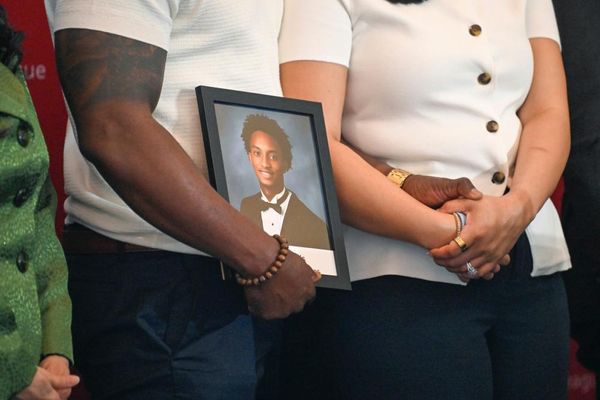
In Israel, Gvili’s father stood in front of the coffin and said: “You had the option to stay home but you said to me: ‘Father, I’m not going to leave my friends to fight alone.’
“You came out, and you need to see the honour you have here, all the people who brought you. All the police are here with you, the entire army is here with you, the entire nation is here with you. I’m proud of you, my son,” he said, in comments reported by the BBC.
Rani Gvili’s sister Shira earlier told the Hostages and Missing Families Forum: “I feel an insane sense of relief. I feel relieved. I am sad. I’m very sad that it ended this way, but it had to end at some point. I am so happy he’s coming back home.”
The handover of the body marks the completion of a key initial demand of Donald Trump’s ceasefire plan for Gaza. It should open the way for progress in its second stage, which the US announced was under way earlier this month.
Key Trump aides last week laid out an extremely ambitious plan for Gaza, with his son-in-law, Jared Kusher, describing it as a blueprint for “catastrophic success”. It envisages a unified Palestinian-run Gaza, which represents a rebuff to the aims of Israeli extremists, including some in the governing coalition, who have sought the deportation of Gaza’s population and the building of Israeli settlements in its place.
The plan’s success will depend largely on whether Trump and his “board of peace” have the determination to implement the plan, overcoming Israeli objections and obstruction. That includes whether a mechanism can be created inside Gaza to oversee the disarming of Hamas, with potential contributors to a proposed international security force ruling out any direct confrontation with the militant group.
After the return of Gvili’s body was announced, the Israeli prime minister, Benjamin Netanyahu, told lawmakers that the next step for Gaza would be not the reconstruction promised by Kushner but instead “the disarmament of Hamas and the demilitarisation of the Gaza Strip”, Haaretz reported.
Israel had said the vital Rafah crossing between Gaza and Egypt would reopen when Gvili’s body had been returned. It has been closed since Israeli troops seized control of it in May 2024. But it will only be open to pedestrians, so this will not ease shortages of food and shelter aid, medicine and other basic humanitarian goods in Gaza, and Israel will retain full control of everyone who enters and leaves, Israeli media reported.
Although the ceasefire reduced the number of attacks inside Gaza, Israeli forces have killed nearly 500 Palestinians since it came into force. The lack of shelter and aid mean hunger is still widespread and at least eight children have died from hypothermia.
The return of Gvili’s remains marks the end of a long public campaign to bring back the living and the dead, including some who had been captured before 2023.
Israel’s president, Isaac Herzog, said in a statement: “After many difficult years, for the first time since 2014 there are no Israeli citizens held hostage in Gaza. An entire nation prayed and waited for this moment.”
Israel keeps the bodies of Palestinians to use as leverage, including detainees who died without being charged or tried and children killed by Israeli forces. Under the terms of Trump’s deal, Israel agreed to hand over the remains of 15 Palestinians for each body returned from Gaza.
Many Israeli campaigners have been shifting focus as the final bodies were returned, demanding an independent inquiry into the 7 October 2023 attack and the war that followed.
Protesters and some returned hostages and their relatives have accused Netanyahu of sabotaging ceasefire deals that could have brought their loved ones back sooner and prolonging the war to protect his political career.
Of 166 people who came back from Gaza alive, the vast majority were freed in ceasefire deals. Eight were released by Israeli military operations.
Of the dead, some were killed before they were taken to Gaza, some were killed by their captors, some by Israeli forces and some died of uncertain causes in captivity.
Gvili’s body was found in a cemetery in northern Gaza inside the Israeli-controlled area behind the “yellow line”, the military said.