Get all your news in one place.
100's of premium titles.
One app.
Start reading
The Times of India
The Times of India
World
TOI World Desk

Recycled Shell Reef Grows: Horry County builds living shoreline; oysters curb erosion and clean water

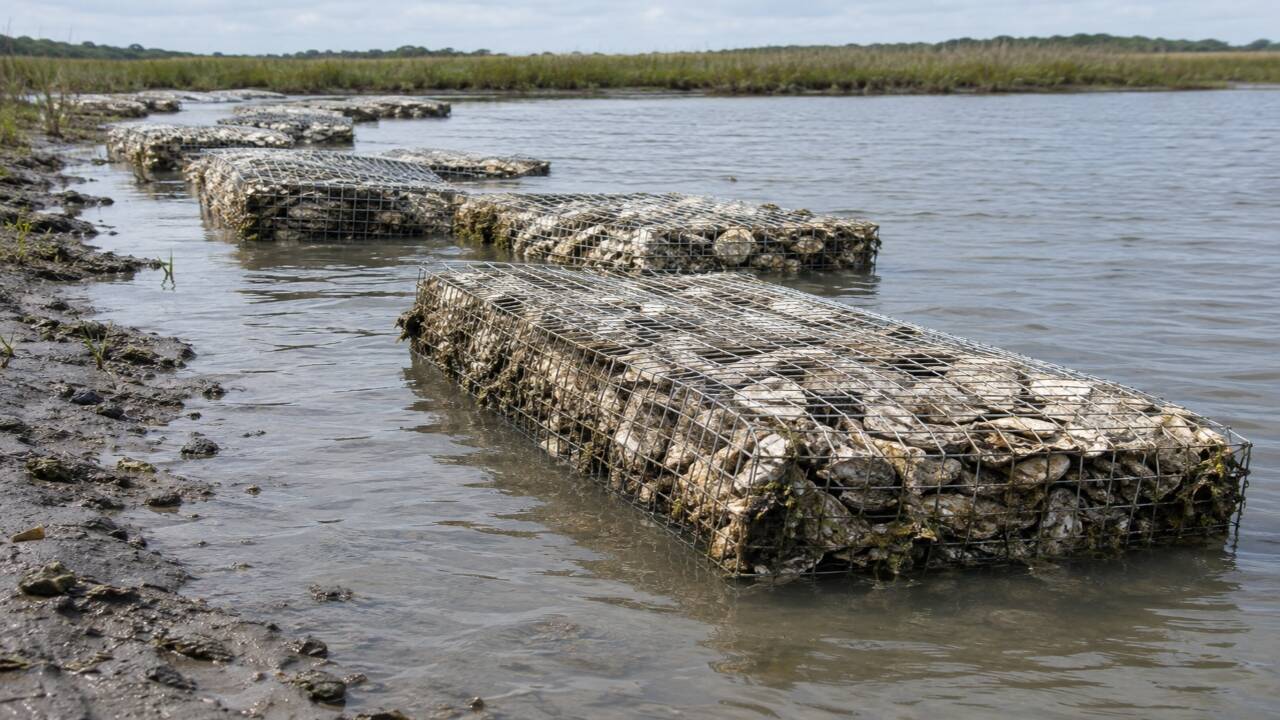
For years, the soft banks that shield the marsh below Garden City, South Carolina, have been steadily eroded by boat wakes, tides, and more regular storms. In 2024, Horry County used a different strategy that begins with something that most people would typically toss in the trash rather than using concrete or rock to hold the queue. The county started putting wire baskets packed with recycled oyster shells into the marsh along Atlantic Avenue, in collaboration with state wildlife officials, creating what is essentially a live reef that can simultaneously develop, filter water, and delay erosion.

Get breaking news anytime, anywhere. Download the TOI app now!

Shells turned back into the shore

According to Horry County, the idea uses oyster shells left from restaurants and backyard gatherings around the county that would otherwise go to a landfill. When cured, the shells are stacked into wire cages called constructed wire reefs and lowered into the marsh, where they produce a solid textured surface for new oyster larvae to settle on. In 2024, the county put up about 200 of the baskets along Atlantic Avenue in Garden City as part of a larger effort to use recycled material to fight marsh erosion rather than importing stone or concrete. In the years since, county personnel have added further baskets to the reef, built with support from local high school students and others.

Why oysters are the best building blocks

Oyster larvae prefer to settle on other oyster shells rather than on rock, sand, or plastic, making old shells particularly effective for culturing. The scientific term for this kind of hard nesting substrate is cultch. The South Carolina Department of Natural Resources says a persistent problem along the coastline is a lack of oyster shell to use in this type of habitat restoration. That is why the state encourages residents, restaurants and event organisers to recycle their shells instead of tossing them away. As baby oysters attach to the baskets, they begin filtering the surrounding water, and one adult oyster is estimated to filter dozens of gallons of water in a day, as the reef itself gets denser and more efficient at soaking up wave energy over time. A healthy oyster reef is, in essence, self-reinforcing, generating new shells and new structures quicker than storms and currents can erode it, if the population within it remains healthy. This type of nature-based coastline protection has been gaining popularity well beyond South Carolina, for reasons that go beyond cost.

A gentler option than concrete

Traditional shoreline defences such as bulkheads and seawalls establish a hard, immovable barrier between land and water but can also exacerbate erosion nearby and offer nothing in the way of habitat for fish, crabs or birds. Living shorelines, made with natural materials such as oyster shell, tend to be cheaper to construct and maintain than rigid structures, and they improve water quality and support far more marine species in the process, according to NOAA Fisheries. A seawall is built to a set height and stays there. A living coastline, however, can change and expand over time. It can slowly increase in height as sediment builds up. For a stretch of coastline like Garden City, where the marsh behind Atlantic Avenue depends on a stable edge to survive, that adaptability could prove just as valuable as the erosion control itself, and Horry County has already signalled plans to keep expanding the reef in the years ahead, one recycled shell at a time.

Beyond the reef itself, the project also gives ordinary citizens a direct way to participate in something that can otherwise feel abstract. Anyone who throws a bag of shells into a local recycling bin after a family dinner is, in fact, supplying raw material for the next basket that ends up in the marsh. County authorities have said the goal is to close that loop completely so that every oyster eaten locally can eventually make its way back into the water as habitat for the next generation. As they age, and as oysters begin to colonise them, the baskets should gradually form a more resilient and more diverse stretch of beach along Atlantic Avenue than has been the case for years, made from shells that would otherwise have been thrown away, rather than imported stone.

Sign up to read this article
Read news from 100's of titles, curated specifically for you.
Already a member? Sign in here
Related Stories
Top stories on inkl right now
One subscription that gives you access to news from hundreds of sites
Already a member? Sign in here
Our Picks
Fourteen days free
Download the app
One app. One membership.
100+ trusted global sources.