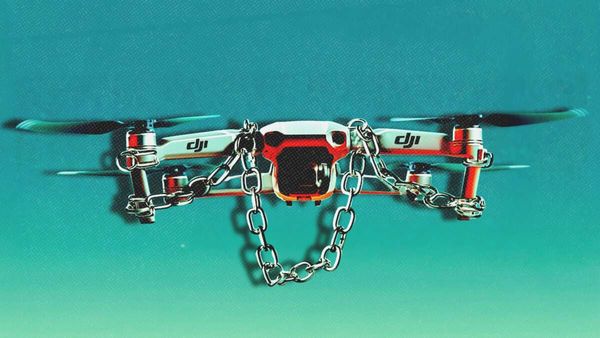
You spent hours tailoring your resume. You wrote a cover letter that was charming yet professional. You hit “submit” and waited. And then… silence. Or worse, you received an automated rejection email three minutes later. It feels personal, but it isn’t.
The truth is that your application likely never reached a human being. It was intercepted by an Applicant Tracking System (ATS)—a gatekeeper robot programmed to reject you based on arbitrary rules. Recruiters admit the system is flawed, but they still use it. Here is why your application is getting tossed into the digital trash can.
1. You Used a Creative Template
That two-column resume with the photo and the cool graphics might look great to a human eye, but the ATS absolutely hates it. These systems generally read left to right and top to bottom. Complex formatting confuses the bot, often causing it to read your work history as your education or just return an error. If the bot cannot parse it, it auto-rejects it, so you are better off sticking to boring, single-column layouts.
2. The File Type Was Wrong
Unless the application specifically asks for a PDF, a Word document (.docx) is often the safer choice for older ATS software. Some systems struggle to extract text from PDFs, effectively seeing the whole page as a single image rather than searchable text. If the robot sees a blank page, you are out of the running immediately.
3. You Used Headers and Footers
Many job seekers put their contact info in the header to save space, but this is a big mistake. Some ATS algorithms cannot read information contained in the header or footer sections of a document. The recruiter might see a resume with no name and no email address, leading them to delete it instantly.
4. Keyword Mismatch
The ATS scans for specific keywords from the job description to determine if you are a match. If the job asks for “Project Management” and you wrote “Managed Projects,” a smart ATS will catch it, but a dumb one might not. You need to mirror the language of the job posting exactly, even if it feels repetitive, because you are writing for a machine first.
5. Functional Resumes
Grouping your skills together instead of listing a chronological work history is a red flag for both bots and humans. The ATS struggles to link your skills to a specific time or company, making it assume you lack the required years of experience. Always use the reverse-chronological format to ensure your history is parsed correctly.
6. You Included a Photo
In the US, including a photo on your resume is a quick way to get rejected because companies fear discrimination lawsuits. To avoid potential bias—and because photos confuse the text parser—many systems are set to automatically discard files containing images.
7. “Date” Formatting Issues
If you write “2020-2022,” the ATS might not know if you worked for two years or just two months. It is safer to always use the “Month/Year” format (e.g., “June 2020 – August 2022”) to be precise. Vague dates can lower your calculated years of experience, potentially knocking you below the minimum requirement.
8. Unexplained Gaps
Some systems are programmed to flag employment gaps of more than six months automatically. While humans are becoming more understanding of gaps, robots are not capable of that nuance. If you have a gap, list it on the resume as “Sabbatical,” “Caregiving,” or “Education” to keep the timeline continuous.
9. You Applied to Too Many Roles
If you apply to 10 different jobs at the same company, the system effectively marks you as spam. It signals desperation and a lack of focus on what you actually want to do. Recruiters can see your application history, so pick the one role you are actually qualified for and stick to it.
10. Using Tables or Text Boxes
Like columns, tables and text boxes are kryptonite to an ATS. The text inside them often disappears during the parsing process because the software cannot read the container. Your “Skills” section might look organized in a table to you, but to the recruiter, it looks like you have zero skills listed.
11. Fancy Fonts
You might love “Comic Sans” or a sleek custom font, but the ATS likely doesn’t have it installed. When the system tries to convert it, your resume turns into a garbled mess of symbols that no one can read. Stick to standard system fonts like Arial, Calibri, or Times New Roman to be safe.
12. You Answered “No” to a Knockout Question
“Do you have 5 years of experience?” “Are you authorized to work in the US?” These are knockout questions. If you answer incorrectly, the system rejects you instantly, regardless of how good your resume is. There is no nuance here; you either pass the gate or you don’t.
Beat the Bot to Get the Job
The job market is a game, and the first level is beating the robot. Your resume doesn’t need to be pretty; it needs to be readable. Strip the formatting, match the keywords, and get your foot in the door so a human can finally see how great you are.
Have you ever suspected an ATS rejected you unfairly? Share your frustration in the comments!
What to Read Next…
- Your Resume Isn’t Enough—HR Is Judging You in Ways You Never Expected
- 10 Dream Jobs That Corporate Insiders Privately Call Career Suicide
- 10 Shocking Facts About Workplace Age Discrimination
- 9 Signs Your Job Is About to Lay People Off
- 9 Signs a Job Posting Is Actually a Human Trafficking Trap
The post Recruiters Admit: 12 Reasons Your Application Is Automatically Rejected (Before Humans See It) appeared first on Budget and the Bees.