
Google Chrome still dominates the desktop browser market share with 69.37%, while Microsoft Edge comes in at a distant second with 12.75%, according to StatCounter. Microsoft has been ramping up its efforts to improve Edge's user experience, but it still struggles with adoption.
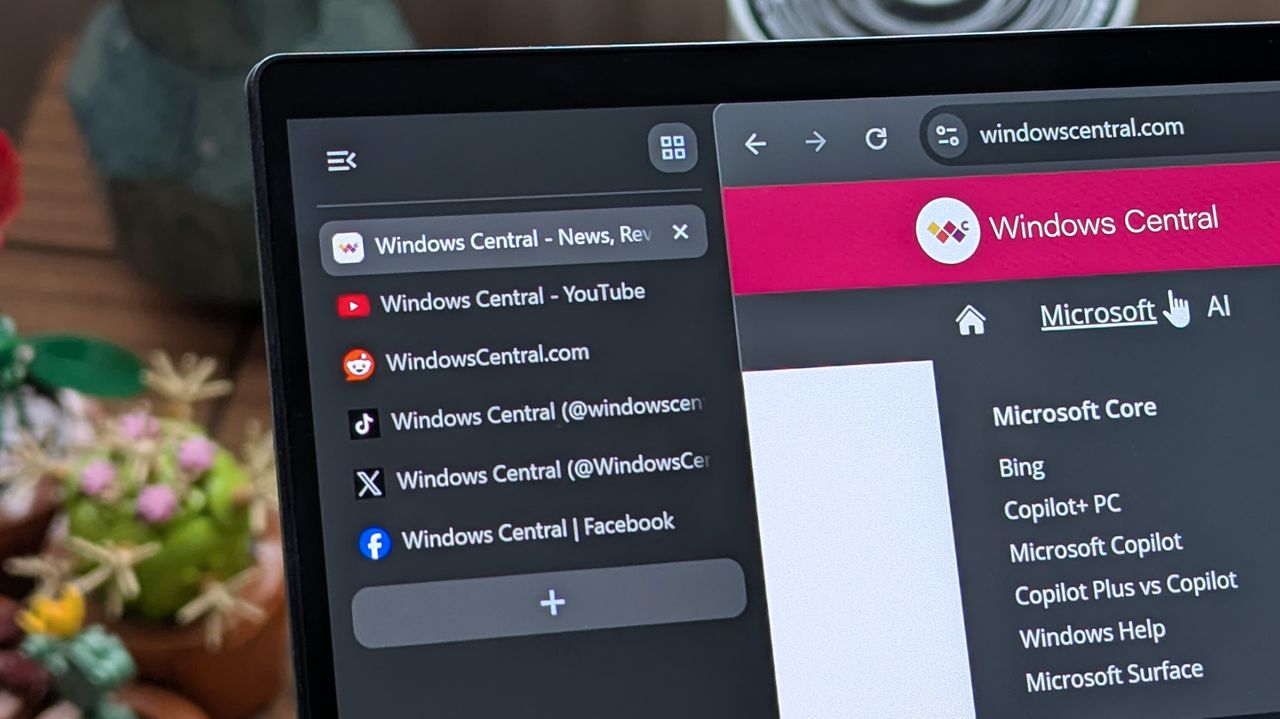
Feature parity might have been a contributing factor before, but Google Chrome is finally getting vertical tabs, something that has already existed in competing browsers, like Microsoft Edge and Mozilla Firefox, for a while now.
If you're part of the rollout wave, you'll be able to right-click your Chrome window and select "Show Tabs Vertically" to open tabs in the browser's left sidebar by default, where you can select each to switch pages. You can also drag and drop an individual tab, move it up or down, and get the same experience you're used to along the top.
Vertical tabs coming to Google Chrome feel like a bonus for users who often interact with tab groups. While it's still handy for horizontal tabs, I felt it was a little cluttered. This update has me reclaiming my screen's real estate, and it's definitely satisfying.
Aside from the vertical tabs, Google also announced that its Chrome browser is getting an improved Reading Mode. As such, the new full-page interface will present a webpage in a simple, uncluttered format that focuses on the text.
The previous approach to this feature felt quite limited, as it launched your current page in a narrow sidebar alongside the normal web view, which forced users to adjust the borders for better readability.
To access it, right-click a page and select the "Open in reading mode" option. You can also adjust the font, color, line height, and other visual elements to meet your preference.
Many users still seem to prefer Chrome over Edge, citing "faster" performance and its extensive ecosystem of extensions and integrations with Google services (even though most are compatible with both browsers).
Elsewhere, Microsoft also brought back the vertical Taskbar to Windows 11 as part of its broader campaign to improve user sentiment around the operating system in 2026, which, if I'm being honest, should've never been scrapped in the first place!

Join us on Reddit at r/WindowsCentral to share your insights and discuss our latest news, reviews, and more.