Ever since the Brexit referendum – called by a Prime Minister who had to maintain a stiff upper lip about whether he had any coital relations with a dead hog – British politics has been a surreal Lovecraftian horror show, with the highlight being a Prime Minister whose innings was shorter than that of a bulb of lettuce. And yet it was horrifying enough for the Queen – who shared her name – to depart for Elysium. Or perhaps it was the revulsion at dealing with a coloured Duchess of Sussex.
Get breaking news anytime, anywhere. Download the TOI app now!

Everything about British politics since Brexit has been so off the rails – much like the politics across the Pond – that fans of Yes Minister have even been left wondering if the classic show was too sedate to capture the schizophrenic chicanery of the current era.
Since David Cameron stepped down, we’ve had so many Prime Ministers from the land of Shakespeare that the premiership has started resembling what a colleague labelled a “two-year free trial” subscription service.
We’ve had Theresa May, whose idea of youthful delinquency was running through fields of wheat.
We’ve had the follicularly challenged Boris Johnson, whose reign ended thanks to hosting too many lockdown parties.
Liz Truss lasted 49 days – enough time to crash the pound, destroy the bond market, sack her Chancellor and still earn the dubious honour of being the last Prime Minister to be appointed by Elizabeth II.
Rishi Sunak followed soon after, the first Hindu PM who had the right to appoint the Archbishop of Canterbury, and a man whose father-in-law’s views on workers’ rights would make Karl Marx turn in his grave.
But things didn’t get better, as Labour picked Keir Starmer, a man who somehow led Labour to a 411-seat landslide and yet managed to be ousted in two short years. Perhaps it had to do with the fact that he had no discernible quality beyond being the human version of a terms-and-conditions page. He was finally replaced by “King of the North” Andy Burnham, who looks like an AI iteration of Keir Starmer generated with a GPT prompt to add a little more gel to his hair.
So, it’s hardly surprising that the Prime Minister-in-waiting just won a by-election in Clacton-on-Sea that was boycotted by all the major parties, including the Tories, Labour, the Liberal Democrats and the Green Party.
The by-election was prompted by Nigel Farage resigning after the revelation that he had received a £5m personal gift from a Thailand-based crypto billionaire when he had promised not to enter electoral politics. He said he could spend it however he wanted, including on “buying a Ferrari”, and that he was resigning to “stick two fingers up to the establishment”.
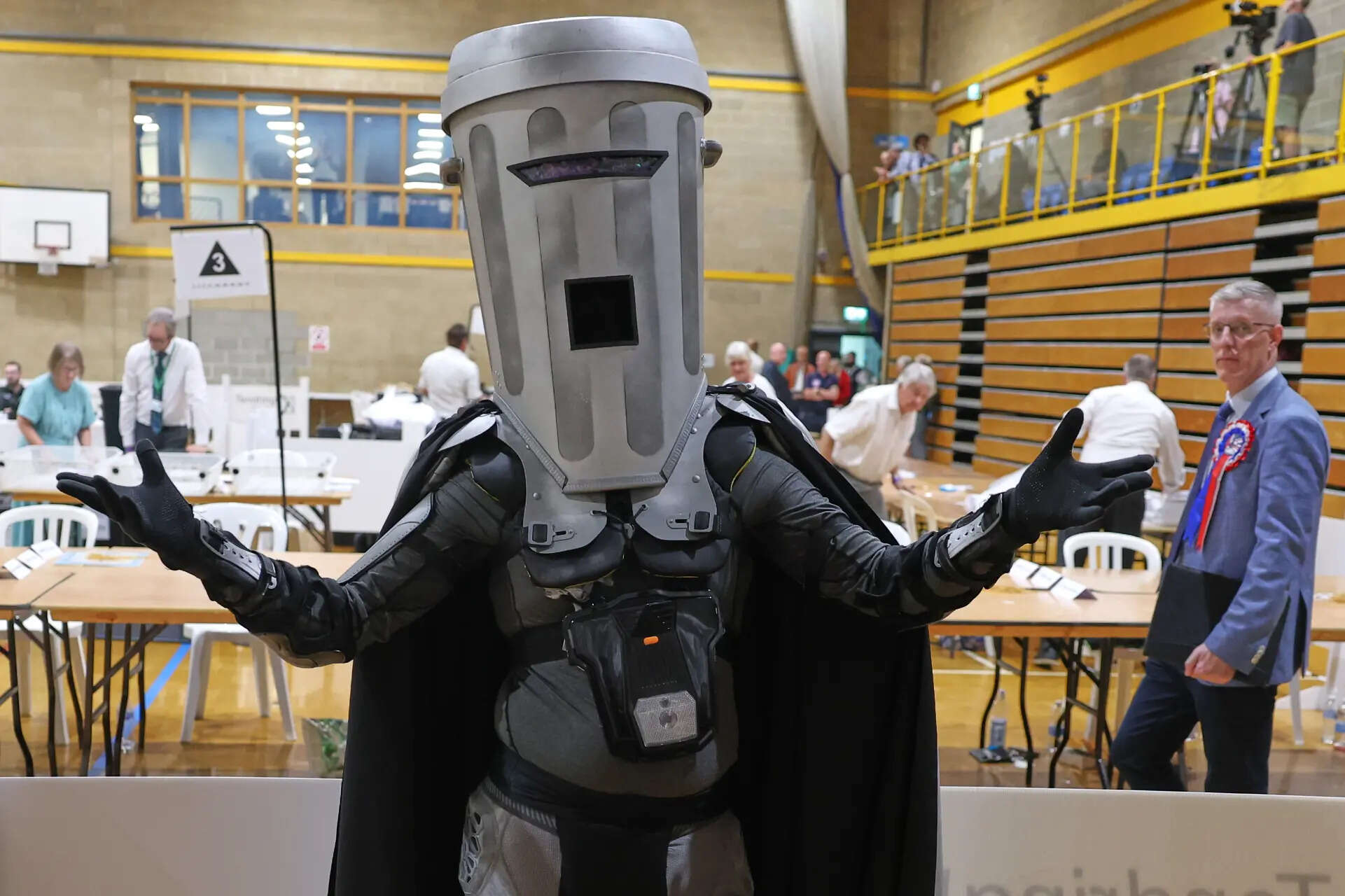
His main opponent, instead, was the breakout character of this election: Count Binface, who, when asked where he is on the spectrum, claims: “I am the galactic centre, and everything else revolves around me…”
Ironically, Nigel Farage isn’t Binface’s first rodeo. Comedian Jon Harvey, Count Binface’s alter ego, first contested against Theresa May as Lord Buckethead, a Star Wars parody of Darth Vader, before later “respawning” as Count Binface and facing off against prime ministerial candidates Boris Johnson, Rishi Sunak and Andy Burnham.
His pledges include raising everyone’s taxes while reducing yours, making Wayne Rooney the expert summariser for the BBC at Eurovision, nationalising Adele and spending more time in Clacton-on-Sea than in Washington DC. The last is an obvious dig at Nigel Farage’s amour proper for Donald Trump across the Pond.
It says something that a satirical candidate’s promises sound more reasonable than the current state of UK politics, in which Farage’s arrival as PM-in-waiting would require a Pramod Mahajan-like explanation of democracy. Mahajan once described an apocryphal meeting with a Chinese delegation whose members were flabbergasted to learn about democracy and the particularly confusing first-past-the-post system.