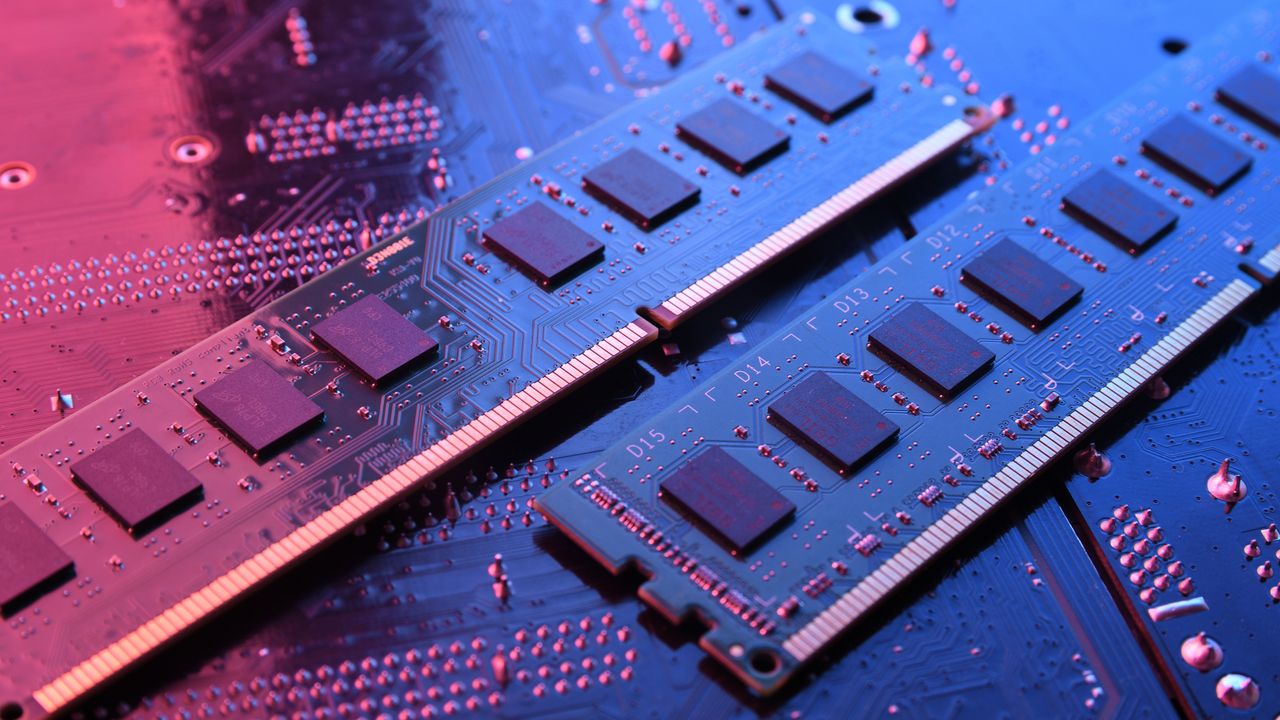
It’s AI’s world now, and we’re just living in it. If you’ve looked to upgrade your laptop, add memory to your PC, or even want to pick up a new games console in recent months, you’ll no doubt have noticed prices are higher than ever.
RAMageddon is here, and consumer RAM has climbed hundreds of percent due to a push to empower our future AI overlords. That means just about everything tech-wise has been affected, but why? And how?

We’re here to clear up the situation, show you your options, and dive deep into what’s been affected.
RAM pricing crisis: Top stories
- Lenovo is planning another PC price hike in March — and I’m all out of patience with this AI bubble
- RAMeggedon comes for gaming as Nintendo and PlayStation mull price hikes and delays
- Steam Deck OLED stock is drying up, Valve confirms — and the RAM crisis has me worried for the Steam Machine
- The 'RAM Rationing' of 2026 could lead to some awkward moments of irony for the likes of Google and Apple — here's why
- Asus says memory shortage should 'start to normalize' by 2027, but 'nobody wants to be the first one to lower prices'
- Intel says laptop makers are sitting on 'about 9 to 12 months' of stock, and it might be the key to surviving the RAM crunch
- 'There's just not enough supply to go around': Micron believes RAM shortage won't improve until 2028
- MacBook and iPhone prices could rise in 2026, as Apple’s RAM supply advantage begins to fade
- Framework says it will not 'gouge customers like Dell' in RAM price crisis
- Brace yourself: PCs, laptops and phones may jump in price as early as December thanks to a '500%' RAM/SSD surge
- RAM crisis continues to worsen — Micron kills Crucial consumer memory in favor of AI data centers
What’s happening?
- A DRAM chip oligopoly controls around 95% of production
- A huge influx of demand from AI and data center companies has caused a drought
- That’s spiking the price for consumers, as business customers have more money to throw around

My colleague Jason England explained it best when comparing the current RAM market to an apple orchard (no, it’s not a new product from the Cupertino firm).
DRAM is the key ingredient for just about anything RAM-wise, and those are the apples in this metaphor. Three main orchards are growing these crunchy, technological apples: Samsung Electronics, SK Hynix, and Micron Technology. Between the three of them, they cover the ‘apples’ for around 95% of the world.
All of a sudden, however, huge firms want as many apples as they can get their hands on. The likes of OpenAI, Microsoft, Google, and more are looking to power AI models that require huge amounts of resources, including those shiny apples. Essentially, those orchards are shipping apples as soon as they’re ready to pick, and they can’t turn down the mammoth orders from Big Tech Apple Pie makers.
That means you or I, more casual apple enjoyers, are left hungry, or forced to pay over the odds for an apple or two.
Earlier this month, Lenovo North America President Ryan McCurdy said “If the infrastructure is critical in the next three, six, 12 months, and the pricing sensitivity is high, then we get into a scenario where we’re acting quickly because essentially the current stock that is at our distributors and at our partners [has] some of the most attractive product pricing that will exist for the next six to 12 months.”
In short, if you need RAM, it’s probably a good idea to buy it sooner rather than later.
Why are prices skyrocketing?
- Supply & demand — AI and data centers have been the leading force behind the massive surge in demand
- That leaves this DRAM chip oligopoly in a position to charge whatever they want for the very limited consumer supply

Leaving the fruit analogy behind, consumers and non-AI manufacturers are essentially working to snap up as much of the pie as they can.
That’s become a lot harder as one orchard closed its doors to consumers, with Crucial (part of Micron) no longer shipping to them. They might not even be alone in that regard, reducing the options (and availability) open to end users that can’t invest millions or billions in buying units en masse.
Naturally, the companies that do have RAM to sell can name their own price, knowing consumers don’t really have much of an option other than to pay it if they’re desperate.
What tech will be impacted?
- PC components like RAM, SSDs and GPUs, and PCs as a whole
- Laptops
- Games consoles
- Phones
- Tablets

Oh boy, here’s the trouble. DRAM is essentially included in, well, anything in terms of modern technology. It began with the obvious: PC components.
CyberpowerPC and Maingear announced that memory prices were surging and that consumers would need to pay more by December 2025, while Framework wasn’t far behind. Apple has long charged significant sums to improve RAM in its Mac lineup, but it’s not just computers.
Tablets and phones will be affected, too, but spare a thought for the likes of Valve. The company’s Steam Deck is facing stock shortages, but the company behind the likes of Half-Life and Counter-Strike was also poised to launch a new home console/PC hybrid in 2026, the Steam Machine, which is now delayed due to RAM shortages and pricing.

While Nintendo Switch 2 squeaked out ahead of the RAM crisis, the Japanese company has been caught up in it, too, and potentially PlayStation.
Bloomberg reports that the Switch 2 and the PS5 could see price increases, while Microsoft has already had some of its own in recent months on its Xbox hardware and services.
The ongoing RAM crisis could also delay the PS6 and next Xbox.
How long will this last?
- When production capacity is expanded in a few years
- Or until the AI bubble bursts — whichever comes first
There are suggestions that the shortage could run until 2028 (from Micron itself), prompting suggestions that older, slower DDR4 RAM could be poised to make a comeback.
We could even see proposed AI features in Windows and Mac laptops rolled back as machines begin shipping with less RAM.
There's a chance supply gets closer to meeting demand, but it’s too soon to say. Micron has reportedly committed to building a new DRAM facility, but it won’t be open until 2028. It’s costing the company almost $10 billion, though, so don’t expect many other similar facilities to pop up.
On the other hand, it feels as though public perception is starting to change on AI usage. Could that mean there’s less need for AI, that consumers are beginning to lose interest, or that its environmental impact is becoming more obvious?
OpenAI has made $1.5 trillion in chip commitments, while Reuters reports the company has made $12 billion in annual revenue this year. Could we be left with a lot of apples left to rot if AI isn’t the future many (including shareholders) are expecting?
SK Hynix disclosed the following at today's virtual group meeting with Goldman Sachs:1. Memory prices are expected to continue rising throughout the year, driven by robust demand from AI customers—underpinned by advancements in AI services—coupled with limited supply growth.…February 20, 2026
According to one analyst on X (formerly Twitter), SK Hynix, a semiconductor manufacturer, suggested memory prices will climb throughout 2026, but that customers are aware that "double-ordering" will only lead to future price increases.
Outlook
As much as AI feels like a limited-term bubble, it’s hard for tech enthusiasts and the general population not to feel more than a little deflated.
We’re marching towards lining the pockets of a small few, while giving up environmental and financial stability. It’s easy to feel jaded, but this kind of crisis feels a little unprecedented. We’ll just have to see how things shake out in the meantime.
More from Tom's Guide
- Apple's wearable trifecta: Apple Glasses, AI pendant and AirPods with cameras detailed in new report
- My ghost is not for sale: The case against Meta's AI Afterlife patent
- 1 billion personal records exposed in massive new data leak — full names, addresses, phone numbers and more

Follow Tom's Guide on Google News and add us as a preferred source to get our up-to-date news, analysis, and reviews in your feeds.