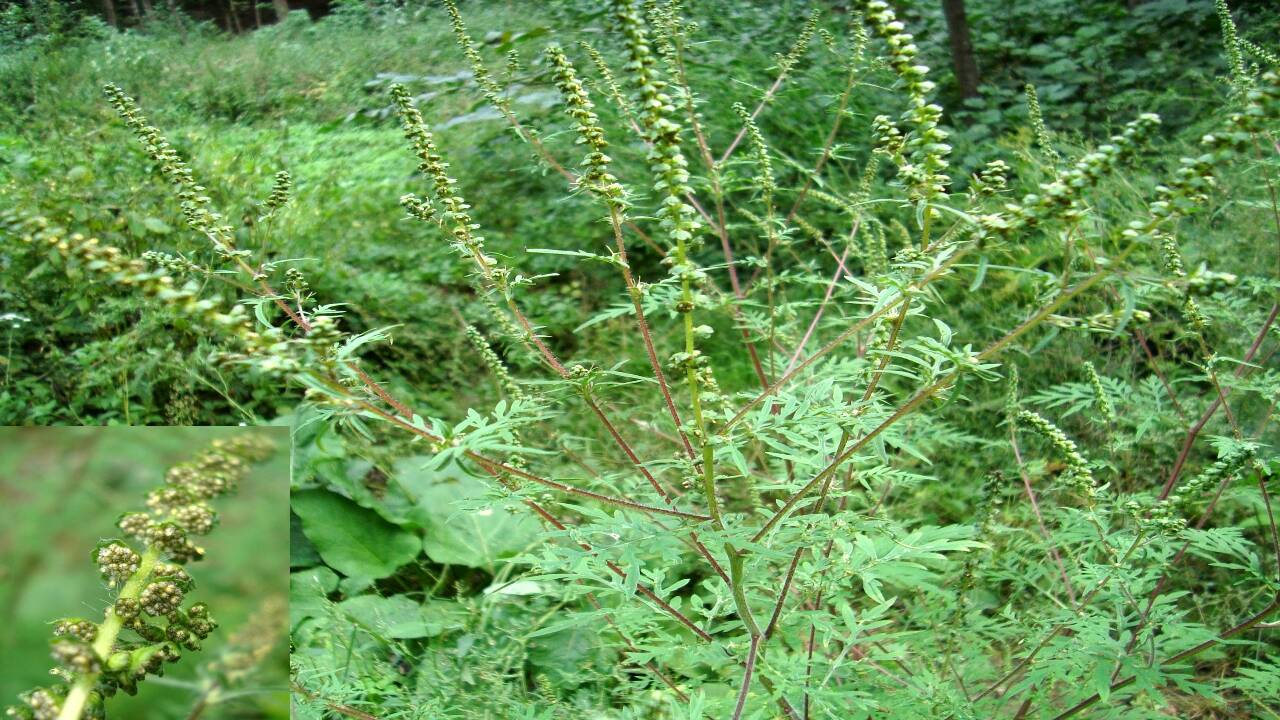
Massive amounts of food, seed, and raw materials must be transported across borders to rebuild a nation following a catastrophic conflict, typically with significantly more hurry than caution. The United States provided Japan with this kind of extensive assistance in the years following World War II in the form of wheat, animal feed, and other agricultural supplies meant to avert widespread hunger and revive Japanese agriculture. Among the plants that later benefited from increased movement of agricultural goods was common ragweed, Ambrosia artemisiifolia, a North American species capable of thriving in disturbed ground. Japan's experience would eventually turn the plant from a minor introduction into a widespread source of seasonal pollen.
Get breaking news anytime, anywhere. Download the TOI app now!

An old arrival that spread after conditions changed
Common ragweed had reached Japan decades before the war, with the first record dating to around 1877. Japan's National Institute for Environmental Studies lists the species as an introduced plant that later established itself in the wild. For decades, it remained a relatively limited introduction rather than a nationwide presence.
What changed after 1945 was the scale of disturbance and the movement of goods. Bomb-damaged urban areas, cleared building sites, expanding farmland and newly disturbed roadsides created the kind of open ground on which ragweed could thrive. Increased movement of agricultural commodities also provided opportunities for seeds to travel. The species eventually became widespread across Japan, occurring in farmland, orchards, pastures, roadsides, vacant lots, woodland edges and riverbanks.
From nuisance on the roadside to established allergies
Japan's recognition of pollen allergy developed gradually. A systematic study of pollinosis carried out in 1960–61 included a patient with ragweed pollinosis, providing an early documented example of pollen-related allergy in the country. Japanese cedar pollinosis was identified separately after doctors in Nikko investigated patients with recurring spring symptoms in 1963, with the first report published in 1964.
Cedar and cypress pollen dominate Japan's spring allergy season, while ragweed releases its pollen in late summer and early autumn, creating a later period of seasonal exposure, which releases its pollen in late summer and early fall, providing Japan a second, lesser wave of seasonal allergy sufferers each year. In urban Saitama, airborne pollen surveys found ragweed pollen levels exceeded the level associated with the onset of clinical allergy symptoms for approximately six weeks in early autumn, and on some days pollen levels were so high that they posed a risk of triggering asthma-related emergency visits.
A plant no one has learnt to weed out
Common ragweed remains widespread in Japan and is recognized as an invasive alien species. The National Institute for Environmental Studies lists competition with native plants among its ecological effects, while the species is also important from a public-health perspective because its pollen can trigger seasonal allergic reactions.
Research on common ragweed in other regions has similarly linked its spread to international grain trade and transportation networks. A recent study of East China, for example, identified multiple introductions and found that modern grain trade between the United States and China was a major invasion pathway. Ragweed can spread through trade and transportation before becoming established in disturbed habitats. Japan's history with the plant illustrates how an introduction recorded in the 19th century can expand over subsequent decades and eventually become both an ecological and public-health concern. Japan’s postwar experience, driven by an emergency to feed the population, left it with a seasonal health annoyance that outlasted the crisis that birthed it by many decades.