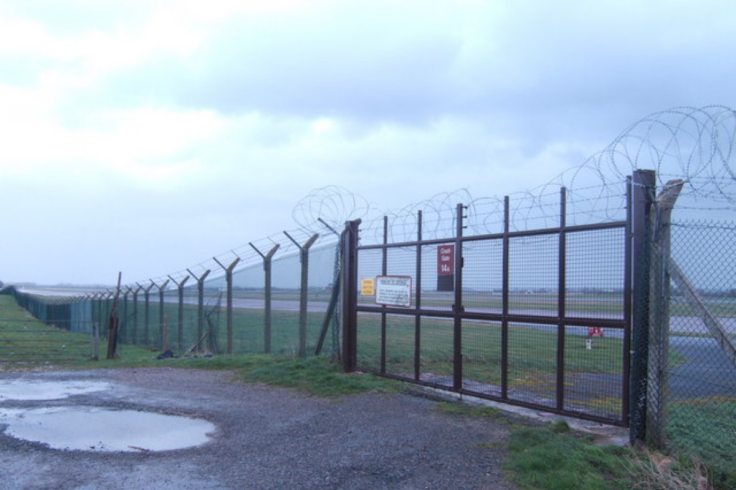
A suspect in the RAF Fairford investigation reportedly called 999 before a farmer alerted police to suspicious vehicles near the military base, while investigators later confirmed they found no improvised explosive devices in the three vans.
The sequence has added another unexplained element to an investigation that began with five arrests on 27 September. All five men remain on police bail, while a 27-year-old dual UK-Iranian national was arrested in Westminster on 1 October on suspicion of preparing terrorist acts. A second man, aged 26, was also questioned under caution.

The unusual timing of the emergency call is significant because police have said their response was triggered by a 'range of information', rather than identifying a single incident as the sole reason officers intervened.
The Emergency Call Adds to the Unresolved Timeline
The reported 999 call came at about 12:45 a.m. on 27 September, according to reporting about the investigation. A local farmer subsequently contacted emergency services after seeing three white vans and a group of masked men near Whelford.
Counter Terrorism Policing has confirmed that officers were alerted to three vehicles travelling towards RAF Fairford at 12:45 a.m., but its public statements have not explained who made the first call or what was said during it. That leaves an important part of the timeline unresolved. Police have not publicly said why one of the suspects would have contacted emergency services, or whether the call was connected to the activity that led to the arrests.
The Vans Contained Petrol but No IEDs
The physical evidence has also complicated the initial picture. Police examined the three vehicles with specialist teams and military support, but confirmed that no improvised explosive devices were found. A quantity of petrol was recovered.
Five men, aged between 23 and 25, were arrested in Whelford on suspicion of offences under the Explosives Act and preparation of a terrorist act under Section 5 of the Terrorism Act 2006. They were subsequently released on police bail and remain under investigation.
Police have not publicly established what the men intended to do near the base. That distinction matters because the absence of an IED does not, by itself, establish what the vehicles or their occupants were allegedly planning.
Sixth Arrest Shifts the Focus to a Wider Network
The investigation widened on 1 October when counter-terrorism officers arrested a 27-year-old dual UK-Iranian national in the Borough of Westminster. The man was arrested on suspicion of preparation of terrorist acts under Section 5 of the Terrorism Act 2006. Officers also searched two properties, while a 26-year-old UK national was questioned under caution.

Counter Terrorism Policing's Senior National Coordinator Vicki Evans described the investigation as 'hugely complex', saying specialist teams were pursuing 'multiple lines of enquiry.' The new arrest does not establish a connection between the individual and the five men already on bail. Instead, it shows that investigators are examining activity beyond the original scene in Gloucestershire.
Iran Claims Remain Separate From Confirmed Evidence
The RAF Fairford case has also acquired an international dimension because the base is used by the US military and has been associated with operations involving Iran. Prime Minister Andy Burnham has said there are 'strong indications' Iran played a part in the incident, while Iranian authorities have rejected the allegation. Counter Terrorism Policing has said it is considering 'all possible angles', including possible foreign-state involvement.
However, police have not publicly established that Iran was behind the incident. The same applies to the motive of those arrested.
For now, the confirmed picture is narrower: five men remain under investigation, a sixth person has been arrested, two London properties have been searched, petrol was recovered from the vans, and no improvised explosive devices were found. The reason for the 999 call and the alleged purpose of the activity near RAF Fairford remain unresolved.