Get all your news in one place.
100's of premium titles.
One app.
Start reading
The Conversation
The Conversation
Benjamin Roulston, Assistant Professor of Physics, Clarkson University

Radioisotope generators − inside the ‘nuclear batteries’ that power faraway spacecraft

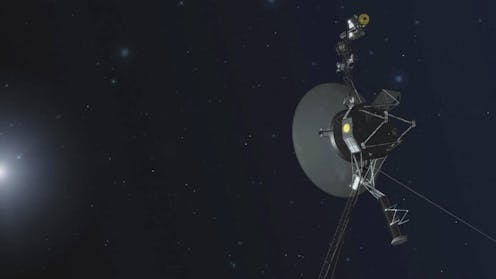
Voyager 1, shown in this illustration, has operated for decades thanks to a radioisotope power system. NASA via AP

Powering spacecraft with solar energy may not seem like a challenge, given how intense the Sun’s light can feel on Earth. Spacecraft near the Earth use large solar panels to harness the Sun for the electricity needed to run their communications systems and science instruments.

However, the farther into space you go, the weaker the Sun’s light becomes and the less useful it is for powering systems with solar panels. Even in the inner solar system, spacecraft such as lunar or Mars rovers need alternative power sources.

Sign up to read this article
Read news from 100's of titles, curated specifically for you.
Already a member? Sign in here
Related Stories
Top stories on inkl right now
One subscription that gives you access to news from hundreds of sites
Already a member? Sign in here
Our Picks
Fourteen days free
Download the app
One app. One membership.
100+ trusted global sources.