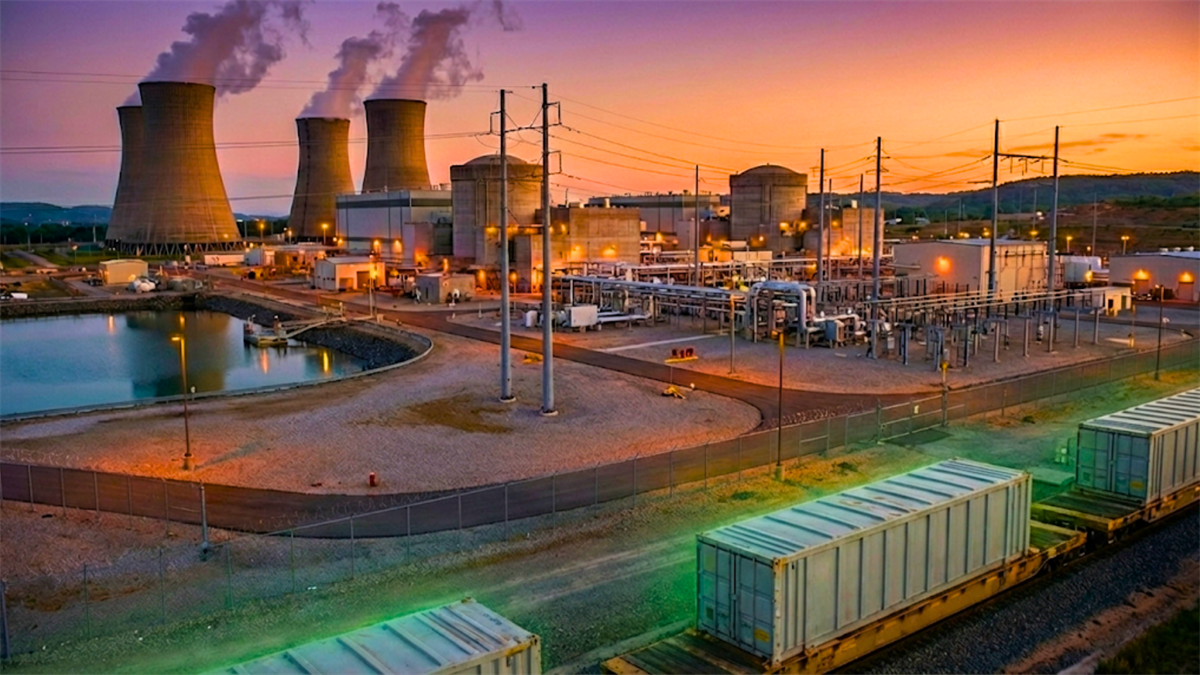
Recent diplomatic reports indicate that Russia is actively marketing and offering nuclear power infrastructure to nations such as Serbia. While this might appear to be standard international trade on the surface, it signals a deepening fracture in the global energy market. Energy infrastructure has evolved into a geopolitical chess piece, forcing the United States and its allies to fundamentally rethink how they secure their power grids.
For decades, the West was comfortable relying on globalized supply chains to meet its energy needs. However, Russia's aggressive moves are pushing Western nations toward onshoring, prioritizing domestic energy independence and security. In 2026, energy security is now synonymous with national security.

Simultaneously, a second, perhaps even more powerful force is hitting the electricity market: artificial intelligence (AI). Data centers, the massive physical warehouses that power the internet, cloud computing, and AI models, are consuming electricity at rates never seen before. Unlike a factory that might shut down at 5:00 PM, data centers require baseload power. This is energy that flows reliably 24 hours a day, seven days a week, regardless of the weather.
While renewable sources like wind and solar are vital to the energy mix, they are intermittent; the sun does not always shine, and the wind does not always blow. Nuclear energy remains the only scalable, carbon-free source capable of providing the massive, constant reliability that Big Tech requires. The convergence of these national security concerns and technological demands is creating a perfect storm for established Western nuclear operators.
The Downstream Powerhouse: Vistra Corp.
Vistra Corp. (NYSE: VST) represents the downstream opportunity in this sector. As an integrated power company, Vistra generates and sells the actual electricity, the electrons, that power the grid and the data centers attached to it.
To understand the investment case for Vistra, investors must understand the concept of Vistra’s economic moat. Building a new nuclear power plant in the United States is an incredibly long and expensive process, often taking more than a decade to clear regulatory hurdles and complete construction. This reality gives Vistra a significant advantage. The company already owns the second-largest competitive nuclear fleet in the country. Because these assets are licensed, operational, and connected to the grid right now, they are scarce and highly valuable in a power-hungry world.
The 2,600 MW Signal
The theoretical value of Vistra’s fleet became a concrete reality on January 9, 2026. The company announced a landmark agreement with Meta Platforms. This 20-year Power Purchase Agreement (PPA) involves supplying over 2,600 megawatts (MW) of capacity to the tech giant.
Crucially, this deal includes uprates. An uprate is an efficiency upgrade that allows an existing plant to generate more power without building a new reactor from scratch. It is the most cost-effective way to add capacity. This agreement serves as proof that major technology companies are willing to pay a premium to secure reliable, carbon-free nuclear energy to support their AI ambitions.
Earnings Watch: Q4 Forecast
Investors are closely watching Vistra as it prepares to report its fourth-quarter 2025 earnings on Thursday, Feb. 26, 2026. Expectations are high, reflecting the company's strong positioning.
- Earnings Per Share (EPS): Consensus estimates sit at approximately $2.51, representing a year-over-year increase of roughly 120%.
- Revenue: Analysts project revenue of $5.34 billion.
Beyond the earnings print, Vistra has been aggressive in returning capital to shareholders, a key metric for long-term investors. Since November 2021, the company has repurchased approximately 30% of its outstanding shares. By reducing the number of shares available, the company increases the value of each remaining share. Furthermore, the company recently declared a quarterly dividend of roughly 23 cents per share, rewarding investors for holding the stock.
Currently trading around $167, the stock has consolidated recently after a strong run. This pause suggests the market is waiting for the upcoming earnings report to confirm the company's growth trajectory before making the next move.
The Upstream Titan: Cameco Corporation
While Vistra generates the power, Cameco Corporation (NYSE: CCJ) provides the essential fuel and technology required to create it. Cameco represents the upstream investment opportunity.
As Western utilities move away from Russian fuel services due to the geopolitical risks mentioned earlier, they are rushing to sign long-term contracts with suppliers in safe, stable jurisdictions. Cameco operates top-tier mines in Canada, including McArthur River and Cigar Lake. These are some of the highest-grade uranium mines in the world, making Cameco the primary beneficiary of this supply chain shift.
The $80 Billion Backstop
Cameco is no longer just a mining company; it has evolved into a nuclear technology infrastructure firm. In October 2025, a strategic partnership was announced involving Cameco, Brookfield, Westinghouse, and the U.S. Department of Commerce. This collaboration targets the deployment of $80 billion in new Westinghouse AP1000 reactors.
This partnership is significant because it effectively puts the financial and diplomatic weight of the U.S. government behind the expansion of Cameco’s nuclear technology division. It signals that the government views Cameco and Westinghouse as critical partners in rebuilding the West's nuclear infrastructure.
The Contract Fortress: 230 Million Pounds
Cameco recently reported strong fourth-quarter results on Feb. 13, 2026, demonstrating operational resilience. The company reported EPS of 36 cents, beating analyst estimates of 29 cents, and revenue of approximately $875 million, surpassing expectations.
Perhaps most importantly for risk-averse investors, Cameco currently has approximately 230 million pounds of uranium committed under long-term contracts. This robust contract book acts as a fortress, protecting the company from short-term fluctuations in spot prices while guaranteeing future revenue streams. Following the earnings beat, GLJ Research reiterated a Buy rating and raised its price target from $100.00 to $171.20, signaling strong confidence in the company's trajectory.
The Nuclear Renaissance: Two Paths, One Destination
Vistra Corp. and Cameco Corporation offer investors two distinct but complementary ways to invest in the nuclear energy resurgence. Vistra provides exposure to the immediate cash flows generated by selling power to AI data centers and the electric grid. Cameco provides exposure to rising uranium prices and the long-term construction of new reactor infrastructure.
With the uranium spot price holding near $89 per pound and political winds blowing firmly in favor of domestic energy security, the sector appears to be in a structural bull market. In a world driven by algorithms and defined by geopolitical borders, nuclear energy has transitioned from a contrarian trade to a cornerstone of modern infrastructure portfolios.
Where Should You Invest $1,000 Right Now?
Before you make your next trade, you'll want to hear this.
MarketBeat keeps track of Wall Street's top-rated and best performing research analysts and the stocks they recommend to their clients on a daily basis.
Our team has identified the five stocks that top analysts are quietly whispering to their clients to buy now before the broader market catches on... and none of the big name stocks were on the list.
They believe these five stocks are the five best companies for investors to buy now...
The article "Radioactive Returns: Geopolitics and AI Fuel a Nuclear Supercycle" first appeared on MarketBeat.