Get all your news in one place.
100's of premium titles.
One app.
Start reading
The Conversation
The Conversation
Olivia Harper Wilkins, Assistant Professor of Chemistry, Dickinson College

Radio telescopes help scientists map molecules in space and uncover where and how stars form

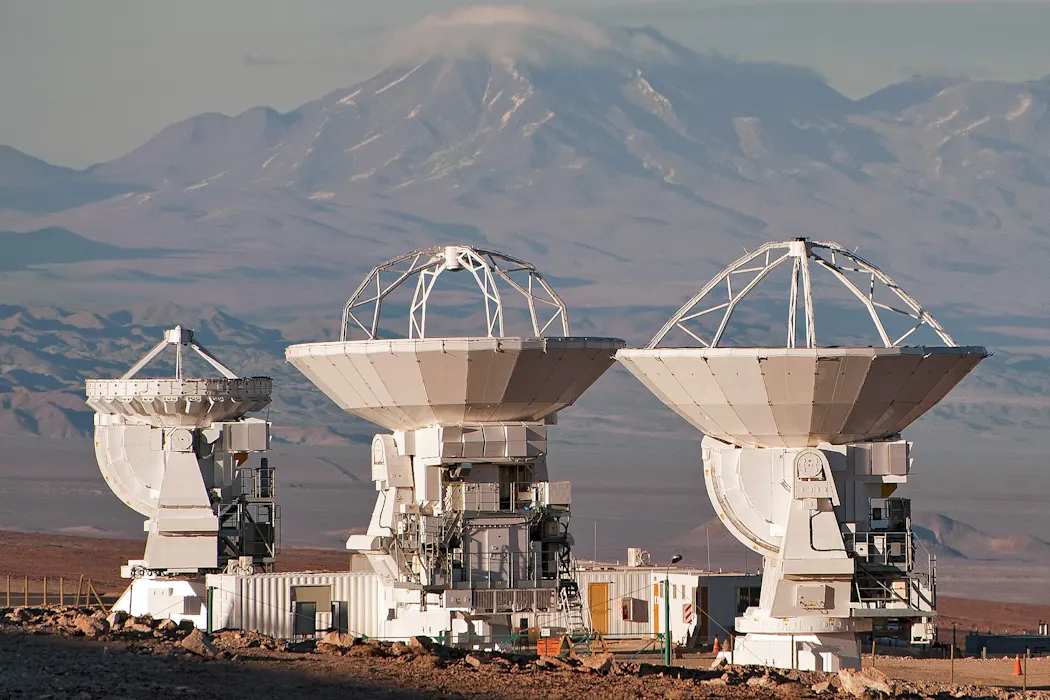
ALMA, a powerful radio telescope in the Atacama Desert of Chile. J.F. Salgado (ESO), CC BY

You may have heard the phrase “we are made of star-stuff.” This statement by the astronomer Carl Sagan refers to the fact that elements heavier than hydrogen and helium were forged in the centers of the first stars. But how does this star-stuff evolve into the chemistry of rocks, plants and people?

As an astrochemist and radio astronomer, I study the places in the universe where stars are born as interstellar laboratories. I’m interested in how simple ingredients come together to form bigger and bigger molecules, including those that are building blocks of life. One way I do this is by mapping molecules in space and finding patterns between how abundant they are and the conditions around them.

Sign up to read this article
Read news from 100's of titles, curated specifically for you.
Already a member? Sign in here
Related Stories
Top stories on inkl right now
One subscription that gives you access to news from hundreds of sites
Already a member? Sign in here
Our Picks
Fourteen days free
Download the app
One app. One membership.
100+ trusted global sources.