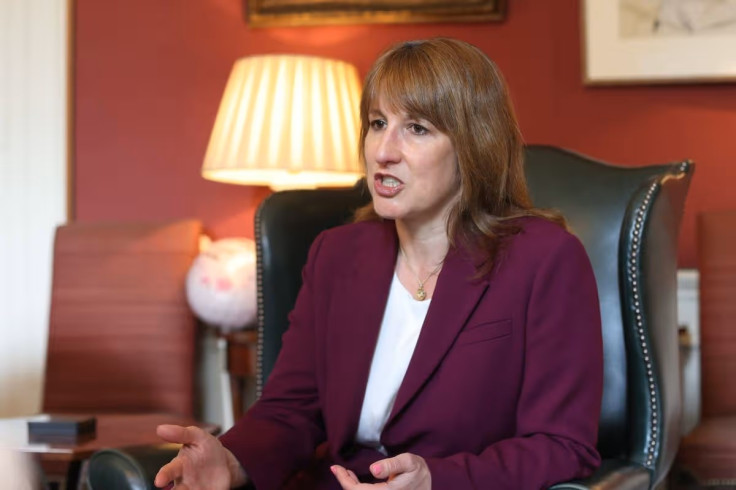
Rachel Reeves has accused Donald Trump's administration of a 'folly' in Iran that is driving up prices in Britain, as the chancellor heads to Washington and Keir Starmer prepares to address the nation on the mounting cost of living crisis linked to the war and the blockade of the Strait of Hormuz.
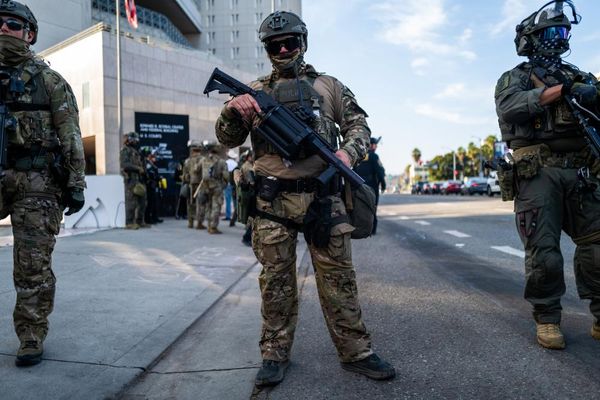
Reeves Blames Trump's Iran War For Squeezing UK Families
Rachel Reeves, speaking to the Mirror before flying to the United States for International Monetary Fund meetings, set out her anger in unusually direct terms. She said this was 'a war that we did not start' and 'did not want.'
'I feel very frustrated and angry that the US went into this war without a clear exit plan, without a clear idea of what they were trying to achieve,' the chancellor said. She described the decision to launch military action in Iran without clear objectives or an agreed path out as a 'folly' that is 'affecting families here in the UK, but also families in the US and around the world.'
The IMF has just cut its forecast for UK economic growth and warned that a global recession could be a 'close call' in a severe scenario linked to the conflict. Oil price turbulence, triggered by the fighting and the closure of Hormuz, is one of the main reasons.

A leading UK think tank, the Resolution Foundation, has warned that the average British household could end up £480 worse off over this financial year than if the war had not happened. Reeves said she did not recognise that exact number but promised that the government would keep a 'close eye' on gas and electricity prices and intervene to protect the most vulnerable if bills start to climb again.
She underlined that she did not support Tehran's regime, but insisted that did not excuse bad planning in Washington. 'Obviously no sensible person is a supporter of the Iranian regime,' she said. 'But to start a conflict without being clear what the objectives are and not being clear about how you are going to get out of it, I do think that is a folly.'
Keir Starmer's Hormuz Summit And A New Iran War Cabinet
While Reeves presses the economic case in Washington, Keir Starmer is trying to shape the security and diplomatic response closer to home. Downing Street has confirmed that the prime minister will travel to Paris to co‑host a summit on the Strait of Hormuz with French President Emmanuel Macron.
According to a No 10 spokesperson, the meeting will 'advance work towards a coordinated, independent, multinational plan to safeguard international shipping once the conflict ends.' Starmer told MPs the UK‑French initiative would combine 'military planning to provide assurance to shipping' with diplomatic efforts to manage the ceasefire and its aftermath.
The French president has already said that countries taking part in the prospective mission would be engaged in a 'strictly defensive' deployment, separate from the warring parties, and would step in only 'as soon as circumstances permit'.
The aim is to keep one of the world's most important maritime choke points open without dragging European navies directly into the shooting war.
Inside Whitehall, the seriousness of the situation is reflected in a new structure of government. Downing Street has set up a Middle East Response Committee, a cabinet‑level group tasked with handling the domestic and international fallout from the Iran conflict. Officials have likened it to the committees created under previous Conservative governments to deal with Brexit preparations and the Covid pandemic.

A source described it as a 'new central structure' focused on medium‑term planning for developments in the region over the coming weeks and months. Alongside ministers, senior civil servants will meet under cabinet secretary Dame Antonia Romeo.
The more familiar Cobra system will still be used to respond to immediate emergencies, but the separate committee signals that the government expects the Iran crisis and its economic aftershocks to drag on.
The first meeting centred on the Strait of Hormuz, reflecting how central the waterway has become to both foreign policy and household finances. The partial closure by Iran has helped push up the cost of fuel, food and other essentials, and has shaken stock markets worldwide.
Trump's Blockade, US Reassurances And A Growing Rift
On the American side, Trump has cast the Gulf confrontation in stark terms. Announcing a blockade of Iranian ports, he argued that Washington could not allow Tehran to 'blackmail or extort the world' by controlling the strait. Iran, for its part, has selectively allowed some tankers through with its permission while threatening retaliation across the region.
US Treasury secretary Scott Bessent has been markedly more sanguine about the economic impact than Reeves. He argued that 'a small bit of economic pain for a few weeks is worth taking off the incalculable tail risk of either a nuclear Iran or a nuclear Iran that uses that weapon'.
In his view, 'there is nothing more transient than what we are seeing now', and once the conflict ends, he expects prices and headline inflation to fall back.

Reeves is plainly less convinced that households can simply ride it out. She has promised targeted support if energy bills spike again, but ruled out the kind of broad, universal interventions used during the Ukraine war under Liz Truss, arguing that untargeted giveaways in that period left the UK with higher interest rates, higher inflation and a heavier tax burden to clear the debt.
She has also been at pains to stress that the UK has kept out of the fighting. 'We're not getting involved in the US blockade, we don't think that is the right approach,' she said. 'All the way through this conflict we have said de‑escalate, de‑escalate.' She contrasted that stance with the Conservatives and Reform, whom she accused of wanting Britain to 'jump in feet first' to active offensive action.
As oil prices slipped back below $100 (£73.79) a barrel on hopes of revived US‑Iran talks and a future deal over Hormuz, the argument between Washington and London over how much economic suffering is acceptable for strategic gain was left unresolved.