Get all your news in one place.
100's of premium titles.
One app.
Start reading
The Economic Times
The Economic Times
Muskan Singh

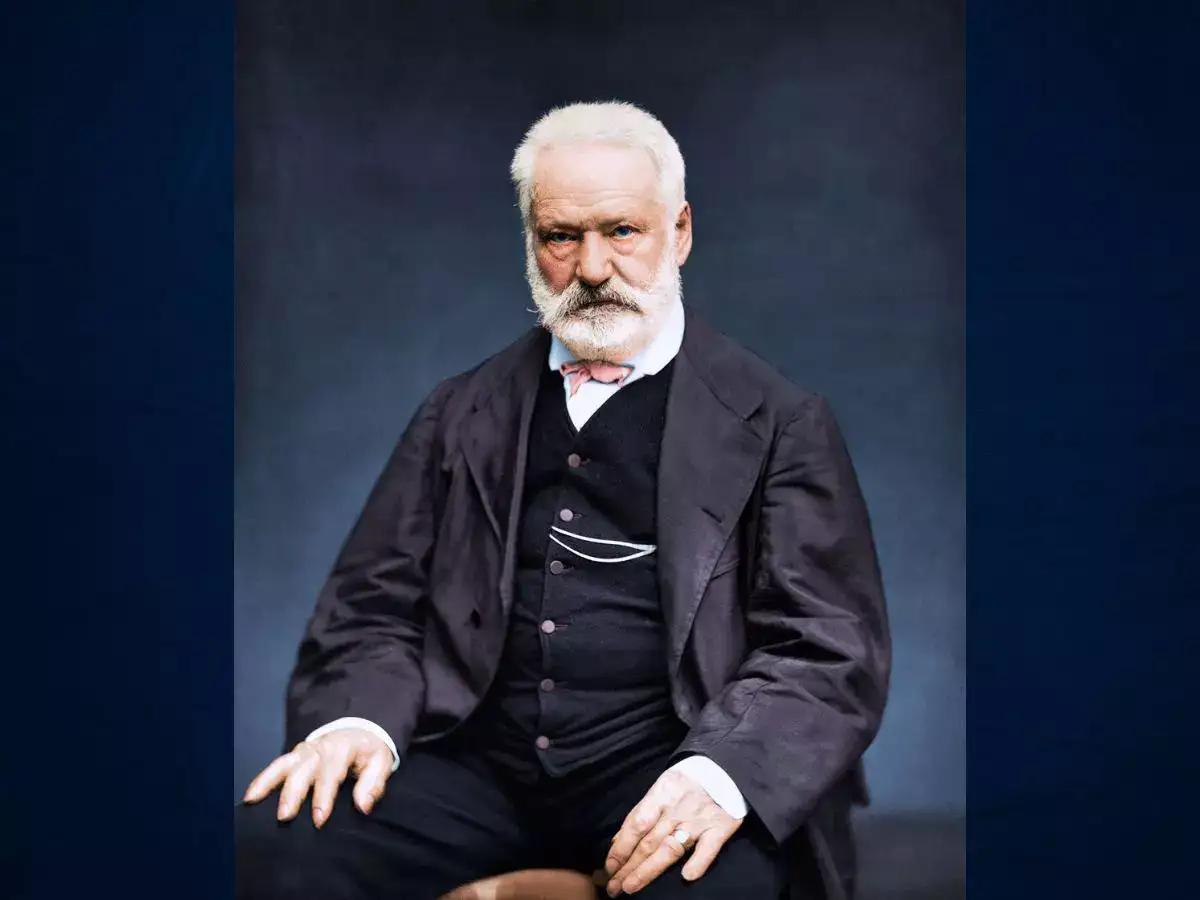
Quote of the Day by Victor Hugo: 'You who suffer because you love...'- A gut-wrenching lesson about love, pain, and the human heart by the famous Notre-Dame novelist

Quote of the Day by Victor Hugo: Love has always been one of the strongest emotions explored by writers, poets, and thinkers. Few understood its beauty and pain as deeply as French author Victor Hugo, whose words continue to inspire generations. His quote, “ You who suffer because you love, love still more. To die of love, is to live by it,” captures the complicated relationship between love, sacrifice, and the human experience.

Known as the legendary author of Les Misérables and The Hunchback of Notre-Dame, Victor Hugo believed that love was not simply a feeling but a force capable of transforming lives. His words remind us that even heartbreak and suffering can carry meaning when they come from a place of genuine affection.

READ ALSO: Quote of the Day by legendary French fashion designer Coco Chanel: 'Don't spend time beating on a wall...'-The luxury fashion house, Chanel founder's timeless quote about knowing when to stop fighting the impossible

The meaning behind Victor Hugo’s quote

At first glance, Hugo’s quote may seem tragic, but its message is actually about the strength of love. He suggests that those who experience pain because they care deeply should not turn away from love. Instead, they should allow that love to grow stronger.

For Hugo, love was not measured only by happiness or comfort. True love involved patience, courage, and sacrifice. The phrase “to die of love, is to live by it” reflects the idea that love gives life a deeper purpose, even when it brings challenges.

The quote also highlights an important truth about human emotions. The things that affect us most are often the things we value most. Pain can sometimes be proof that something truly mattered.

READ ALSO: Quote of the Day by street artist and political activist Banksy: 'I don’t know why people are so keen to put the details of their private life in public...' - The graffiti artist known for his anti-authoritarian art offers a thought-provoking quote about why staying invisible can be the ultimate superpower

Who was Victor Hugo?

Victor-Marie Hugo was born on February 26, 1802, in Besançon, France. He became one of the most influential figures in French literature and a leading voice of the Romantic movement.

Hugo was a poet, novelist, and playwright whose writing explored themes of love, justice, suffering, hope, and social inequality. Although he created many works, he became internationally famous for his novels Les Misérables and Notre-Dame de Paris, later known as The Hunchback of Notre-Dame.

His childhood was shaped by political changes and family struggles. His father served as a general in Napoleon’s army, while his mother held royalist views. These opposing influences shaped Hugo’s understanding of society, politics, and human emotions.

From a young age, Hugo showed a passion for writing. He published his first collection of poems when he was only 20 years old and quickly became recognized for his powerful imagination and emotional depth.

READ ALSO: Quote of the Day by Franz Kafka: 'Reality is too heavy for people, so they rent illusions...' -A powerful lesson that exposes our search for escape by the Absurdist fiction novelist known for his Kafkaesque writing style

How love influenced Hugo’s writing

Love was one of the central themes throughout Victor Hugo’s work. His characters often experienced impossible choices, heartbreak, sacrifice, and redemption.

In Les Misérables, Hugo created unforgettable characters whose lives were shaped by compassion and love. Jean Valjean’s journey, in particular, shows how kindness and love can change a person’s destiny.

The novel explores the idea that love and forgiveness can overcome hatred and suffering. This belief was deeply connected to Hugo’s own view of humanity.

His personal life also influenced his writing. Hugo experienced deep losses, including the tragic death of his daughter Léopoldine, whose memory inspired some of his most emotional poetry. His grief became a powerful source of reflection on life, death, and love.

READ ALSO: Quote of the Day by one of history's greatest commanders Napoleon Bonaparte: 'Show me a family of readers, and I will show you...'- A timeless lesson on books and greatness by the Emperor who dominated European history

Why this quote still matters today

More than a century after Victor Hugo’s death, his words continue to feel relevant. Relationships, friendships, and family bonds often come with both joy and pain.

Modern life encourages people to avoid discomfort, but Hugo’s message suggests that meaningful connections require vulnerability. Loving deeply means accepting that there may be moments of sadness, disappointment, or sacrifice.

The quote encourages people not to measure love only by easy moments. Sometimes the strongest forms of love are revealed when life becomes difficult.

In a world where many people fear emotional pain, Hugo’s words offer a reminder that feeling deeply is part of being human.

READ ALSO: Quote of the Day by the father of Political Philosophy Plato: 'When men speak ill of thee...' – Aristotle's teachers' timeless reminder that reputation is built through actions, not rumours

The lasting legacy of Victor Hugo

Victor Hugo died on May 22, 1885, in Paris, but his influence continues across literature, film, theatre, and culture. His works remain among the most celebrated examples of French literature.

He was remembered not only as a great writer but also as someone who used his voice to speak about compassion, equality, and human dignity.

His quote about love remains one of his most memorable reflections because it captures something universal. Everyone experiences love, loss, hope, and longing. Hugo understood that these emotions connect people across generations.

A century later, his words still remind us that love is not always simple, but it is often what gives life its deepest meaning.

Sign up to read this article
Read news from 100's of titles, curated specifically for you.
Already a member? Sign in here
Related Stories
Top stories on inkl right now
One subscription that gives you access to news from hundreds of sites
Already a member? Sign in here
Our Picks
Fourteen days free
Download the app
One app. One membership.
100+ trusted global sources.