Get all your news in one place.
100's of premium titles.
One app.
Start reading
The Economic Times
The Economic Times
Muskan Singh

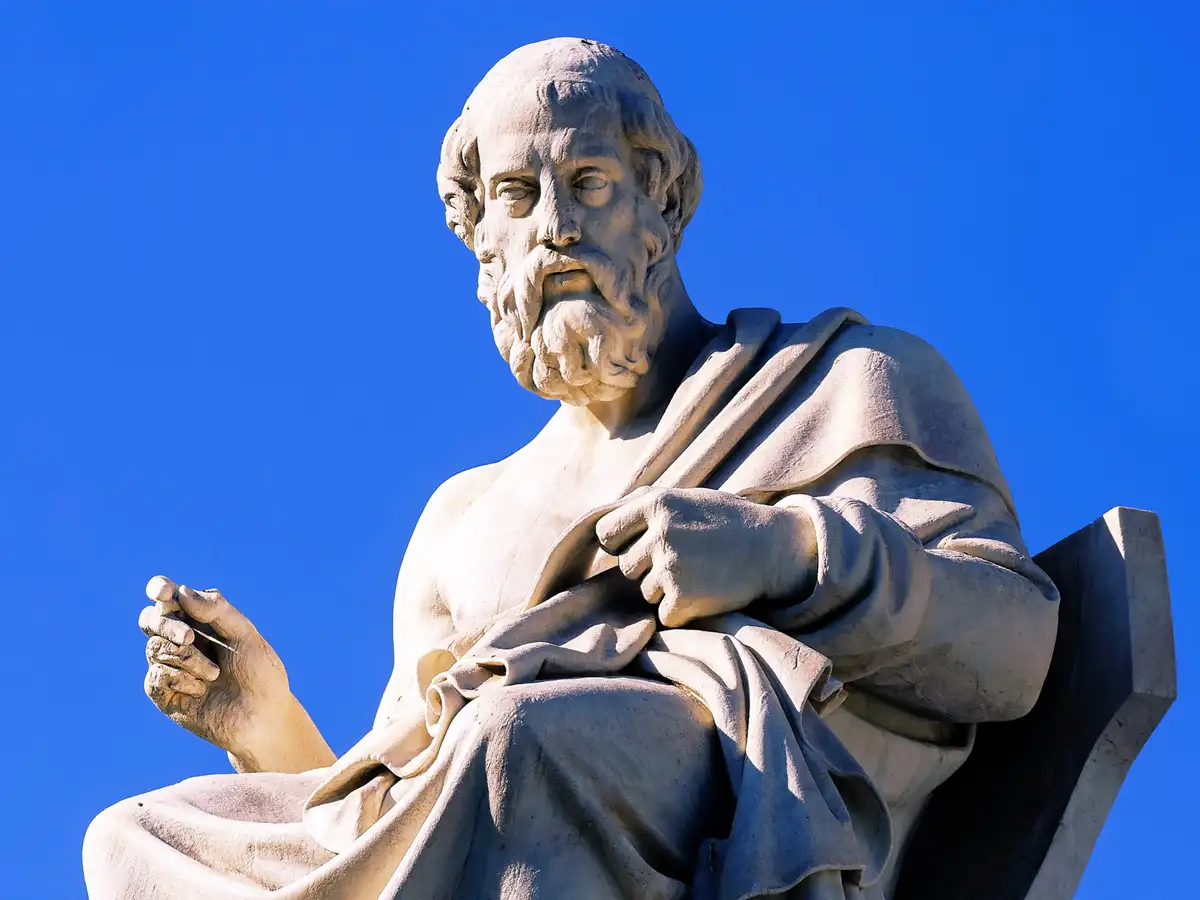
Quote of the Day by the father of Political Philosophy Plato: 'When men speak ill of thee...' – Aristotle's teachers' timeless reminder that reputation is built through actions, not rumours

Quote of the Day by Plato: Throughout history, some quotes have survived not because they were complicated, but because they captured a simple truth about human nature. The words of ancient philosophers often continue to feel surprisingly relevant centuries later, especially when they explore themes like character, reputation, patience and the way people judge one another.

Quote of the Day

One such powerful thought comes from the legendary Greek philosopher Plato, whose ideas shaped Western philosophy for generations. His quote, “When men speak ill of thee, live so as nobody may believe them,” reflects a deeper lesson about responding to criticism, false accusations and the importance of letting one’s actions speak louder than words.

For Plato, true character was not something that could be defended through endless arguments. It was something proven through the way a person lived.

READ ALSO: Quote of the Day by famous American transcendentalist writer Henry David Thoreau: 'How vain it is to sit down to write...' – Walden author's timeless reminder that life must be experienced before it is explained

What does Plato’s quote teach us about criticism and character?

Plato’s words suggest that when people spread negative opinions about someone, the strongest response is not always to fight back. Instead, a person’s consistent behaviour, honesty and values can eventually become the answer.

The quote does not mean that criticism should always be ignored. Rather, it highlights the power of reputation built over time. If someone’s actions repeatedly show kindness, wisdom and integrity, false claims often lose their influence.

In a world where rumours can spread quickly, Plato’s message feels more relevant than ever. People are often judged by a single mistake, a misunderstanding or someone else’s version of events. But the ancient philosopher reminds us that a lifetime of choices carries more weight than temporary opinions.

READ ALSO: African Proverb of the Day: 'Gold should be sold to the one who...'-Life lessons on value, recognition, wisdom, and why true worth is appreciated only by those who understand it

Why did Plato believe actions mattered more than words?

Plato, born around 428/427 BCE in Athens, Greece, was one of the most influential philosophers in history. A student of Socrates and the teacher of Aristotle, he dedicated his life to understanding truth, justice and the meaning of a good life, as per Britannica.

Unlike many thinkers who focused only on practical matters, Plato explored deeper questions, like, 'What makes a person good?' What is justice? How should humans live?

His philosophy often returned to the idea that appearances could be misleading. People might believe something because it is popular, but truth requires deeper understanding.

That idea connects directly with his famous quote. Plato believed that a person should not spend their entire life trying to control what others think. Instead, they should focus on becoming someone whose actions reveal their true nature.

A person who lives honestly does not need to constantly defend their reputation because their life becomes evidence.

READ ALSO: Quote of the Day by one of the most influential philosophers Immanuel Kant: 'The busier we are, the more acutely we feel...'- Here's a timeless reminder that a busy life can be a meaningful life

How did Plato’s own life reflect his philosophy?

Plato’s life was shaped by moments of political conflict, disappointment and questioning. Coming from an aristocratic Athenian family, he lived during a turbulent period when Athens experienced wars, changes in government and social unrest.

The execution of his teacher Socrates deeply affected him. Socrates was sentenced to death after being accused of corrupting the youth and disrespecting the gods. Plato saw the event as an example of how public opinion and political systems could sometimes fail to recognise truth.

This experience influenced much of Plato’s later work. He became deeply interested in justice, leadership and the difference between appearance and reality.

In his famous work The Republic, Plato explored the idea of the philosopher king, someone who leads not for personal gain but through wisdom and understanding. His writings questioned whether society always rewards the most deserving people.

READ ALSO: Quote of the Day by the Maggie May singer Rod Stewart: 'Only a fool permits the letter of the law to override...' -Powerful quote on love, law and the heart by the best-selling music artists of all time

Why does Plato’s quote still matter today?

Centuries after Plato’s death, the struggle between reputation and reality remains familiar. People continue to face criticism, gossip and judgement from others.

Social media has made this even more complicated. A single statement or moment can be taken out of context and shared widely. In such situations, Plato’s message offers a different approach: build a life so consistent that temporary accusations cannot define you.

The quote also carries a message about patience. Truth does not always appear immediately. Sometimes, the strongest response to unfair judgement is simply continuing to act according to one’s principles.

Many of history’s most respected figures faced criticism during their lifetimes. Their ideas were questioned, their intentions misunderstood and their choices criticised. Yet their work and character eventually shaped how the world remembered them.

READ ALSO: African Proverb of the Day: 'In dealing with a man who thinks you are a fool...'-Life lessons on wisdom, patience, humility, and why silence can be a sign of strength

The lasting legacy of Plato

Plato founded the Academy in Athens, an institution often considered one of the earliest models of a university. His writings influenced philosophy, politics, science, ethics and education for more than two thousand years.

His works, including The Republic, Phaedo and Symposium, continue to be studied because they examine questions that still matter today: justice, love, knowledge and human nature.

Plato’s influence can be seen throughout modern thought. Philosophers, writers and leaders have repeatedly returned to his ideas while discussing morality and society.

His quote about criticism remains one of his most relatable observations because it speaks to a universal human experience, the fear of being misunderstood.

READ ALSO: Quote of the Day by Elizabeth Taylor: 'I adore wearing gems, but not...'-Hollywood icon's timeless lesson on beauty, possession, and appreciating life

In the end, Plato’s wisdom suggests that the best defence against unfair judgement is not anger or endless explanation. It is a life lived with enough honesty and purpose that false words cannot survive against the truth. A person’s character, built quietly over time, often becomes the strongest answer to those who doubt them.

Sign up to read this article
Read news from 100's of titles, curated specifically for you.
Already a member? Sign in here
Related Stories
Top stories on inkl right now
One subscription that gives you access to news from hundreds of sites
Already a member? Sign in here
Our Picks
Fourteen days free
Download the app
One app. One membership.
100+ trusted global sources.