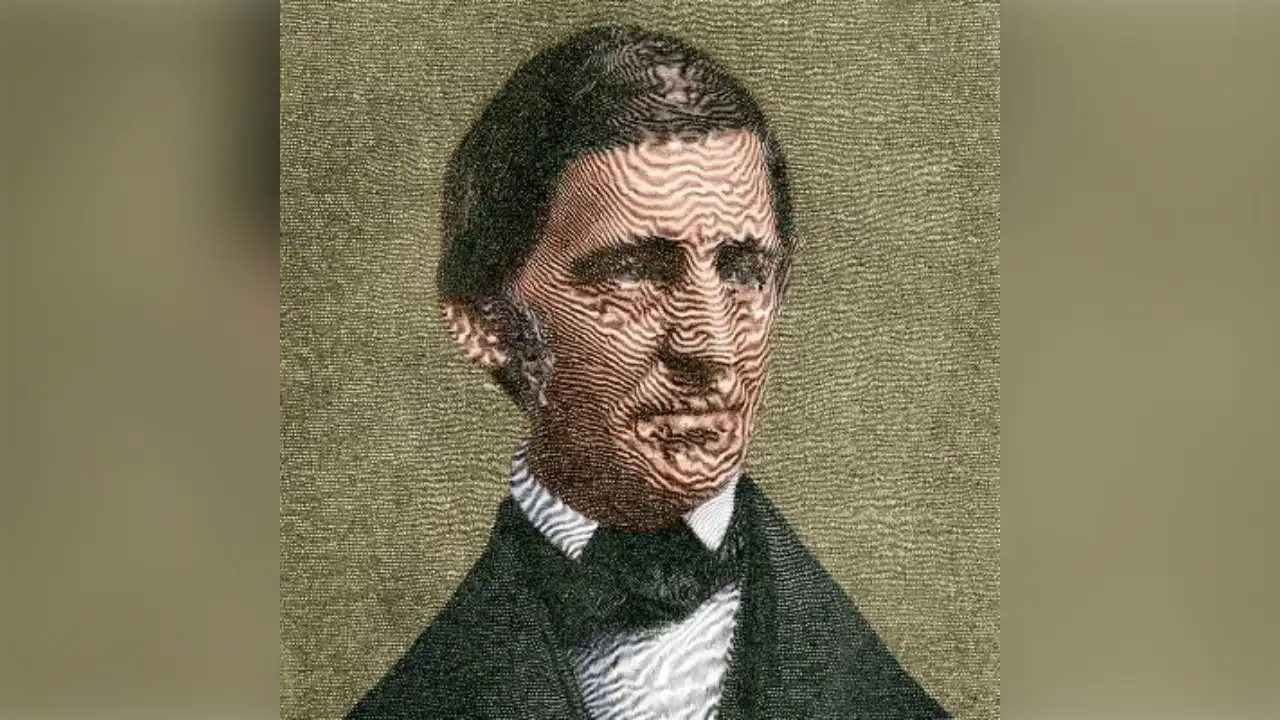
Quote of the day by Ralph Waldo Emerson : The way we see the world can say more about us than we realise. Our opinions are shaped by our experiences, beliefs and values, which means that the same situation can look completely different to two people. What one person sees as a problem, another may see as an opportunity, while someone else may focus on the people involved. This idea is at the heart of a quote by American essayist and philosopher Ralph Waldo Emerson. His words encourage us to look beyond our opinions and consider what they might reveal about our own character.

Quote of the Day Today: Ralph Waldo Emerson on Character
Ralph Waldo Emerson said, “ People do not seem to realize that their opinion of the world is also a confession of character, ” as per BrainyQuote.
What Does Ralph Waldo Emerson’s Quote Mean
Emerson suggests that our opinions are not only statements about the world around us. They can also reveal our personality, values and outlook on life.
The way we judge people or react to difficult situations can offer clues about how we think. Someone who constantly expects the worst may have a different outlook from someone who looks for possibilities in the same situation.
The quote is therefore a reminder to think about where our opinions come from before assuming they are simply an accurate picture of the world.
Life Lesson From Ralph Waldo Emerson’s Quote
The biggest lesson is to become more aware of our own perspective. We cannot control everything that happens around us, but we can pay attention to how we respond. Taking a moment to question our assumptions can help us understand ourselves better.
Emerson’s words remind us that when we describe the world, we may also be revealing something about ourselves.
Who Was Ralph Waldo Emerson
Ralph Waldo Emerson was an American lecturer, poet and essayist and a leading voice of New England Transcendentalism. Born in Boston in 1803, he studied at Harvard and initially became a Unitarian minister, as per a Britannica report.
Ralph Waldo Emerson’s Work
After leaving the ministry in 1832, Emerson focused on writing and lecturing. His 1836 book Nature helped establish his Transcendentalist philosophy, which stressed self-reliance, individual freedom and personal intuition.
His notable works include The American Scholar, Essays, Representative Men and The Conduct of Life. He also helped launch The Dial in 1840.
Ralph Waldo Emerson’s Legacy
Emerson became internationally known for his essays and lectures and was regarded as a major American poet. He died in Concord, Massachusetts, in 1882 and was later remembered as the “Sage of Concord,” as per the Britannica report.