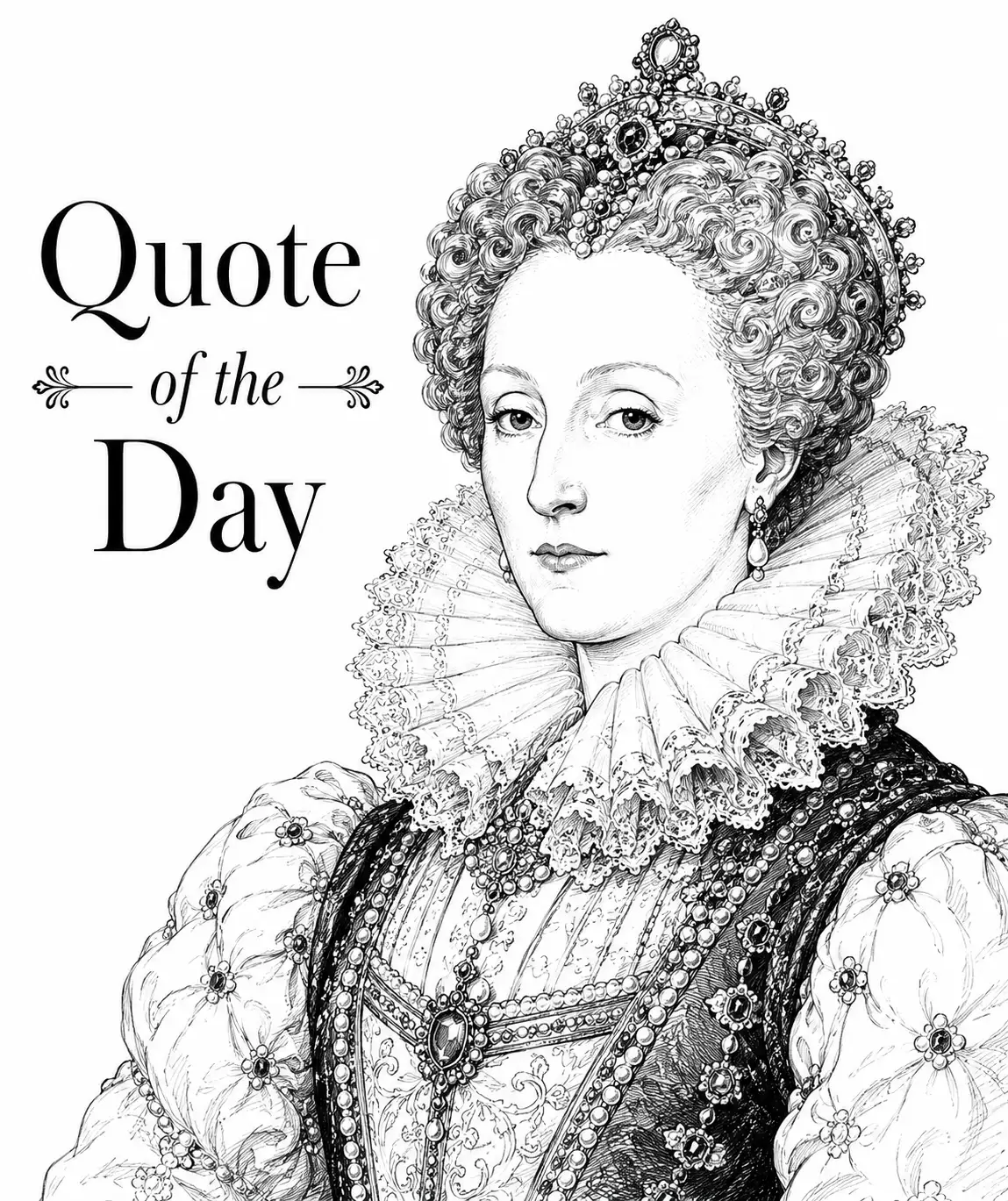
Quote of the Day: Elizabeth I remains one of history’s most influential monarchs, remembered for leading England through a transformative era that reshaped the nation’s political and cultural identity. Born on September 7, 1533, in Greenwich to Henry VIII and Anne Boleyn, Elizabeth’s early life was marked by political upheaval, personal loss, and intense public scrutiny.
Declared illegitimate following her mother’s execution, she grew up in a royal court shaped by shifting alliances and constant uncertainty. Despite these hardships, Elizabeth rose to the throne in 1558 and ruled until her death in 1603, overseeing a period now known as the Elizabethan Age.
During her reign, England emerged as a major European power in politics, commerce, and the arts, while strengthening its Protestant identity and expanding its maritime influence. Her rule also coincided with a remarkable cultural flourishing, often regarded as a golden age of English literature and theater, during which figures such as William Shakespeare left an enduring legacy.
Quote of the Day by Queen Elizabeth I: ‘Those who appear the most sanctified are the worst’
Queen Elizabeth I Quote: Context and meaning explained
The quote carries remarkable depth and reveals her keen understanding of human nature. It reflects a ruler who spent decades observing ambition, deception, loyalty, and betrayal within royal courts and political circles. Elizabeth understood that appearances can be carefully crafted and that virtue displayed too loudly can sometimes conceal darker motives.
The context behind this statement lies in the world Elizabeth inhabited, where religious devotion and moral posturing were often intertwined with political ambition. Elizabeth’s words suggest deep skepticism toward those who weaponize morality as a shield, recognizing that outward holiness does not always reflect inner integrity.
The quote offers a timeless lesson about perception and judgment. It reminds us to look beyond appearances and avoid accepting virtue at face value. People who loudly advertise their goodness may sometimes be seeking admiration, control, or authority rather than acting from genuine principle. True character often reveals itself not through public displays of righteousness but through consistent actions, humility, and integrity over time.
Elizabeth’s words encourage discernment in both personal and public life. In a world shaped by image, reputation, and carefully curated identities, her warning feels strikingly relevant. The lesson is not to become cynical, but to become wiser—learning to judge people by their actions rather than their image.