Sometimes the most difficult truths are not hidden at all. They may be visible in plain sight, repeated in everyday conversations and even acknowledged privately, yet somehow remain unspoken.
That tension lies at the heart of one of Ayn Rand's memorable lines from The Fountainhead . The quotation points to a curious human tendency: when an obvious reality conflicts with what people already believe, prefer or have collectively accepted, recognizing the truth can become difficult.
Who was Ayn Rand?
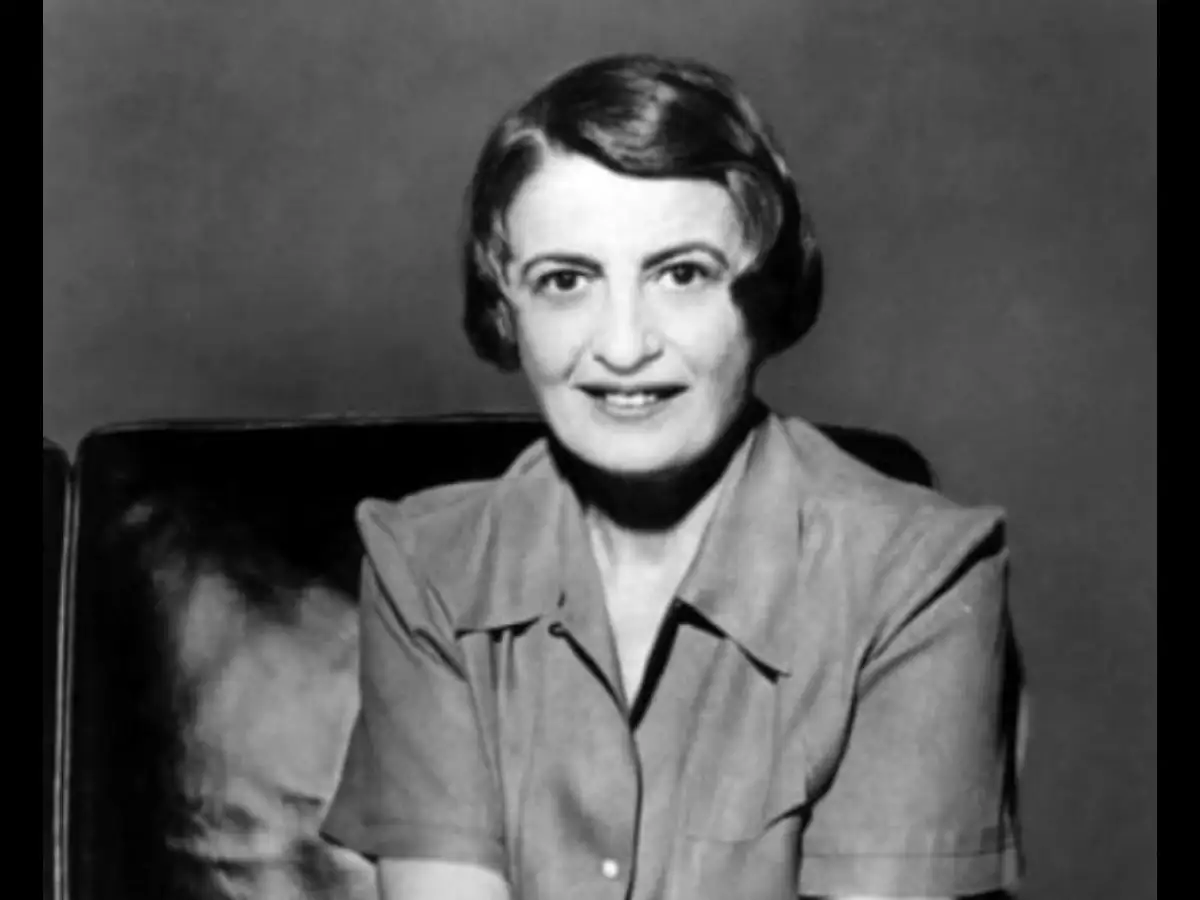
Ayn Rand was born Alisa Zinovyevna Rosenbaum in St. Petersburg, Russia, in 1905. She developed an early interest in literature and moved to the United States in 1926, where she eventually established herself as a novelist, philosopher and public intellectual.
Rand first achieved major literary recognition with The Fountainhead , published in 1943. The novel follows architect Howard Roark, an uncompromising individualist who refuses to alter his artistic principles simply to satisfy conventional expectations. The book became a major part of Rand's literary legacy and introduced many readers to themes that would later become central to her philosophical writing. The Ayn Rand Institute identifies the novel's conflict between the individual and collectivist social pressures as one of its central concerns.
Her later novel Atlas Shrugged , published in 1957, expanded those ideas into a much larger story involving industrialists, government regulation, individual achievement and social responsibility.
Rand eventually developed Objectivism, the philosophical system associated with her name. It placed reason, individual judgment and rational self-interest at the centre of her moral and philosophical outlook.
Quote of the day
“The hardest thing to explain is the glaringly evident which everybody has decided not to see.”
- Ayn Rand, The Fountainhead
The line is spoken by Dominique Francon, one of the principal characters in The Fountainhead . The power of the line comes from its apparent contradiction. If something is “glaringly evident,” why would it be difficult to explain? Because people have collectively chosen not to see it.
What does the quote mean?
The quotation is fundamentally about denial, social conformity and the difficulty of challenging accepted assumptions. Something does not have to be hidden to be overlooked. A person may see evidence of a problem but dismiss it because acknowledging it would require changing an established belief. A group may encounter an uncomfortable fact repeatedly but continue behaving as though it does not exist because accepting it would disrupt the group's shared understanding.
That is why Rand describes the truth as “glaringly evident.” The problem is not necessarily a lack of information. The problem is the unwillingness to accept what the information suggests.
The phrase “everybody has decided” also introduces a social dimension. Rand suggests that people can reinforce one another's blind spots. When an entire group accepts the same assumption, questioning it can become harder because the individual is no longer confronting only an idea but also the expectations of everyone around them.
The quotation therefore asks readers to distinguish between something that is genuinely difficult to understand and something that is difficult to accept.
Ayn Rand's literary and philosophical legacy
Rand's influence grew considerably after The Fountainhead and Atlas Shrugged . Her novels became particularly important to readers interested in individualism, capitalism and the relationship between personal freedom and society.
Her philosophical writings developed arguments about reason, morality and individual rights. In Atlas Shrugged , for example, Rand presents reason and productive achievement as fundamental to human life. The Ayn Rand Institute continues to publish scholarship and commentary on these ideas, including analyses of her philosophical arguments.
At the same time, Rand remains a controversial intellectual figure. Her advocacy of rational self-interest and her opposition to altruism have generated extensive philosophical criticism and debate. Her legacy is therefore not simply literary; it remains part of broader arguments about morality, politics, economics and individual freedom.
More quotes by Ayn Rand
“The question isn't who is going to let me; it's who is going to stop me.”
“The man who does not value himself, cannot value anything or anyone.”
“To achieve, you need thought. You have to know what you are doing and that's real power.”
“The smallest minority on earth is the individual. Those who deny individual rights cannot claim to be defenders of minorities.”