
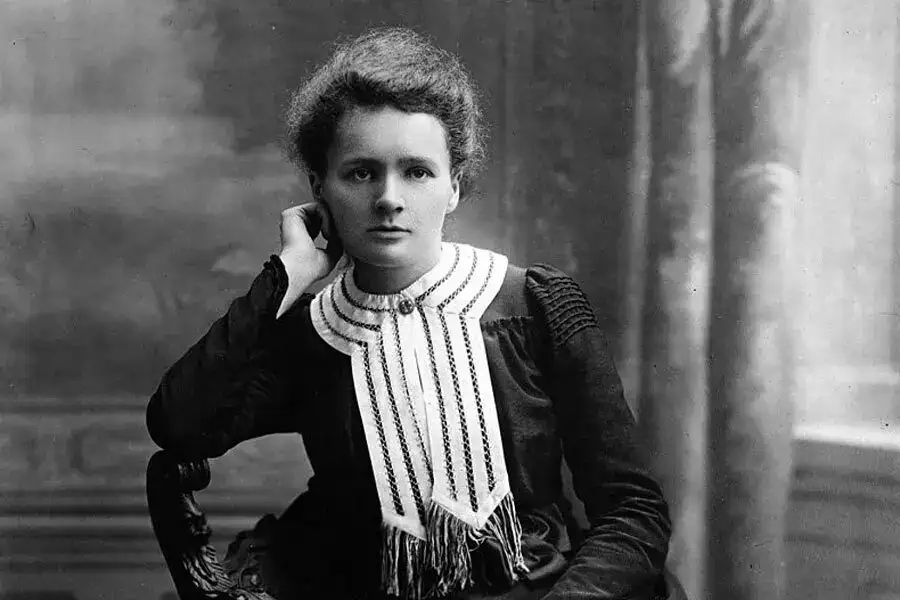
Quote of the Day by Marie Curie: Few names in modern science carry the same weight as Marie Curie. Even decades after her death, the Nobel Prize-winning physicist continues shaping how people think about ambition, sacrifice and progress. Her famous quote — “I was taught that the way of progress was neither swift nor easy” — still resonates because it speaks to something deeply human.
The Marie Curie quote about progress feels especially relevant in today’s fast-moving world. People constantly search for instant success, overnight transformation and immediate validation. Yet Curie’s words quietly challenge that mindset. Her life itself became proof that genuine achievement unfolds slowly. She spent years studying, researching and struggling through difficult conditions before the world recognized her discoveries.

Quote of the day today:
“Nothing in life is to be feared, it is only to be understood.” — Marie Curie
Quote of the day by Marie Curie
Marie Curie’s quote about progress carries timeless wisdom in today’s fast and impatient world. “I was taught that the way of progress was neither swift nor easy” reflects the reality behind every meaningful achievement. Curie did not become a Nobel Prize-winning physicist through luck or shortcuts. She spent years studying radioactivity, facing hardship, loss and exhaustion while still pushing modern science forward with courage and discipline.
The Marie Curie quote reminds readers that real growth takes time. Success in career, science, education or personal life rarely happens overnight. Curie’s discoveries changed physics and chemistry forever, yet her journey was filled with sacrifice and persistence. Her words encourage people to stay patient during difficult seasons because lasting progress often comes slowly, quietly and through continuous effort rather than instant results.
Meaning of the Quote of the Day
The famous quote by Marie Curie teaches that true progress takes patience, struggle and continuous effort. Nothing meaningful grows instantly. Whether someone wants success in career, education, relationships or personal goals, the journey often becomes difficult before results appear. Marie Curie understood this deeply because her scientific discoveries came after years of sacrifice, research and perseverance. Her words remind people not to quit during slow seasons of life.
The deeper meaning of the Marie Curie quote also highlights emotional strength and long-term vision. Modern life pushes people toward quick success and immediate rewards, but lasting achievement usually develops slowly. Curie’s life proved that determination matters more than speed. Every challenge, failure and delay can shape wisdom and resilience.
All about Marie Curie
Marie Curie was a world-famous physicist and chemist who transformed modern science through her groundbreaking research on radioactivity. Born in Poland in 1867, she later moved to Paris to study at the Sorbonne, where her passion for physics and chemistry grew stronger. Along with her husband, Pierre Curie, she discovered the elements polonium and radium. Her scientific work changed medicine, physics and cancer treatment forever.
Marie Curie’s life became a symbol of intelligence, courage and perseverance. Despite financial struggles, personal loss and dangerous working conditions, she continued pushing scientific discovery forward. During World War I, she helped develop mobile X-ray units to treat wounded soldiers, saving countless lives. Her dedication to science eventually harmed her health because of long exposure to radiation, leading to her death in 1934.
Marie Curie was born as Maria Skłodowska in Warsaw, Poland, in 1867. She grew up during a difficult period when Poland was under Russian control. Her family valued education deeply, but financial struggles shaped much of her childhood. After losing her mother at a young age, Curie developed emotional strength early in life.
Determined to continue studying, Marie Curie worked as a governess to support herself and her sister’s education. She spent years reading books and teaching herself advanced subjects. In 1891, she moved to Paris and joined the Sorbonne University. Life there was harsh. She often lived in cold rooms and survived on little food while focusing completely on physics and mathematics. Those years built the discipline and resilience that later defined her scientific journey.
Marie Curie became globally respected for her groundbreaking research on radioactivity. Working alongside her husband, Pierre Curie, she studied mysterious energy released from uranium. Their research led to the discovery of two new chemical elements, polonium and radium.
Curie’s work also created major progress in medical science. Her research later helped develop radiation treatments for diseases including cancer. During World War I, she organized mobile X-ray units that doctors used to treat injured soldiers on battlefields. She personally trained medical workers and operated equipment herself.
Marie Curie achieved historic success through intelligence, patience and extraordinary dedication. In 1903, she won the Nobel Prize in Physics with Pierre Curie and Henri Becquerel for research on radiation phenomena. That achievement made her the first woman ever to receive a Nobel Prize.
Her success continued years later when she received the 1911 Nobel Prize in Chemistry for isolating radium. With that honor, she became the first person in history to win two Nobel Prizes in different scientific fields. Her achievements earned worldwide admiration, but Curie remained deeply focused on research rather than fame.
Other Famous Quotes by Marie Curie
- “Nothing in life is to be feared, it is only to be understood.”
- “Life is not easy for any of us. But what of that? We must have perseverance.”
- “One never notices what has been done; one can only see what remains to be done.”
- “Be less curious about people and more curious about ideas.”
- “I am among those who think that science has great beauty.”
- “The older one gets, the more one feels that the present moment must be enjoyed.”
- “Humanity needs practical men, who get the most out of their work.”







