Get all your news in one place.
100's of premium titles.
One app.
Start reading
The Economic Times
The Economic Times

Quote of the day by Leon Festinger: 'A man with a conviction is a hard man to change. Tell him you disagree and he turns away. Show him facts or figures and he...' - American social psychologist explains the psychology of beliefs and why changing people's minds is tough

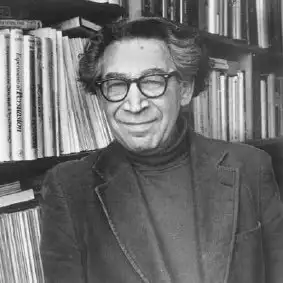
Leon Festinger quote today : Every person forms beliefs through a combination of personal experiences, education, culture, emotions, and interactions with others. Over time, these beliefs can become deeply rooted, shaping how people interpret new information and understand the world around them. While it may seem that facts and logical arguments should easily change someone's opinion, human psychology is often far more complex. Leon Festinger's quote explores this reality, explaining why people frequently hold on to their convictions even when confronted with evidence that challenges them.

Quote of the Day by Leon Festinger: Why Convictions Are So Difficult to Change

Leon Festinger said, “A man with a conviction is a hard man to change. Tell him you disagree and he turns away. Show him facts or figures and he questions your sources. Appeal to logic and he fails to see your point,” as per Goodreads.

Leon Festinger Quote Explained: The Psychology Behind Strong Convictions

Festinger's quote highlights one of the most fundamental aspects of human psychology that people often protect their deeply held beliefs, even when they are presented with strong evidence that challenges them. The quote suggests that convictions are not based solely on facts or logic. Instead, they are often connected to a person's identity, experiences, emotions, and worldview. As a result, changing someone's opinion can be far more difficult than simply providing better information.

READ ALSO: Quote of the day by Marc Antony: 'Friends, Romans, countrymen, lend me your ears, I come to bury Caesar, not to...' - Roman general's speech from William Shakespeare's Julius Caesar teaches life lessons on persuasion, critical thinking, influence, judgment and leadership

How Beliefs Shape the Way We See the World

When Festinger says that a person "turns away" after hearing disagreement, he points to the natural tendency to avoid information that feels threatening. Likewise, questioning facts or doubting sources can become a way of defending existing beliefs rather than objectively evaluating new evidence. His observation reflects the reality that people often interpret information through the lens of what they already believe instead of approaching every argument with complete neutrality.

Why People Resist Facts That Challenge Their Beliefs

The quote also reminds us that persuasion is rarely achieved through confrontation alone. Facts and statistics certainly matter, but they may not be enough if they are delivered without understanding, empathy, or respect. Meaningful conversations often require listening carefully, acknowledging different perspectives, and creating an environment where people feel comfortable reconsidering their views without feeling personally attacked.

READ ALSO: Quote of the day by Christina Aguilera: 'In order to effect great change, we need to look at how we can help those in our...' - motivational life lessons by Genie In a Bottle and Moves like Jagger singer on creating positive change, helping your community and making the world a better place

Life Lesson from Leon Festinger's Quote

The quote highlights that human beliefs are complex. Changing minds often requires patience, open dialogue, and mutual respect rather than simply winning an argument. By recognizing that convictions are deeply personal, people can approach disagreements with greater understanding, encouraging thoughtful discussion instead of division.

Who Was Leon Festinger

Leon Festinger (May 8, 1919 – February 11, 1989) was an American cognitive psychologist best known for developing the theory of cognitive dissonance. According to a Britannica report, his research showed how conflicts between thoughts, beliefs, and actions create psychological discomfort that motivates people to change their attitudes or behavior. He also made important contributions to the study of group behavior and attitude change.

Leon Festinger's Education

Festinger earned a psychology degree from the City College of New York in 1939 and completed his Ph.D. at the University of Iowa in 1942 under psychologist Kurt Lewin. During World War II, he worked as a statistician for the National Research Council, as per the Britannica report.

READ ALSO: Best advice for life by Jack Welch: 'Management is all about managing in the short term, while developing the plans for the...' - motivational life lessons by former CEO of General Electric (GE) on leadership, planning and how managing today can help you build a better tomorrow

Leon Festinger's Major Contributions

At MIT, Festinger studied how groups influence opinions and behavior, finding that people are more likely to form friendships with those nearby and tend to adopt similar attitudes within groups.

He later introduced social comparison theory, explaining that people evaluate their opinions and abilities by comparing themselves with others when objective standards are unavailable.

Leon Festinger's Cognitive Dissonance Theory

Festinger's most influential work was cognitive dissonance theory. He proposed that people experience psychological discomfort when their beliefs and actions conflict, motivating them to change their attitudes, justify their behavior, or seek supporting information, as per the Britannica report. His famous experiments at Stanford University helped establish the theory as one of psychology's most important concepts.

Leon Festinger's Legacy

Later in his career, Festinger researched visual perception and human nature, publishing The Human Legacy in 1983. According to the Britannica report, his work continues to influence psychology, particularly the study of belief, decision-making, and human behavior.

READ ALSO: Quote of the day by Carl Friedrich Gauss: 'It is not knowledge, but the act of learning, not possession but the act of...' - German physicist and mathematian teaches life lessons on why learning brings more job than achievement and why you must stop chasing results

Sign up to read this article
Read news from 100's of titles, curated specifically for you.
Already a member? Sign in here
Related Stories
Top stories on inkl right now
One subscription that gives you access to news from hundreds of sites
Already a member? Sign in here
Our Picks
Fourteen days free
Download the app
One app. One membership.
100+ trusted global sources.