Get all your news in one place.
100's of premium titles.
One app.
Start reading
The Economic Times
The Economic Times
Gandharv Walia

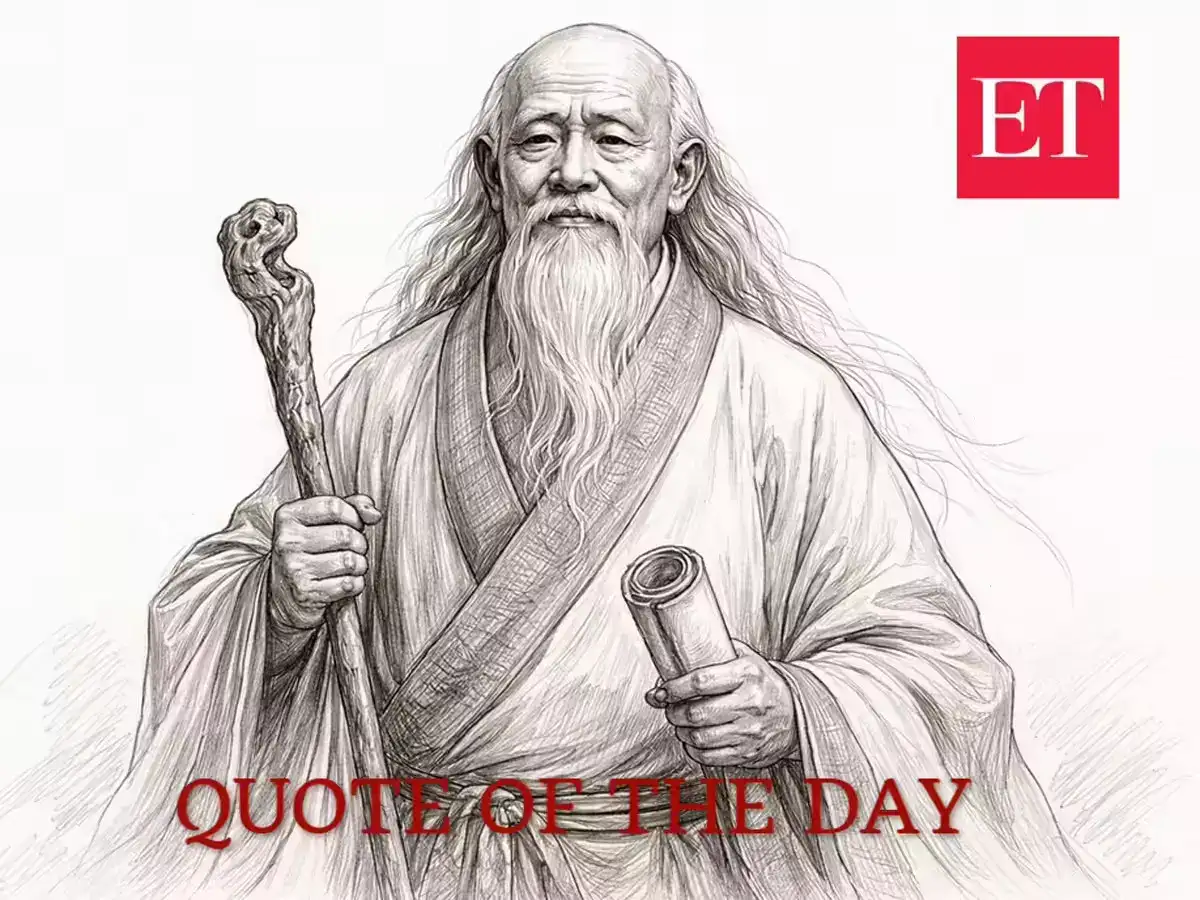
Quote of the day by Lao Tzu: 'Fill your bowl to the brim and it will spill. Keep sharpening your knife and it will blunt.' Life lessons on learning, human nature and success by Chinese philosopher

Quote of the day by Lao Tzu has drawn attention for its message about balance and human behavior. The quote says, “Fill your bowl to the brim and it will spill. Keep sharpening your knife and it will blunt.” The statement explains how excess can create loss instead of success. Lao Tzu, also known as Laozi, is linked to the foundation of Daoism and the writing of the Daodejing. His teachings discuss calmness, simplicity, self-control, and understanding human nature. The quote remains relevant in modern life because people often face pressure related to ambition, achievement, work, wealth, and recognition.

Quote of the day today

The quote is,

“Fill your bowl to the brim and it will spill. Keep sharpening your knife and it will blunt."

Meaning behind the Lao Tzu quote

The quote, “Fill your bowl to the brim and it will spill. Keep sharpening your knife and it will blunt,” focuses on the dangers of excess. Lao Tzu used simple examples to explain human behavior and life decisions.

A bowl filled beyond its limit cannot hold more. It spills because balance is lost. In the same way, people who constantly seek more success, more wealth, or more recognition may eventually lose peace, relationships, or stability.

The second part of the quote discusses sharpening a knife continuously. A knife becomes dull if it is sharpened too much. The lesson is that pushing something beyond its natural limit can weaken it instead of improving it.

The quote teaches moderation. It encourages people to avoid greed, overwork, pride, and constant competition. Lao Tzu believed that balance leads to stability and peace of mind.

READ ALSO: Quote of the day by Confucius: “A great man is hard on himself; a small man is...” Life lessons on success, human nature and achievements by China’s popular philosopher

Life lessons from the quote

Balance is important in life

The quote teaches that balance matters in every part of life. People often try to achieve more money, more power, or more success. Lao Tzu’s teaching explains that endless pursuit can create stress and dissatisfaction. Balance helps people maintain mental peace and healthy relationships. It also allows people to avoid burnout and emotional pressure.

Success should not become obsession

Many people connect success with constant work and competition. The quote reminds readers that ambition without limits may create problems. A person who keeps chasing achievements without rest may lose health, peace, and happiness. Lao Tzu’s words encourage people to understand when enough is enough.

Human nature often seeks excess

The quote also explains human nature. People naturally want improvement and growth. However, the desire for more can sometimes become uncontrolled. Lao Tzu believed wisdom comes from self-awareness and restraint. The teaching encourages people to pause and reflect before making decisions driven by pride or greed.

Learning requires patience

The quote also applies to learning and personal development. Improvement takes time. Trying to force results quickly may damage progress. Lao Tzu’s philosophy supports calm learning, patience, and steady growth instead of pressure and haste.

READ ALSO: Quote of the day by Bernard Meltzer: 'Before you speak ask yourself if what you are going to say is true, is kind, is necessary, is helpful. If the answer is...' Life lessons on kindness, truth, human nature and why is it important to think before we speak

Who was Lao Tzu?

Lao Tzu, also known as Laozi, was connected to ancient Chinese philosophy and Daoism. He is believed to have flourished during the 6th century BCE in China. Many scholars consider him the first philosopher of Daoism.

He is traditionally linked to the Daodejing, which is one of the main texts of Daoist philosophy. Modern scholars believe the text may not have been written by one person alone, but they still acknowledge the influence of Lao Tzu and Daoism on Chinese thought and even Buddhism.

Lao Tzu remains respected in different traditions. Confucians viewed him as a philosopher, Daoists considered him an important spiritual figure, and some religious traditions worshipped him as a divine figure.

Historical details about Lao Tzu

Information about Lao Tzu’s life mostly comes from the Shiji or “Records of the Historian” written by Sima Qian around 100 BCE. According to the account, Lao Tzu was born in Quren in the state of Chu, which matches present-day Henan province in China. His family name was Li, while his personal name was Er.

He reportedly worked at the royal court of the Zhou dynasty as a scholar connected to sacred texts, astrology, and records. One famous story describes a meeting between Lao Tzu and Confucius. According to legend, Lao Tzu criticized Confucius for pride and ambition. Confucius later compared Lao Tzu to a dragon rising through the sky. Scholars debate whether this meeting actually happened because different historical sources provide conflicting details.

READ ALSO: Quote of the day by Ogden Nash: 'You are only young once, but you can stay immature indefinitely.' Life lessons on age, human nature and matureness by American writer

The story of the Daodejing

Another well-known legend describes Lao Tzu leaving society during the decline of the Zhou dynasty. He travelled westward and reached the Xiangu pass. The guardian of the pass, Yinxi, reportedly requested Lao Tzu to record his teachings before leaving. Lao Tzu then wrote the Daodejing in around 5,000 characters.

The book discussed the Dao, meaning “The Way,” and de, often translated as virtue or moral power. After completing the text, Lao Tzu reportedly disappeared, and later historians stated that nobody knew what happened to him.

Questions about Lao Tzu’s existence

Historians continue to debate whether Lao Tzu was a real historical figure or a symbolic representation of wisdom traditions. Some scholars believe the Daodejing contains teachings from multiple writers collected over time. Archaeological discoveries, including texts found at Guodian dating before 300 BCE, support the idea that the work evolved through different contributions. Despite debates about historical details, Lao Tzu’s influence on philosophy, religion, and culture remains strong.

READ ALSO: Quote of the day by Dwayne Johnson: 'If you've ever been hungry, you can never be...' Life lessons on success, work culture and human nature by American professional wrestler and actor

Lao Tzu in religious traditions

Over time, Lao Tzu became more than a philosopher in Chinese religious traditions. During the Eastern Han dynasty, he became a mythical figure worshipped by many people. Daoist traditions later described him as Lord Lao, a divine teacher and saviour.

Legends about his birth also developed. One story claimed his mother carried him in her womb for 72 years. Another stated he was born near a plum tree, which explained the family name Li. Some stories even connected Lao Tzu to Buddha, claiming he travelled west and became Buddha himself. These stories later became part of religious debates between Daoism and Buddhism.

Why the quote remains relevant today?

The quote continues to connect with modern readers because many societies focus heavily on achievement, productivity, and competition. People today often deal with pressure from work, social status, education, and financial goals. Lao Tzu’s teaching reminds readers that excess can create imbalance.

The message encourages moderation, patience, and awareness. It also explains that peace and stability often come from simplicity instead of constant pursuit. The quote remains useful in discussions about mental peace, learning, human nature, ambition, and success.

Sign up to read this article
Read news from 100's of titles, curated specifically for you.
Already a member? Sign in here
Related Stories
Top stories on inkl right now
One subscription that gives you access to news from hundreds of sites
Already a member? Sign in here
Our Picks
Fourteen days free
Download the app
One app. One membership.
100+ trusted global sources.