Get all your news in one place.
100's of premium titles.
One app.
Start reading
The Economic Times
The Economic Times
Gandharv Walia

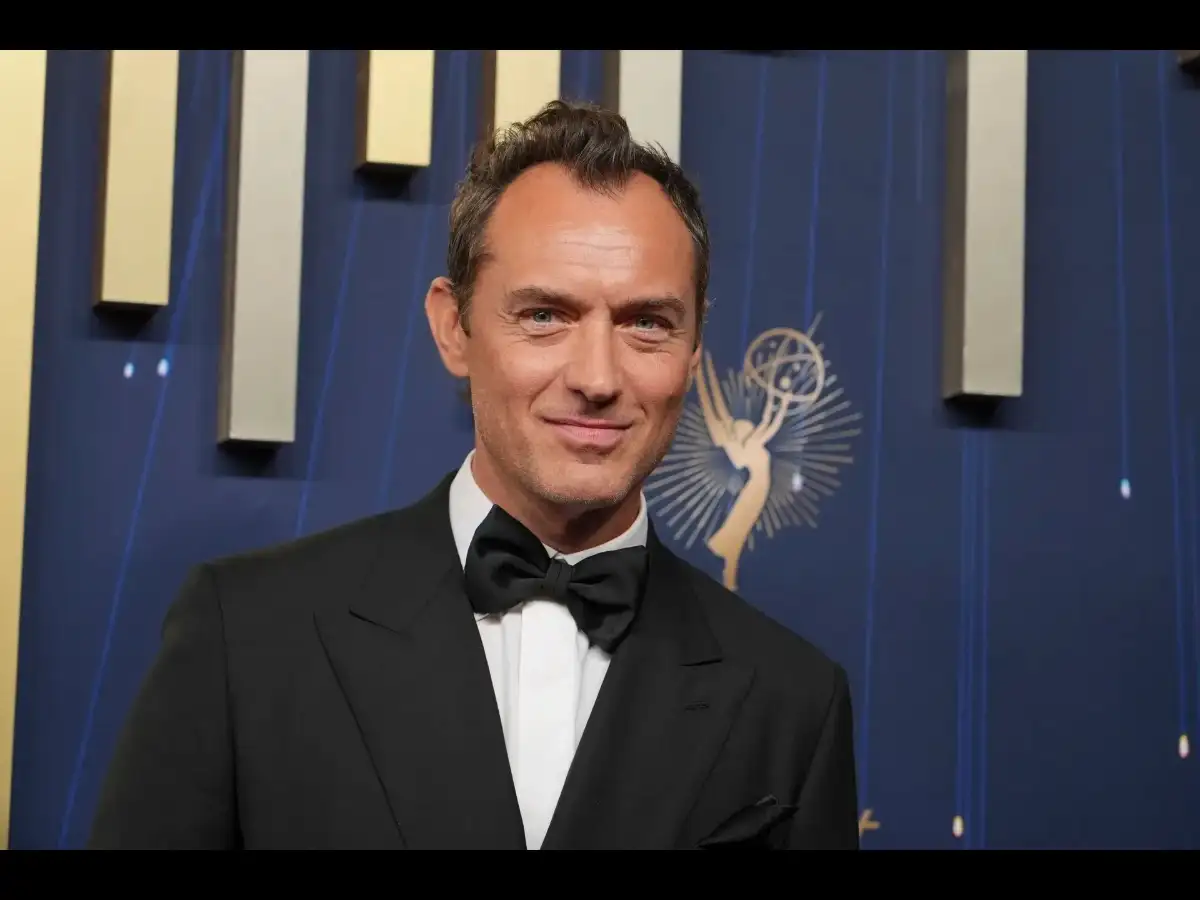
Quote of the day by Jude Law: 'My only obligation is to keep myself and other people guessing.' Life lessons from motivational quote on true personal freedom, predictability, labels, mystery, compliance and stagnation

Quote of the day by Jude Law is: “My only obligation is to keep myself and other people guessing.” The statement reflects an approach to personal freedom and change. It suggests that people do not have to remain within an identity created by others. They can change their choices, interests and direction as they grow. The quote also connects with Jude Law’s career as an actor. He has played romantic leads, supporting characters, dramatic roles and antagonists. His film and television work has covered different genres and characters. His career includes The Talented Mr. Ripley, Cold Mountain, Closer, The Holiday, Sherlock Holmes, The Young Pope and Black Rabbit.
Quote of the day today

The quote is,

“My only obligation is to keep myself and other people guessing.”

What does the quote mean?

The saying is about unpredictability. Law’s statement suggests that he does not see it as his duty to behave in a way that others can easily predict. For an actor, this can also mean avoiding the same type of role throughout a career. Law became known to many audiences for his appearance and for roles involving romance. However, his work later included characters with different personalities, professions and positions.

The idea of personal freedom is also central to the quote. A person may face expectations from family, friends, colleagues, audiences or society. The saying suggests that these expectations do not have to determine every decision.

The phrase “keep myself guessing” points toward personal change. It means remaining open to discovering something new about yourself. It can also mean avoiding a routine in which every decision is based on what was done before.

“Keep other people guessing” has a different meaning. It can refer to not allowing the public to decide who you are. For a public figure, this can involve maintaining privacy and avoiding a fixed public identity.

READ ALSO: Quote of the day by Jennifer Lawrence: 'A powerful woman is someone who exudes confidence and can be tough but fair and kind. And also knows how to get what she wants.' Life lessons from inspiring quote on confidence, fairness, kindness, true strength, ambition, self-respect, female empowerment and determination

Quote meaning and relevance

The quote first appeared in print in John McVicar’s 2006 biography Jude Law. It reflects ideas connected with Law’s approach to fame, privacy and expectations.

The statement can be understood through several themes:

  • Unpredictability: The quote supports making choices that others may not expect.
  • Personal freedom: It rejects the idea that other people should define an individual.
  • Avoiding labels: People can be placed into categories based on appearance, profession or past choices.
  • Change: The saying supports changing direction instead of remaining attached to an old identity.
  • Curiosity: Keeping yourself guessing requires an interest in what you may do or become next.
  • Privacy: Keeping others guessing can also mean not explaining every personal choice to the public.
  • Creative choices: For actors, taking different roles can prevent a career from being limited to one character type.

The quote is particularly relevant to people who feel pressure to behave according to an identity that others have created for them. It suggests that identity does not have to remain fixed.

Jude Law’s early life and acting career

Jude Law was born David Jude Heyworth Law on December 29, 1972, in London, England. His parents, Margaret Law and Peter Law, were teachers. His middle name came from Thomas Hardy’s 1895 novel Jude the Obscure. Law has said that he has always been called Jude rather than David.

His sister, Natasha Law, is an artist. Jude Law has seven children. His two oldest sons, Rafferty and Rudy, and his oldest daughter, Iris, are from his marriage to English designer and actress Sadie Frost, which lasted from 1997 to 2003. Rafferty, Rudy and Iris have worked in acting and modeling.

Law became interested in acting during childhood. He has said that his parents helped develop his interest in cinema. In 1987, as a teenager, he joined the National Youth Music Theatre.

His early stage work included Joseph and the Amazing Technicolor Dreamcoat. He later moved into television. His early credits included two episodes of Families in 1990–91 and an episode of The Case-Book of Sherlock Holmes in 1991, which starred Jeremy Brett as Sherlock Holmes.

Law made his film debut as a lead actor in Shopping in 1994. The film also starred Sadie Frost. He continued working on stage and appeared in productions including Les Parents Terribles and its Broadway version, Indiscretions.

In 1997, he played Lord Alfred Douglas in Wilde opposite Stephen Fry. He also appeared as a paralyzed former athlete in Gattaca, alongside Ethan Hawke and Uma Thurman. The same year, he appeared in Midnight in the Garden of Good and Evil with John Cusack and Kevin Spacey.

READ ALSO: Quote of the day by Whoopi Goldberg: 'We’re here for a reason. I believe a bit of the reason is to throw little torches out to lead people through the dark.' Life lessons from inspirational quote on purpose, inspiration, guidance, empathy, kindness, mentorship and wisdom

From stage roles to major films

Law continued working in theatre while building his film career. His stage roles included Doctor Faustus, Hamlet and Henry V. He received two Tony Award nominations for Indiscretions and Hamlet.

A major point in his film career came with The Talented Mr. Ripley in 1999. Director Anthony Minghella offered Law the role of Dickie Greenleaf. Law initially declined because he was concerned about being typecast.

He later accepted the role. The film starred Matt Damon, Gwyneth Paltrow, Cate Blanchett and Philip Seymour Hoffman. Law received an Academy Award nomination for Best Supporting Actor for the film and won the BAFTA in the same category.

Between 2000 and 2004, he appeared in 11 movies. These included Enemy at the Gates, A.I. Artificial Intelligence, Road to Perdition and The Aviator. He also appeared in Cold Mountain and Closer. His performance in Cold Mountain earned him an Academy Award nomination for Best Actor.

His film Alfie, released in 2004, was a remake of the 1966 film starring Michael Caine. It received a negative response from critics and did not perform well at the box office.

Roles that showed different sides of his career

In 2005, Chris Rock referred to Law’s number of film appearances during the Academy Awards opening monologue. Law later appeared in The Holiday in 2006, playing Cameron Diaz’s love interest. The film also starred Kate Winslet and Jack Black.

He played Dr. Watson opposite Robert Downey Jr. in Sherlock Holmes in 2009 and returned to the role in Sherlock Holmes: A Game of Shadows in 2011. His other films from the 2010s included Hugo, Anna Karenina, The Grand Budapest Hotel and Spy.

Law played Albus Dumbledore in Fantastic Beasts: The Crimes of Grindelwald in 2018 and Fantastic Beasts: The Secrets of Dumbledore in 2022. He played Yon-Rogg in Captain Marvel in 2019.

His later film roles included Captain Hook in Peter Pan & Wendy in 2023, Henry VIII in Firebrand in 2023 and Vladimir Putin in The Wizard of the Kremlin in 2025.

Television, streaming and activism

Law returned to television with HBO’s The Young Pope in 2016. He played the fictional Pope Pius XIII and also worked as a producer. The series attracted discussion over some of its scenes, including scenes showing Law smoking. He returned to the character in The New Pope, which continued the story. The series also included scenes that drew attention because of the character’s behavior and clothing.

In 2025, Law appeared with Jason Bateman in the Netflix miniseries Black Rabbit. Law has also been involved in activism. He has criticized the seal fur trade and the fossil fuel industry. In 2002, he directed and appeared in a commercial with Paul McCartney and other celebrities for Respect for Animals.

He visited Afghanistan in 2007 and 2008 while working on a documentary for Peace One Day, a United Nations-backed initiative. In 2013, he protested against piracy charges brought by Russia against Greenpeace activists.

Life lessons from the quote

The saying offers several lessons about personal freedom and personal growth.

  • Avoid stagnation: People can change their interests and goals instead of assuming that their identity must remain the same.
  • Do not live only to please others: Public expectations can influence decisions. The quote suggests that people can make choices based on their own interests.
  • Accept evolution: Change is part of life. A person does not have to remain connected to an earlier version of themselves.
  • Stay curious: Keeping yourself guessing requires openness to new experiences and ideas.
  • Question labels: A label can describe one part of a person without defining the whole person.
  • Make room for privacy: Not every personal decision needs to be explained to other people.
  • Take creative risks: New choices can create opportunities that may not appear when a person repeats the same pattern.

The central idea is that personal freedom can include the ability to change. A person can learn from earlier choices without allowing those choices to determine every future decision.

Sign up to read this article
Read news from 100's of titles, curated specifically for you.
Already a member? Sign in here
Related Stories
Top stories on inkl right now
One subscription that gives you access to news from hundreds of sites
Already a member? Sign in here
Our Picks
Fourteen days free
Download the app
One app. One membership.
100+ trusted global sources.