Get all your news in one place.
100's of premium titles.
One app.
Start reading
The Economic Times
The Economic Times

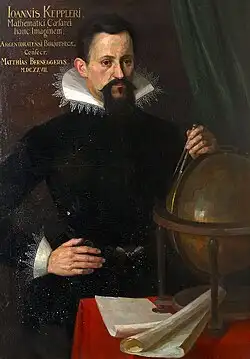
Quote of the Day by Johannes Kepler: 'Truth is the daughter of time, and I feel no shame in...' - Inspiring lessons on patience and persistence from the German polymath and astronomer who uncovered the laws governing the universe

Quote of the Day by Johannes Kepler: Discovery and patience are two ideas that rarely get discussed together, yet Kepler's life is proof they're inseparable. He spent decades working through failed models, flawed assumptions, and painstaking calculations before arriving at the laws of planetary motion that would eventually reshape astronomy. His quote captures exactly that kind of process, not a flash of genius, but years of quiet, unglamorous labor.

His words, "Truth is the daughter of time, and I feel no shame in being her midwife," reframe the discoverer's role entirely. Kepler isn't claiming to have created truth. He's describing himself as someone who helped deliver something that was already forming, given enough time and enough careful attention. In a world that rewards speed and instant answers, this quote is a quiet argument for the opposite.

READ ALSO: Quote of the Day by Leonardo da Vinci: 'A painter should begin every canvas with a wash of black, because...'- Life lessons on perspective, creativity, and why true brilliance emerges only after embracing life's darkest moments, by the ultimate "Renaissance Man," known for masterpieces like the Mona Lisa and The Last Supper

Quote of the Day Today: Johannes Kepler on patience, discovery, persistence and truth

Quote of the Day by Johannes Kepler: "Truth is the daughter of time, and I feel no shame in being her midwife," originally written in Latin as "Temporis filia veritas; cui me obstetricari non pudet."

READ ALSO: Phrase of the Day: 'Break the ice'- The surprising story behind this everyday expression- meaning, history, and usage explained

Meaning of Kepler's Quote About Truth and Time

Kepler's metaphor is precise and deliberate. Truth is the "daughter," meaning something that is born, not manufactured on demand. Time is the "mother," meaning truth needs duration, patience, and process before it can fully take shape. Kepler casts himself as the "midwife," the one present at the moment truth finally emerges, but not the one who created it. He didn't invent the laws of planetary motion. He uncovered them, slowly, through years of painstaking observation and calculation.

The deeper meaning lies in that phrase "I feel no shame." Kepler is pushing back against any embarrassment tied to how long his discoveries took, or how many wrong turns preceded them. There's no need to apologize for a slow process when the process itself is what makes the outcome trustworthy. Real truth, in Kepler's view, earns its credibility precisely because it wasn't rushed.

READ ALSO: The Best Life Advice by Barack Obama: 'You don’t have to get to 100% certainty on your big decisions...'- Got a tough decision to make? Here's the former U.S. President's 51% rule that will help you stop overthinking forever and make confident decisions in no time

Why Patience Matters in the Pursuit of Truth

Patience matters because meaningful discovery, whether scientific, personal, or otherwise, rarely arrives on a convenient timeline. Kepler's own breakthrough on the orbit of Mars came only after he refused to ignore a small, stubborn error of just a few minutes of arc in his calculations, an error many would have dismissed as negligible. That refusal to rush past an inconvenient detail eventually led to a complete reformation of astronomy. Rushing toward an answer often means settling for a convenient one instead of a correct one.

Kepler's patience and his comfort with the slow unfolding of understanding are what allowed him to arrive at conclusions that have held up for over four centuries. The lesson extends well beyond astronomy. Whatever truth you're working toward, whether in research, relationships, or self-understanding, forcing it prematurely usually produces something fragile. Letting it take the time it needs tends to produce something durable.

READ ALSO: Quote of the Day by Anne Frank: “The best remedy for those who are afraid, lonely or unhappy is…” - Timeless lessons on nature, healing, hope, and why the natural world remains humanity’s greatest source of comfort, by the Jewish victim of the Holocaust and author of The Diary of a Young Girl

Early Life of Johannes Kepler

Johannes Kepler was born on December 27, 1571, in Weil der Stadt, in the German region of Württemberg, into a modest family. A ducal scholarship for poor but promising boys gave him access to schooling that would otherwise have been out of reach, eventually leading him to the Lutheran seminary at the University of Tübingen in 1589, where he initially planned to become a theologian.

A Shift Toward the Stars

At Tübingen, Kepler studied under Michael Maestlin, a mathematics professor and quiet supporter of the Copernican theory. Maestlin lent Kepler his own annotated copy of Copernicus's work, and Kepler grasped its ideas quickly, sensing what he later described as a kind of divine order behind them. Rather than abandoning his religious sense of purpose, Kepler folded it directly into his scientific pursuits, believing that understanding the structure of the heavens was itself a form of theology.

The War on Mars and the First Laws

Kepler's early work, including his 1596 "Mysterium Cosmographicum," proposed that the spacing of the planets reflected the geometry of the five regular polyhedrons. After Tycho Brahe's death in 1601, Kepler inherited access to Tycho's uniquely precise planetary observations, data accurate enough to expose small but critical errors in Kepler's earlier models. Rather than dismiss an error of just a few minutes of arc in his calculations for Mars's orbit, Kepler treated it as too significant to ignore, a decision that led directly to his discovery that Mars, and by extension all planets, moves in an elliptical orbit rather than a perfect circle. This became his first law, published in 1609 alongside his second law in "Astronomia Nova."

Optics, the Telescope, and a Decade of Discovery

Beyond planetary motion, Kepler produced a groundbreaking account of how vision works, explaining for the first time why curved glass could correct blurred sight, and he developed important theoretical work on the telescope shortly after Galileo's discoveries in 1610. His correspondence and treatises supporting Galileo's observations of Jupiter's moons helped validate findings that many of Galileo's contemporaries were still reluctant to accept.

Personal Loss Alongside Scientific Triumph

Kepler's scientific achievements unfolded against a backdrop of significant personal hardship. He lost his first wife and several of his children to illness, faced religious exclusion due to his independent theological views, and later spent years defending his own mother against accusations of witchcraft. In 1619, amid this hardship, he published "Harmonice Mundi," which contained his third law, describing the exact mathematical relationship between a planet's orbital period and its distance from the Sun.

A Legacy That Outlived Its Framework

Kepler died on November 15, 1630, in Regensburg, after falling ill during a trip to collect money he was owed. His three laws would later be derived from entirely different physical principles by Isaac Newton, who built on Kepler's work while largely setting aside the theological and harmonic framework Kepler had used to arrive at them. Even so, the laws themselves proved permanent, reshaping how humanity understood the motion of the planets.

Life Lessons from Kepler's Famous Quote

Kepler's quote teaches that truth doesn't arrive on command, and that there's no shame in the slow, careful work required to uncover it. It challenges the instinct to rush toward conclusions or feel embarrassed by a long process. Real understanding, the kind that lasts, tends to come from patience, attention to small details others would dismiss, and a willingness to keep working without immediate reward.

Johannes Kepler's quote reflects the same patience that defined his life's work. He didn't force the universe to reveal its structure on his timeline. He waited, calculated, and refined his understanding for years until the truth was ready to be delivered. His discoveries, still foundational to astronomy centuries later, are proof that truth born of time, however long it takes, is the kind that endures.

Sign up to read this article
Read news from 100's of titles, curated specifically for you.
Already a member? Sign in here
Related Stories
Top stories on inkl right now
One subscription that gives you access to news from hundreds of sites
Already a member? Sign in here
Our Picks
Fourteen days free
Download the app
One app. One membership.
100+ trusted global sources.