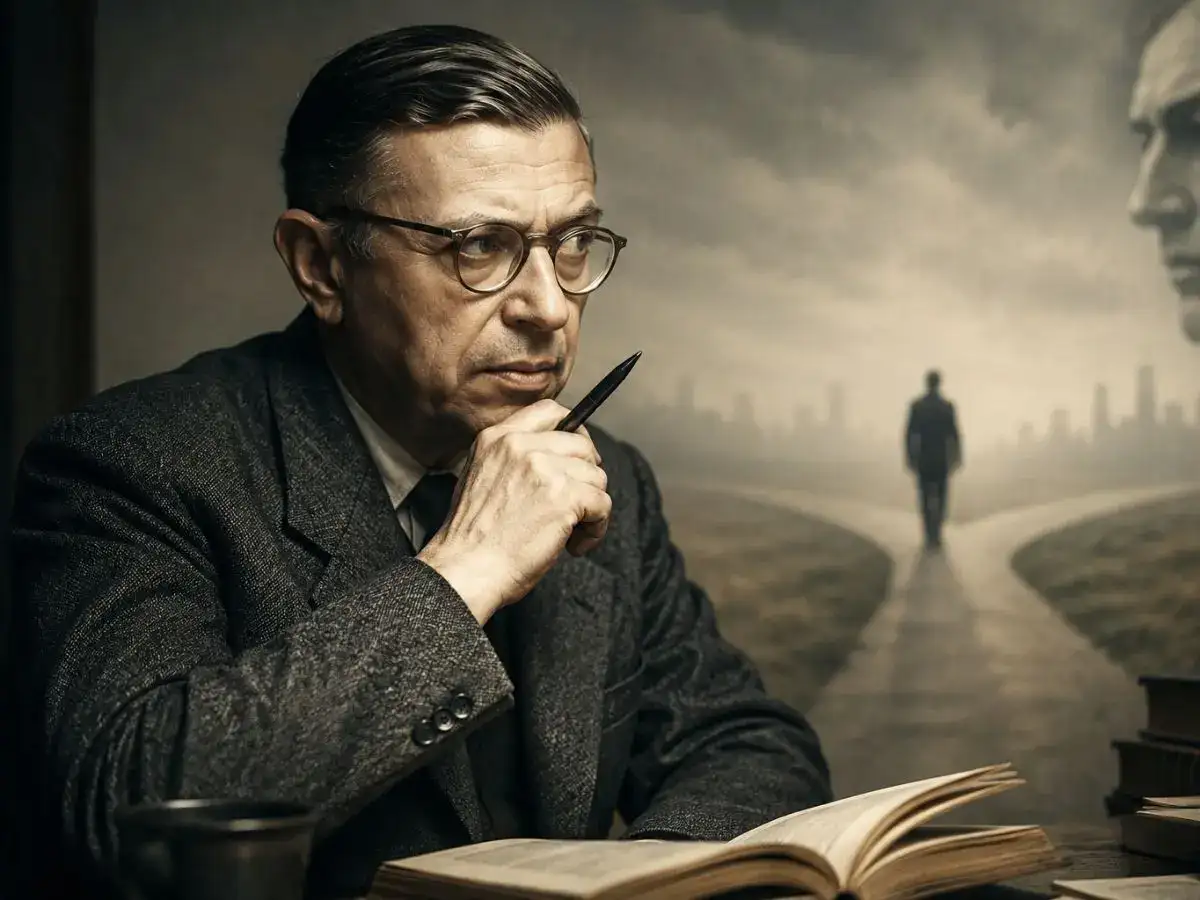
Quote of the day motivation: Few philosophers have influenced modern thinking about freedom and personal choice as deeply as Jean-Paul Sartre. Writing during a period marked by war, political upheaval, and social change, Sartre challenged people to think about how they shape their own lives through the decisions they make every day. His ideas continue to resonate because they address questions that remain timeless: How much control do we really have over our lives? Are we defined by our circumstances, or by the choices we make? One of his most memorable quotes offers a powerful perspective on personal responsibility and self-determination.
Quote of the day today: Jean-Paul Sartre once said
"We are our choices."
Jean-Paul Sartre's Motivational quote and its meaning
Although short, the quote carries one of the central ideas of Sartre's philosophy. It suggests that people are not defined solely by their background, talents, possessions, or circumstances. Instead, they become who they are through the choices they make.
Also Read: Quote of the day by Maya Angelou
1. Actions matter more than intentions
Many people have good intentions, dreams, or plans. However, Sartre believed that what truly defines a person is what they actually do.
For example:
- Wanting to be kind is different from acting kindly.
- Wanting to succeed is different from putting in the effort.
- Wanting to help others is different from taking action.
According to Sartre, our actions reveal our character more clearly than our words.
2. Every choice shapes identity
The quote highlights that identity is not something fixed from birth. Every decision, big or small, contributes to the person someone becomes.
Choices such as:
- pursuing an education
- changing careers
- helping a stranger
- standing up for a belief
all play a role in shaping one's character and future.
Sartre argued that people continuously create themselves through these decisions.
3. Freedom comes with responsibility
One of Sartre's most famous ideas was that human beings are free to choose. While this freedom can be empowering, it also comes with responsibility.
People cannot always control what happens to them, but they can control how they respond.
The quote serves as a reminder that blaming circumstances alone may overlook the power individuals have to make decisions and influence their own paths.
4. The deeper philosophy behind the quote
Sartre was a leading figure in existentialism, a philosophical movement that focuses on individual freedom, responsibility, and meaning.
His belief was that life does not come with a predetermined purpose. Instead, people create meaning through their actions, relationships, and choices.
The quote reflects this idea by suggesting that every decision contributes to the story of who we become.
5. Why the quote remains relevant today
In an age of constant distractions, social pressures, and rapid change, Sartre's words remain surprisingly relevant.
The quote encourages people to:
take ownership of their decisions
think carefully before acting
focus on actions rather than excuses
recognise the impact of everyday choices
It reminds us that even small decisions can shape the direction of our lives over time.
In essence
Jean-Paul Sartre's quote, "We are our choices," teaches that identity is not something handed to us. It is something we build through the decisions we make every day. While circumstances may influence life, our choices ultimately play a major role in determining who we become.
All about Jean-Paul Sartre
Jean-Paul Sartre was a French philosopher, novelist, playwright, and political thinker born in 1905. He is best known as one of the leading figures of existentialism, a movement that emphasises individual freedom and personal responsibility. Sartre wrote influential works including Being and Nothingness and the novel Nausea. His writings explored themes such as freedom, choice, consciousness, and the search for meaning. Sartre's ideas continue to influence philosophy, literature, psychology, and political thought decades after his death in 1980.