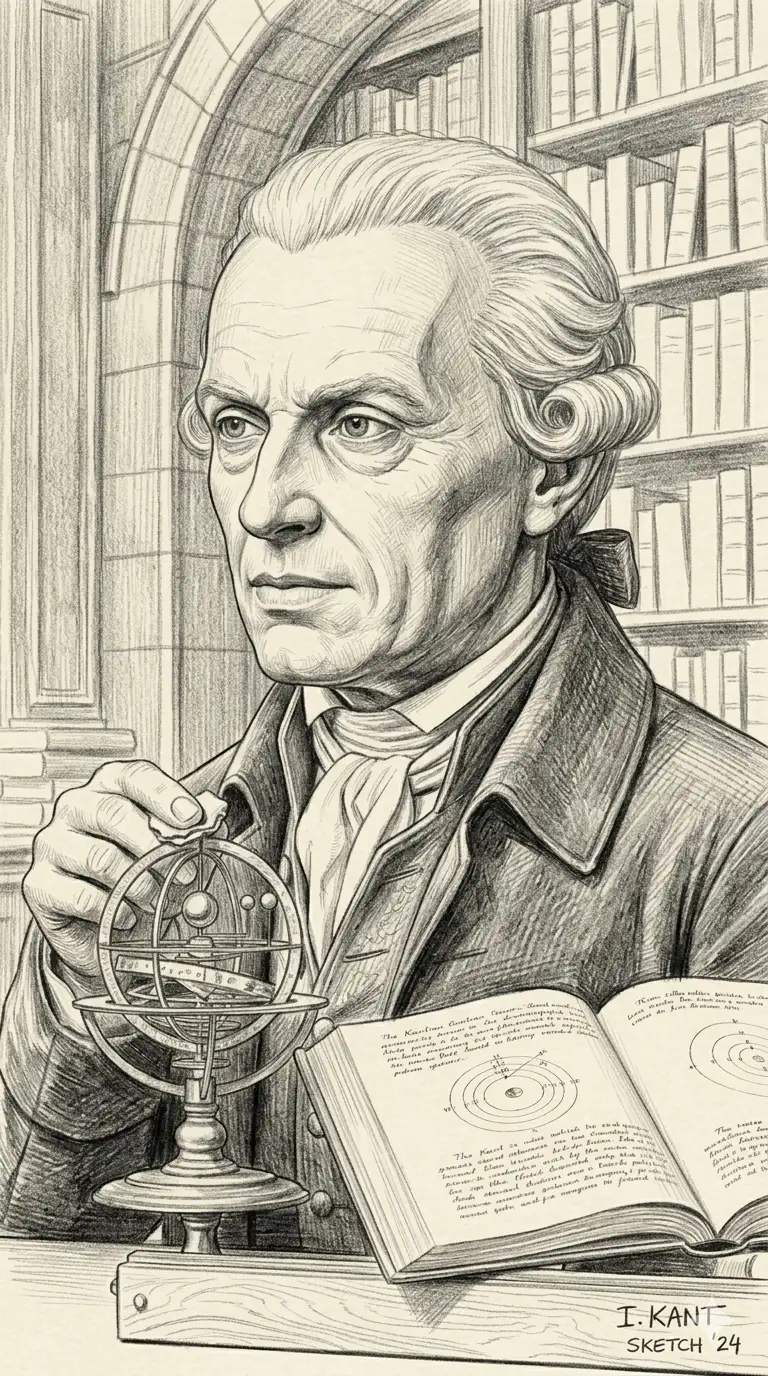
Quote of the day by Immanuel Kant : Modern life is deeply influenced by social expectations, personal ambitions, and the constant pressure to live up to certain standards. Many people find themselves comparing their journey with others, questioning whether they are doing enough or living correctly. In the middle of this uncertainty, philosophers remind us to reflect on the ethical foundation of our actions rather than simply chasing outcomes. The idea of moral responsibility encourages individuals to think beyond personal gain and consider the broader impact of their choices on society.

Quote of the Day Today: Immanuel Kant on Moral Responsibility and Ethics
Immanuel Kant said, “ May you live your life as if the maxim of your actions were to become universal law ,” as per BrainyQuote.
Understanding Immanuel Kant’s Quote on Universal Moral Principles
This quote by Immanuel Kant highlights the importance of evaluating human actions through the lens of universal ethics. Kant suggests that before making any decision, individuals should consider whether their behavior would remain acceptable if everyone in society acted the same way.
The idea of “universal law” reflects a moral standard that applies equally to all people, regardless of circumstance. It encourages consistency, fairness, and rational thinking in everyday choices.
Kant’s philosophy is based on the belief that morality should not depend on personal advantage or emotional impulse, but on principles that can be applied universally without contradiction.
Quote of the Day May 29: Why Universal Ethics Still Matter Today
The quote remains highly relevant in modern society, where people constantly face ethical decisions in personal relationships, workplaces, and digital environments. It encourages individuals to think beyond short-term outcomes and consider the long-term effects of their actions on others.
Kant’s idea also highlights the importance of accountability. If everyone acted dishonestly or irresponsibly, trust within society would collapse. His philosophy reminds us that ethical behavior is essential for maintaining social order and mutual respect.
Lessons on Responsibility and Moral Thinking
This quote teaches that true morality is based on principles rather than convenience. It encourages individuals to reflect before acting and to consider whether their choices align with values they would accept universally.
By applying this mindset, people can develop stronger integrity, consistency, and fairness in their daily lives.
Key Takeaways From Immanuel Kant’s Quote
- Moral actions should follow universal principles
- Always consider if your behavior should apply to everyone
- Ethics are based on reason, not convenience
- Responsible actions build trust in society
- Consistency is central to moral decision-making
Who Was Immanuel Kant
Immanuel Kant (April 22, 1724 – February 12, 1804) was a German philosopher from Königsberg, Prussia (now Kaliningrad, Russia), and one of the most influential thinkers of the Enlightenment. He made major contributions to epistemology, ethics, and aesthetics, shaping later philosophical movements such as Kantianism and idealism, as per a Britannica report.
Raised in a Pietist family, Kant studied at the University of Königsberg, initially focusing on theology before shifting to mathematics and physics. After working as a private tutor, he returned to academia and became a lecturer in 1755, teaching subjects including logic, metaphysics, physics, and geography.
Kant was influenced by both rationalist and empiricist traditions and developed a new philosophical approach during his “critical period.” His major works include Critique of Pure Reason (1781), Critique of Practical Reason (1788), and Critique of Judgment (1790), as per the Britannica report.
He is best known for his theory of knowledge and moral philosophy, especially the categorical imperative: “Act only on that maxim through which you can at the same time will that it should become a universal law.”