Get all your news in one place.
100's of premium titles.
One app.
Start reading
The Economic Times
The Economic Times
Muskan Singh

Quote of the day by German chemist Otto Hahn: 'I felt profoundly ashamed..'-The 'father of nuclear chemistry's' regret after Hiroshima reveals the human cost of scientific discovery

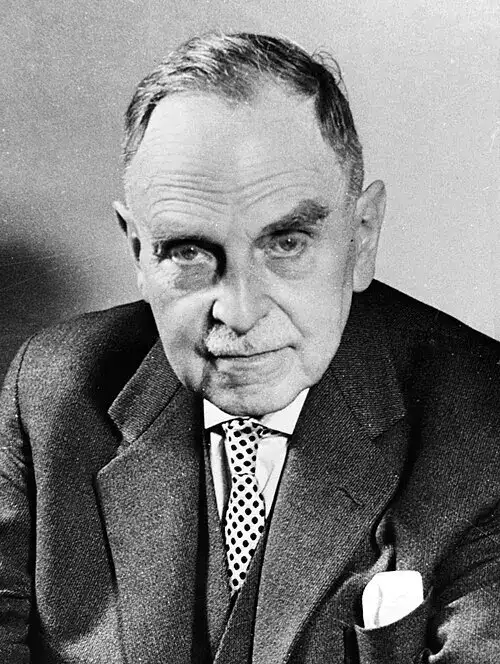
Quote of the day by German chemist Otto Hahn : Few scientific discoveries have changed the world as dramatically as nuclear fission. It unlocked a new understanding of matter, revolutionized energy production, and reshaped global politics forever. Yet for the man most closely associated with that breakthrough, the moment the world witnessed its destructive power brought not pride, but sorrow.

German chemist Otto Hahn is often remembered as the father of nuclear chemistry and the scientist whose work helped pave the way for the atomic age. But one of the most revealing moments of his life came not in a laboratory, but in his reaction to the devastating events that followed World War II.

The words he spoke after learning about the atomic bombing of Hiroshima remain among the most powerful reflections ever made by a scientist confronting the consequences of discovery.

A haunting reflection from Otto Hahn

"I felt profoundly ashamed, I was very much upset."

Those simple words carried enormous emotional weight. Hahn was speaking about his reaction to the atomic bombings of Hiroshima and Nagasaki in 1945, attacks that killed tens of thousands of people and forever changed the course of history.

For many people, Otto Hahn's name is linked to one of the greatest scientific achievements of the twentieth century. Alongside radiochemist Fritz Strassmann, Hahn discovered nuclear fission in 1938 after years of research into radioactivity. The breakthrough revealed that uranium atoms could split into smaller atoms, releasing tremendous amounts of energy. What began as a scientific discovery soon became the foundation for both nuclear power and nuclear weapons.

When Hahn learned that his research had indirectly contributed to the creation of the atomic bomb, his response was not one of celebration. Instead, it was marked by deep personal anguish.

READ ALSO: Quote of the Day by Desmond Tutu: 'Differences are not intended to separate...'- beloved South African Archbishop and Nobel Peace Prize Laureate's words about human differences still matter today

Why did Otto Hahn feel such regret?

The answer lies in the difference between discovery and application. Like many scientists of his era, Hahn was focused on understanding the mysteries of nature. His work was driven by curiosity, experimentation, and the pursuit of knowledge. He did not set out to create a weapon capable of destroying entire cities.

When the bombs were dropped on Japan, Hahn reportedly struggled with the realization that a discovery made in a laboratory could be used to unleash such devastation. His reaction reflected a question that continues to challenge scientists today: What responsibility do inventors bear for the ways their discoveries are used?

The quote remains powerful because it shows that scientific achievement and moral reflection can exist side by side. Hahn understood the significance of his work, but he also understood the human suffering associated with its consequences.

READ ALSO: Quote of the Day by Elizabeth Taylor: 'I adore wearing gems, but not...'-Hollywood icon's timeless lesson on beauty, possession, and appreciating life

What does this quote teach us about responsibility and humanity?

The enduring lesson of Hahn's words is that progress is not measured solely by what humanity can do, but also by how humanity chooses to use its knowledge.

Throughout history, many breakthroughs have carried both benefits and risks. Nuclear technology, for example, has helped generate electricity, advance medicine, and deepen scientific understanding. At the same time, it introduced the possibility of unprecedented destruction.

Hahn's response reminds us that knowledge alone is not enough. Wisdom, ethics, and compassion must guide the use of powerful discoveries.

READ ALSO: Chinese Proverb of the Day: 'He who is afraid of suffering, is already suffering...'-Life lessons on courage, creativity, resilience, and why fear often causes more suffering than failure itself

Despite his Nobel Prize-winning achievement, Hahn spent much of his later life advocating against the expansion of nuclear weapons. He became a respected public voice calling for restraint and responsibility in the nuclear age.

Today, Otto Hahn is remembered not only for changing science but also for demonstrating humility in the face of history. His quote endures because it captures a deeply human truth: even the greatest accomplishments can lead to difficult moral questions.

READ ALSO: Spanish Proverb of the Day: 'Tell me who your friends are, and I will tell...'-Life lessons from this famous Spanish saying on friendship, influence, character, and why the people around you shape who you become

More than eighty years after the atomic bombings, his words still resonate. Not because they celebrate a scientific triumph, but because they reveal the conscience of a man who understood that every discovery carries consequences far beyond the laboratory.

Sign up to read this article
Read news from 100's of titles, curated specifically for you.
Already a member? Sign in here
Related Stories
Top stories on inkl right now
One subscription that gives you access to news from hundreds of sites
Already a member? Sign in here
Our Picks
Fourteen days free
Download the app
One app. One membership.
100+ trusted global sources.