Get all your news in one place.
100's of premium titles.
One app.
Start reading
The Economic Times
The Economic Times
Maitreyee Thakkar

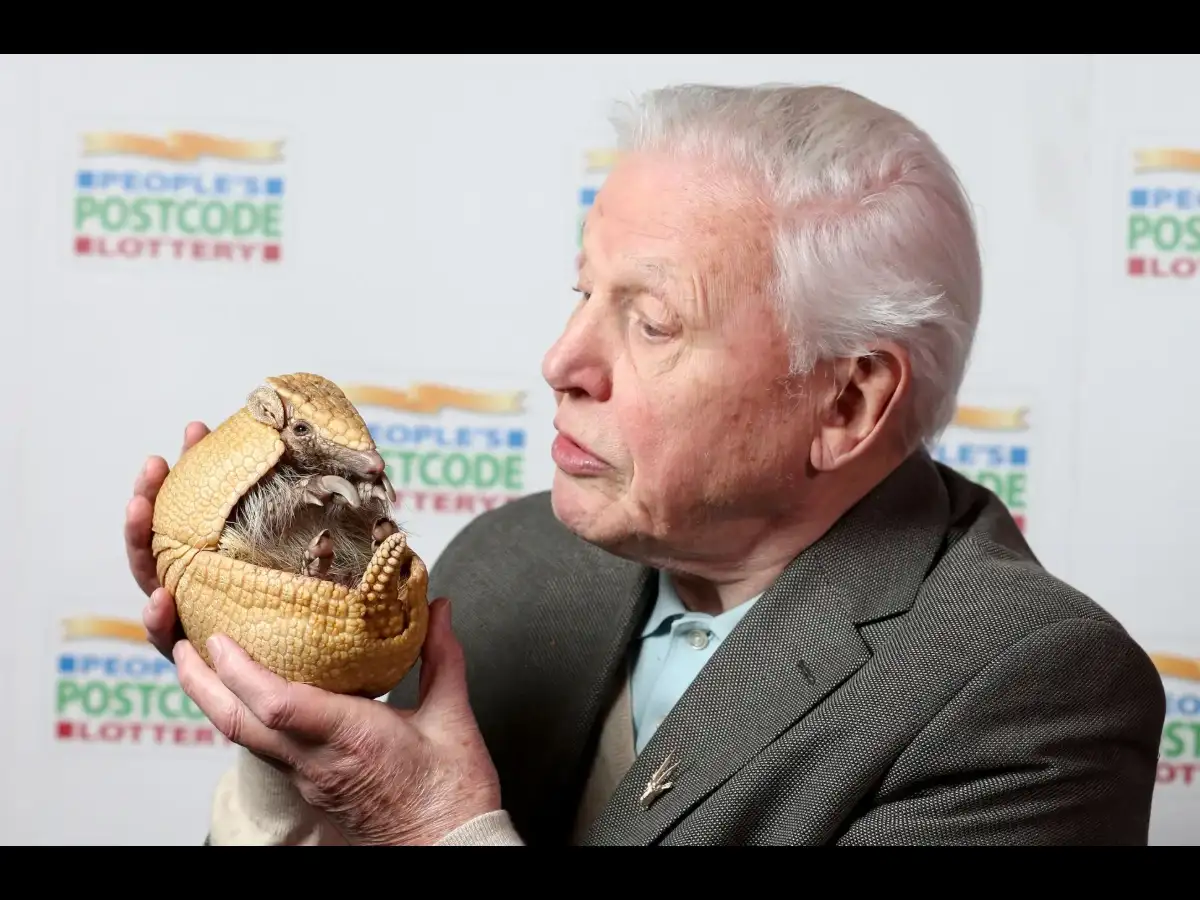
Quote of the day by David Attenborough: ‘We often talk of saving the planet, but the truth is that we must do these things to save ourselves’ – British naturalist on humanity and nature

The forests can recover. Rivers can eventually clear. Wildlife can return. But the question David Attenborough has spent decades asking is more uncomfortable: what happens to humanity if the natural systems we depend on are pushed beyond their limits?

Few people have watched the natural world change as closely as Attenborough. Across more than seven decades of broadcasting, he has taken audiences into forests, oceans, deserts and frozen landscapes, turning wildlife that once seemed impossibly distant into something millions of people could understand and care about.
Who is David Attenborough?

Born in London in 1926, Sir David Attenborough became one of the world's best-known natural-history broadcasters and filmmakers. He joined the BBC in the early 1950s and presented his first natural-history programme in 1954. His career eventually included landmark series such as Life on Earth , The Living Planet , The Blue Planet , Planet Earth and Our Planet .

His work changed the way television audiences experienced wildlife. Instead of treating animals simply as subjects of scientific observation, his programmes placed viewers alongside them, often showing behaviour that had rarely been filmed before.

Over the years, however, the focus of his work increasingly expanded from documenting nature to examining what humans are doing to it.

In A Life on Our Planet , published in 2020, Attenborough described the book as his "witness statement", drawing on his lifetime of observing environmental and biodiversity changes. He also emphasised that the book was intended to offer possible ways forward rather than simply describe environmental damage.

Quote of the day

“We often talk of saving the planet, but the truth is that we must do these things to save ourselves. With or without us, the wild will return.”

– David Attenborough, A Life on Our Planet: My Witness Statement and a Vision for the Future

What does the quote mean?

Attenborough's point is that protecting nature is not simply an act of generosity toward animals, forests or oceans. Human societies rely on functioning ecosystems for essentials including food, clean water, breathable air and other resources.

The distinction in his wording is important. The planet itself is not necessarily dependent on humanity's survival. In A Life on Our Planet , Attenborough points out that life has survived several mass extinctions and argues that nature can recover if given the opportunity. The greater question is whether humans will remain able to thrive in a world whose natural systems have been severely damaged.

That idea has remained central to his environmental messaging. The Natural History Museum, which has featured another Attenborough quote, “The future of the natural world, on which we all depend, is in our hands”, similarly describes humanity as dependent on the natural world.

More quotes by David Attenborough

“The future of the natural world, on which we all depend, is in our hands.”

“The natural world is still a source of solace and pleasure and delight.”

“The truth is: the natural world is changing. And we are totally dependent on that world.”

“Each of us must cherish the natural world that surrounds us.”

Sign up to read this article
Read news from 100's of titles, curated specifically for you.
Already a member? Sign in here
Related Stories
Top stories on inkl right now
One subscription that gives you access to news from hundreds of sites
Already a member? Sign in here
Our Picks
Fourteen days free
Download the app
One app. One membership.
100+ trusted global sources.