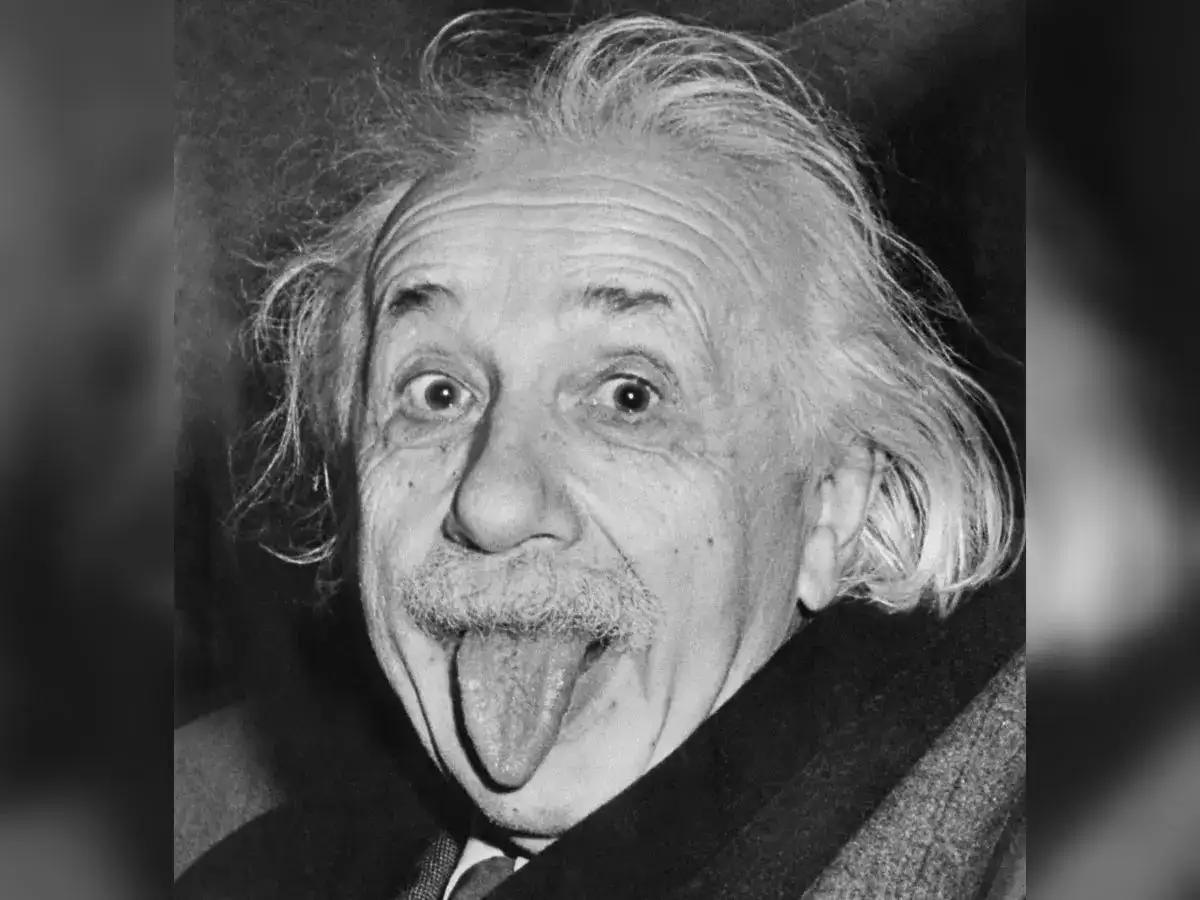
Some of the smartest people in history are remembered for making difficult ideas easier to understand. That may be why one of Albert Einstein’s most enduring quotes has nothing to do with equations or relativity. Instead, it is a simple observation about communication, clarity, and what true understanding really looks like.

Complicated equations, impossible theories, and ideas that changed humanity forever made Albert Einstein one of the greatest scientific minds in history. From relativity to the famous equation E=mc², Einstein transformed how people understood the universe. But decades after his discoveries reshaped modern physics, one of his most powerful statements is not about science at all. It is a simple sentence about communication, understanding, and the danger of pretending to know more than we actually do.
Quote of the Day by Albert Einstein
The quote continues to resonate across classrooms, workplaces, and everyday life because of how brutally honest it feels. Einstein once said, “If you can't explain it to a six year old, you don't understand it yourself.”
At first glance, the quote sounds almost playful. But behind those few words is a much deeper truth about intelligence and clarity. Einstein believed real understanding was never about sounding complicated. It was about understanding something so deeply that you could strip away jargon, ego, and unnecessary complexity and explain it in the simplest possible way.
Why did Albert Einstein believe simplicity was the true test of intelligence?
For much of his early life, Einstein struggled inside rigid education systems that rewarded memorisation more than curiosity. Teachers reportedly considered him difficult because he questioned everything instead of blindly accepting authority. Yet that same curiosity later helped him challenge centuries of scientific assumptions.
As a child, Einstein became fascinated by invisible forces after seeing a compass needle move mysteriously at the age of five. Years later, while still a teenager, he imagined what it would feel like to chase a beam of light through space. That thought experiment eventually helped lead him toward the theory of special relativity.
Even when working on ideas so advanced that most people could barely comprehend them, Einstein constantly searched for simpler ways to describe the universe. He believed complexity often hides weak understanding. If someone truly grasps an idea, they should be able to explain its core meaning in plain language.
That philosophy also reflected Einstein’s personality. Despite becoming one of the world’s most famous scientists after his “miracle year” in 1905, he often distrusted intellectual arrogance. He knew that sounding intelligent and being intelligent were not always the same thing.
What does this quote teach us about communication and ego?
Einstein’s words remain relevant because they apply far beyond science. In modern life, people often use complicated language to appear knowledgeable, whether in business, politics, education, or even everyday conversations. But the quote challenges that behaviour directly.
The line reminds people that true mastery is usually simple, not confusing. Explaining something clearly requires patience, empathy, and complete understanding. It forces someone to remove unnecessary layers and focus only on what truly matters.
The quote also quietly exposes the role of ego. Sometimes people avoid simplicity because they fear appearing less intelligent. Complicated explanations can create distance and authority, while simplicity demands vulnerability and clarity. Einstein understood that real confidence comes from clarity, not from making others feel confused.
That is why the quote still connects with millions online today. Teachers use it in classrooms. Business leaders reference it during presentations. Students repeat it while studying difficult subjects. The message stays timeless because almost everyone has experienced moments where confusion was mistaken for intelligence.
Over the years, Einstein became much more than a physicist. He became a symbol of curiosity, imagination, and intellectual honesty. Beyond developing theories like special relativity and general relativity, he also won the Nobel Prize for explaining the photoelectric effect, helped shape modern cosmology, and inspired generations of scientists across the world.
But despite all his achievements, Einstein’s greatest strength may have been his ability to remain curious about simple questions. He never lost the childlike wonder that first drew him toward science.
Today, his quote continues spreading across social media, classrooms, and motivational speeches because it captures a truth people constantly rediscover: intelligence is not about making things sound harder. It is about making them understandable.
And perhaps that is why Einstein’s words still feel so powerful decades later. Not because he made the universe more complicated, but because he spent his life trying to make sense of it in the clearest way possible.