
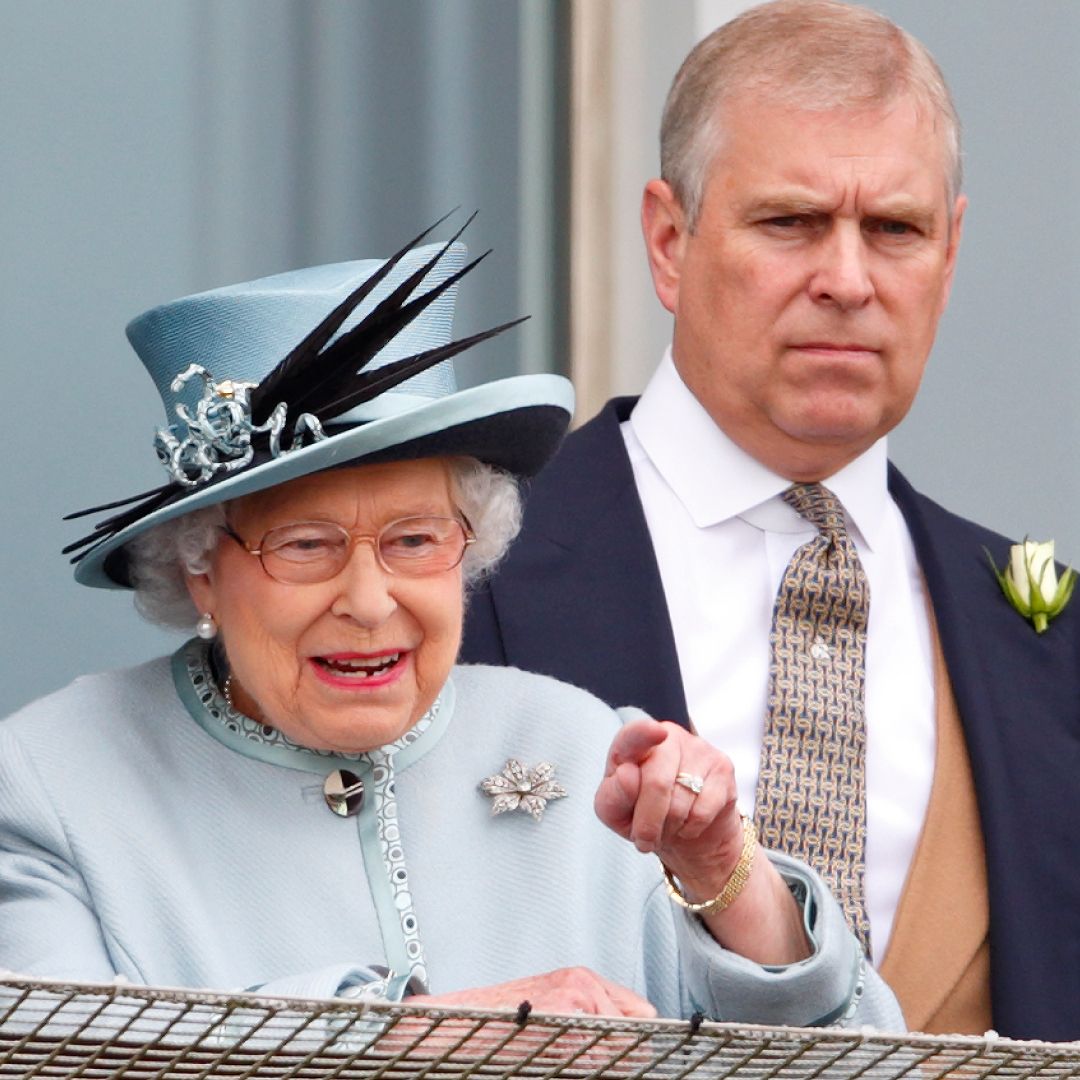
Since Andrew Mountbatten-Windsor's arrest, royal commentators have been questioning whether the late Queen Elizabeth II knew the extent of her son's alleged involvement with convicted sex offender Jeffrey Epstein. In fact, one crisis expert alleged that The Queen "looked the other way" when it came to Andrew's activities. But according to one royal historian, the former monarch likely didn't have as much influence as was once thought.
In his new book, Queen Elizabeth II: A Concise Biography of an Exceptional Sovereign, respected royal historian David Cannadine wrote, "There was nothing The Queen could do…to persuade Prince Andrew to be more discreet."
As for why Elizabeth had little control over the ex-Duke of York, Cannadine explained, "The Queen indulged her two younger sons [ex-Prince Andrew and Prince Edward] too much." She did this after her eldest son, King Charles, had a miserable experience attending Gordonstoun boarding school, and following his "complaints that his parents had been too distant," per Cannadine.

Unfortunately, Queen Elizabeth's decision to allegedly "indulge" Andrew backfired. "The result was that [ex-]Prince Andrew acquired an excessive sense of entitlement and an exaggerated opinion of his own abilities, which would lead to serious misjudgments that would eventually compel him to withdraw from public life," royal historian Cannadine explained.

Alongside Andrew's friendship with Epstein, the former prince allegedly developed somewhat of a reputation early on.
"Andrew fully availed himself of the more relaxed moral climate of the early 1980s, the press nicknamed him 'Randy Andy,' and he had a succession of girlfriends, of whom the most famous was the extraordinarily named Koo Stark, who had once appeared naked in a lesbian shower scene in the erotic historical film, Emily (1976)," Cannadine explained.
Basically, it sounds as though the late Queen tried—and failed—to rein in the ex-Duke of York.